




The engineering challenge of powering a global mega-event is immense, requiring planners to think beyond the event's duration to the entire lifecycle of the new infrastructure. For the engineers managing Qatar’s grid expansion, this meant justifying a $2.5 billion investment in eight primary substations and answering a critical question: how can 500 MVA of peak capacity be strategically integrated into the grid for decades to come?
Planning for the 500 MVA Legacy
The grid load for a World Cup venue presents a challenge of unprecedented simultaneity. An 80,000-seat stadium such as Lusail requires a firm 60-70 MVA—more than many small towns—but with the load profile of a factory where every machine is switched on for precisely the same four-hour shift. This demand is non-negotiable and uninterruptible, supporting not just stadium lighting but the global broadcast infrastructure that transmits the event to billions.
To meet this singular challenge across eight primary venues, the grid was designed to serve a temporary, geographically concentrated demand spike of over half a gigawatt. This was achieved with some of the most advanced 132/11 kV substations available. While these assets performed their primary function reliably, their secondary function—operating efficiently in the decades following the event—represented a sophisticated engineering consideration that was addressed from day one.
Specification-Rich Design for Uncompromising Reliability
The mechanism behind this capability lies in the specifications. These were not standard distribution substations. To meet a stringent N-2 mandate, each of the primary 132/11 kV substations serving a stadium complex was designed with a level of component duplication and automation usually reserved for critical industrial facilities or major data centres.
Consider a typical configuration:
- Dual 132 kV Incomers: Fed from separate parts of the Kahramaa transmission grid to ensure supply path diversity.
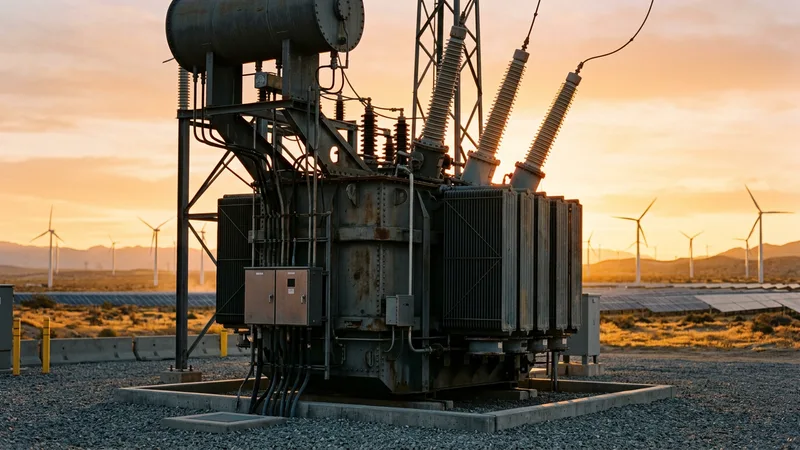
- Multiple Power Transformers: Typically three or more 40 MVA power transformers, where one alone could handle the base load, and two could handle the peak, leaving one entirely redundant. The specifications align with robust IEC 60076 standards but are applied with a zeal for reliability rarely seen in the distribution world.
- Highly Automated Switchgear: The 132 kV Gas-Insulated Switchgear (GIS) and the 11 kV switchgear arrays were equipped with sophisticated IEC 61850-compliant automation. Sub-cycle fault detection and load-shedding schemes were in place to isolate issues before they could cascade.
Building such a facility is a capital-intensive exercise. This brings us to Engineering Insight #1: it is vital to design for the lifecycle, not just the event. A high-redundancy facility built for a peak load scenario offers immense capability. The challenge, then, becomes optimising this impressive capacity for day-to-day utility and ensuring its operational profile is proportional to long-term needs.
Long-Term Integration of High-Capacity Assets
The consequence of this focused, peak-load engineering is the emergence of under-utilised assets post-event. A 132 kV substation whose load is only a fraction of its nameplate capacity represents significant underutilised capacity. The capital has been spent, but the return on investment—measured in delivered kilowatt-hours over decades—must be actively cultivated. This highlights Design Consideration #2: aligning asset location with long-term demand growth.
The stadiums were constructed where land and logistics were optimal for the global event. These locations did not always perfectly coincide with published master plans for future residential or commercial expansion. Planners at Kahramaa are now demonstrating how to meet this challenge by bringing demand to the substation or, in more complex scenarios, extending the substation’s reach to the demand.
Decommissioning is rarely a viable option due to the immense cost of dismantling and site remediation, alongside the value of the embedded equipment like transformers and switchgear. Scrapping these is not a sustainable choice. The logical path forward, integration, introduces its own complexities and leads to Design Consideration #3: appreciating the deeper complexity of adapting a high-redundancy asset for standard operation. A specification-rich substation requires careful technical recalibration to integrate efficiently into a distribution network designed for lower, more variable loads.
From Stadium Lights to Suburban Loops
This is where the region's forward-thinking engineering shines. Qatar’s strategy provides a blueprint for how to transform a high-capacity event asset into a valuable grid backbone for new urban developments. It is a multi-stage process of technical and operational adaptation.
First, the operational philosophy evolves. A high-redundancy N-2 substation operating in a standard N or N-1 distribution environment can be reconfigured for efficiency. This involves de-energising and preserving redundant transformers and switchgear bays, effectively placing them in strategic reserve. The substation is "de-rated" operationally to match the reliability profile of the network it now serves.
The second, more critical step, is physically connecting the substation to new load centres. The 11 kV feeders that once ran a few hundred meters to a stadium’s internal ring main must now be extended for kilometers to serve new neighborhoods. While a major civil works project, it is far more cost-effective than building a new substation from scratch. The key steps in this process demonstrate a best-practice approach:
1. Demand Forecasting: Identifying and mapping the projected load growth in areas surrounding the stadiums, such as the new districts in Lusail City or emerging communities near Al Bayt and Al Janoub.
2. Feeder Re-routing: Planning and executing the trenching and cable-laying works to connect the substation’s 11 kV outgoing bays to the new distribution network pillars.
3. Protection Recalibration: Completely re-calculating and re-configuring existing protection schemes, originally designed for concentrated, high-intensity loads, for sprawling, lower-diversity residential loads. A fault on a suburban feeder behaves very differently from one inside a stadium.
4. Phased Energisation: Bringing the new loops online incrementally, carefully managing the load transfer from other parts of the grid.
This strategy establishes the substation as a new anchor for urban expansion, a solution far more elegant than leaving valuable capacity idle. This brings us to Engineering Insight #4: the value of pre-planning post-event integration during the initial design phase. For future planners, including the teams in Saudi Arabia preparing for 2034, the lesson from Qatar is to site these mega-substations where the city is going, not just where the stadium is today. Looking for more engineering resources? You can find them on our resources page.
Lessons for Riyadh's 2034 Grid Planners
With Saudi Arabia poised to host the 2034 World Cup, its grid planners at SEC and National Grid SA can build upon the successful legacy strategies pioneered in the region. Qatar's experience confirms that an event-driven substation project is most valuable when conceived from day one as a long-term urban development project. This represents a strategic shift in mindset, from temporary overlay to permanent backbone.
Modular substation design, for instance, could offer an evolution of this approach, allowing for the deployment of capacity that can be more easily scaled down or even physically relocated after the event. Siting decisions, as demonstrated, must be made in close coordination with municipal planners, ensuring that the multi-billion-riyal investment anchors future growth corridors, consistent with IKTVA and JIPP objectives for long-term value.
Ultimately, the goal is to treat the substation not as a cost of the event, but as a down payment on the future grid. If you have a complex project on the horizon, it pays to talk to experts early.
The Engineer's Takeaway
The most forward-thinking grid engineering is not just about meeting the peak, but about designing for the decades that follow. As the Qatar experience demonstrates, event infrastructure is a 30-year asset, not a 30-day expense. Meticulous lifecycle planning is what separates a smart, strategic investment from a short-term solution.