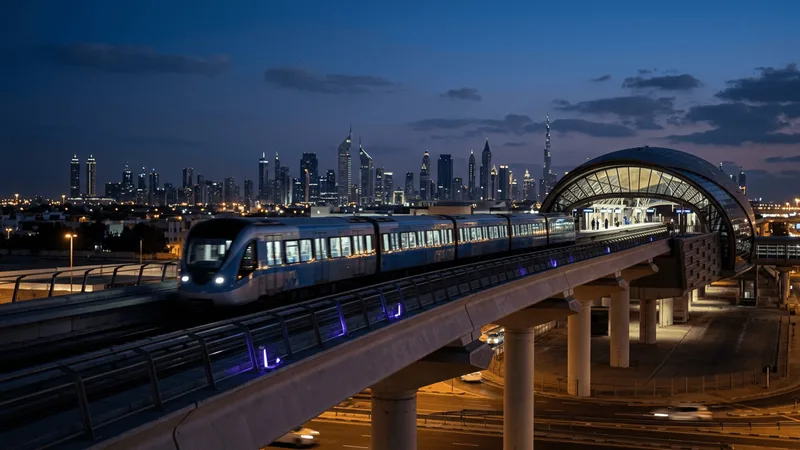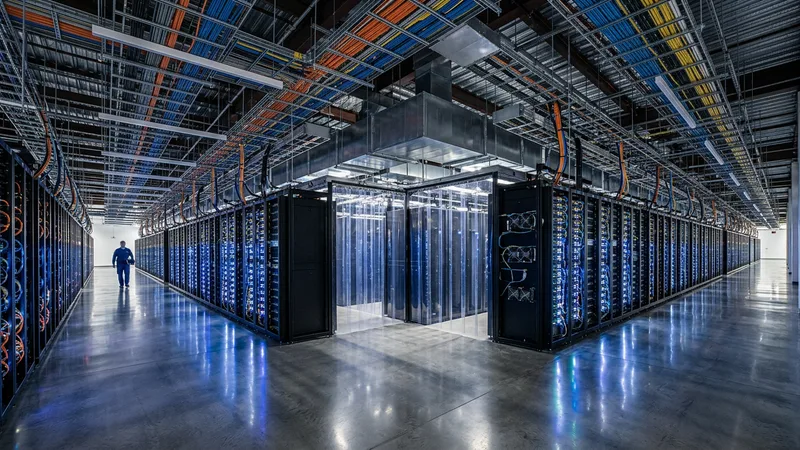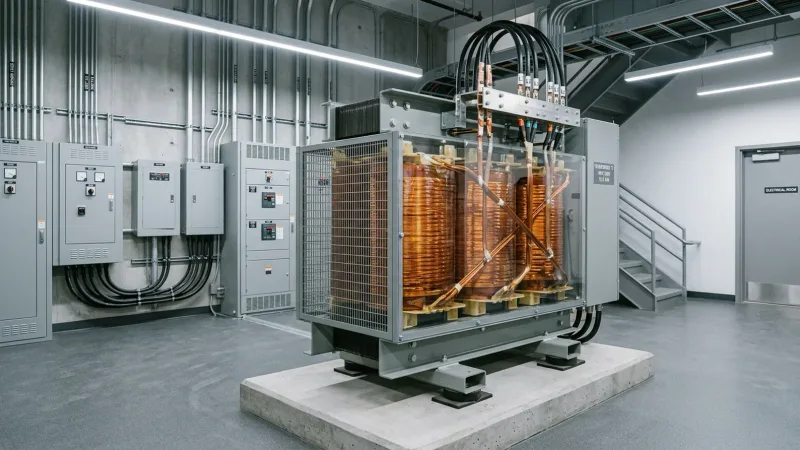




Imagine standing on a pier in Abu Dhabi or Doha in the height of August. The humidity is so thick it feels like a physical weight, and the breeze off the Arabian Gulf carries a fine, almost invisible mist of saline moisture. To a tourist, it is merely uncomfortable. To a maintenance engineer, that air is a slow-motion explosion. Within five kilometers of this coastline, the combination of extreme heat, ultraviolet radiation, and high salinity creates one of the most aggressive environments on Earth for electrical infrastructure. This is the reality of managing coastal corrosion in a region where the desert literally meets the sea.
For a distribution transformer or a line of switchgear, the Gulf shoreline is a gauntlet. The salt crusts onto insulators, creating conductive paths that lead to tracking and flashovers. The heat accelerates the oxidation of metals, turning unprotected steel into flakes of rust in a fraction of the time it would take in a temperate climate. In this landscape, "standard" equipment is a liability. Engineering substations that survive thirty summers in the GCC requires more than just a thicker coat of paint; it requires a fundamental reimagining of the materials, the seals, and the very chemistry of the enclosure.
The Chemistry of a Coastal Killzone
At the heart of the problem is the localized microclimate. While much of the interior Arabian Peninsula is hyper-arid, the coastal strip suffers from high dew points. When the temperature drops at night, moisture condenses on metal surfaces, trapping salt particles against the paint. This creates an electrolyte. Under the relentless sun of the following day, the water evaporates, and the salt concentration increases, intensifying the corrosive attack. This cycle repeats 365 days a year, testing the limits of any equipment built to international benchmarks like IEC 60076.
Traditional mild steel, even when hot-dip galvanized, often finds its match here. The chloride ions are incredibly persistent, finding their way into the microscopic pores of standard industrial coatings. Once the barrier is breached, the corrosion spreads underneath the paint—a process known as "under-creeping"—until large sheets of the protective layer simply fall away. This isn't just an aesthetic issue; it compromises the structural integrity of the tank and threatens the dielectric properties of the insulating oil if a leak develops.
To combat this, the engineering philosophy shifts from "protection" to "immunity." This begins with the substrate itself. While stainless steel (specifically Grade 316L) is the gold standard for corrosive environments, it is prohibitively expensive for massive transformer tanks. The solution often lies in a sophisticated multi-stage coating system. We look toward C5-M (Marine) or CX categories defined by ISO 12944, which require a rigorous sequence: a zinc-rich primer for cathodic protection, a high-build intermediate epoxy layer for barrier protection, and a polyurethane topcoat to resist the intense UV degradation that characterizes the Arabian Gulf.
Sealing Against the Invisible: IP66 and Beyond
In a Gulf substation, the enemy isn't just the salt you can see; it’s the fine dust and humidity you can’t. The ingress of moisture into a control cabinet can lead to the premature failure of sensitive relays and protection strings. This is why the industry relies heavily on the IEC 60529 standard for Degrees of Protection. In coastal environments, moving from a standard IP54 rating to a more robust IP66 rating can be the difference between a twenty-year lifespan and a five-year failure.
An IP66 rating signifies that the enclosure is "dust-tight" and protected against powerful jets of water. In practical terms for a GCC substation, this means the seals must be capable of withstanding the expansion and contraction caused by 50°C daytime temperatures and 20°C nights. Standard rubber gaskets often become brittle and crack under these conditions. Engineers instead specify high-grade EPDM or silicone gaskets that maintain elasticity across these thermal extremes.
The challenge with a completely sealed IP66 enclosure, however, is heat. A transformer or a piece of switchgear generates its own internal thermal load. If you seal it tight to keep the salt out, you risk cooking the components inside. This creates a paradox that requires clever thermal management. We employ labyrinthine ventilation designs—vents that allow air to pass but force it through multiple 90-degree turns to drop out moisture and dust—or, in more extreme cases, we use air-to-air heat exchangers that isolate the internal air from the corrosive coastal atmosphere entirely.
The Insulator’s Dilemma: Creepage and Clearance
When salt accumulates on the surface of a bushing, it creates a conductive film. In the presence of light rain or even heavy dew, this film becomes "leaky," allowing a small amount of current to flow across the surface of the insulator. If the leakage current is high enough, it can lead to a spectacular—and destructive—flashover. In the damp, salty air of a coastal city like Dammam or Muscat, standard designs for bushings simply won't suffice.
The engineering answer is found in the "creepage distance." This is the shortest distance over the surface of the insulation material between two conductive parts. For coastal GCC substations, we refer to IEC 60815, which dictates the selection and dimensioning of high-voltage insulators for polluted conditions. In "Very Heavy" pollution zones (Class E), the required creepage distance can be as high as 53.7mm per kilovolt of system voltage.
To achieve this without creating impossibly tall bushings, we use "sheds"—the umbrella-like disks on a bushing that increase surface area. In the Gulf, these sheds are often designed with an aerodynamic profile to encourage the wind to blow away salt deposits rather than allowing them to settle in the "valleys" of the insulator. Furthermore, the industry is increasingly moving away from traditional porcelain in favour of composite silicone rubber. Silicone is naturally hydrophobic; it causes water to bead up and roll off, taking the salt with it before a conductive path can form.
Mastering the Grounding Reality
The corrosive nature of the Gulf soil is the final boss in this engineering struggle. Near the coast, the water table is high and often hyper-saline. This creates a highly conductive environment for grounding, but it also means that the copper earth mats and rods typically used in substations are subject to rapid galvanic corrosion. If the grounding system fails, the entire substation becomes a safety hazard, as fault currents have no clear path to earth.
Project specifications in these regions often lean on BS EN 50522 or IEEE 80, but with local adaptations. Engineers might specify tinned copper conductors or even specialised conductive concrete to protect the earthing grid from the aggressive soil chemistry. In some cases, sacrificial anodes—like those used on the hulls of ships—are buried alongside the grounding grid to ensure that the "salt-eating" chemical reactions target the anode rather than the critical copper wires.
The busbars inside the switchgear are another focal point. Even within an enclosure, high humidity can lead to "tin pest" or the oxidation of silver-plated contacts. We often favour high-purity copper with a specific thickness of tin or silver plating, ensuring that every bolted joint is treated with a specialised anti-corrosion conductive grease. It is a game of millimeters and microns, where the slightest oversight can lead to a "hot spot" that eventually melts a connection.
Resilience as a Cultural Standard
The substations dotting the coastlines of the Arabian Gulf are not merely functional blocks of metal; they are testament to a specific branch of materials science. They represent a compromise between the laws of thermodynamics and the relentless chemistry of the sea. By adhering to rigorous standards like IEEE C57.12 for liquid-immersed transformers and ensuring every bolt and weld meets the CX corrosion class, manufacturers can provide a backbone for the region’s rapid urbanization.
Ultimately, engineering for the Gulf is about acknowledging that the environment will always try to reclaim the materials we use. Our job is to slow that process down so significantly that it becomes irrelevant over the equipment's operational life. Whether it is through the application of advanced polymers or the precision of IP66-rated enclosures, the goal remains the same: ensuring that the lights stay on in the city, no matter how hard the salt spray blows off the dhow coasts.
Survival in this climate is a balance of brute strength and chemical finesse. It is the result of decades of learning what fails and why, turning each past breakdown into a more resilient future. In the end, the most reliable machinery is the kind that treats the world's harshest air as just another day at the office.