





Three jurisdictions converge on the Duqm refinery transformer specification. Hazardous-area requirements at the 11 kV process-island level draw on European ATEX practice. The 132 kV grid-side specification follows Oman Power and Water Procurement Company contractual reliability targets. And Sultanate of Oman in-country value rules govern the bidding process itself. This article walks through how the OQ8 EPC translated those constraints into a coherent BoM.
The Illusion of the Grid
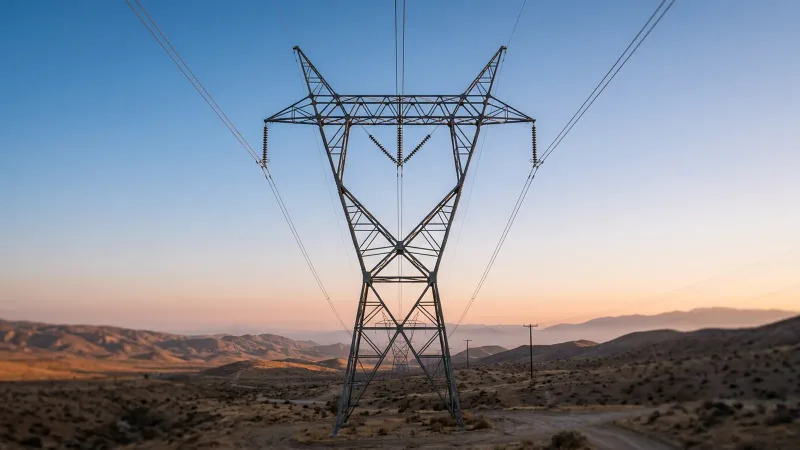
Connecting a facility on the scale of the Duqm Refinery and Petrochemical Industries Company (DRPIC)—a 230,000 barrel-per-day behemoth—is not a simple matter of tapping into the wires overhead. It represents a negotiated interface between two vastly complex systems: the private industrial network and the public grid. In the GCC, where transmission infrastructure often expands almost as quickly as the industrial loads it serves, the characteristics of that connection point can be a moving target.
A classic failure pattern emerges when this interface is mishandled. Assume a late-stage change occurs in the specifications of a main incoming transformer from the utility. If that single data point, such as its impedance or vector group, is not meticulously propagated through the design chain, it can invalidate months of protection coordination studies. The result is what engineers dread most: a perfectly healthy 11 kV switchgear panel that fails its site acceptance test because its brain, the protection relay, is working with outdated information.
This single point of failure reveals the brittle chain of dependencies in refinery electrical design. The specification of one transformer has a cascading impact on every downstream piece of equipment. Getting it wrong introduces risk that compounds all the way to the 400V motors, turning small oversights into frantic, last-minute recalculations and costly project delays.
Forgetting ATEX in the Specification
Problem: A refinery is, by its very nature, a hazardous area. The space around process units handling flammable hydrocarbons, like a hydrocracker or catalytic reformer, is classified into zones—Zone 1, Zone 2, etc. Electrical equipment in these areas must be certified not to be an ignition source. Yet, time and again, general-purpose distribution transformers are specified for locations that demand stringent ATEX or IECEx certification.
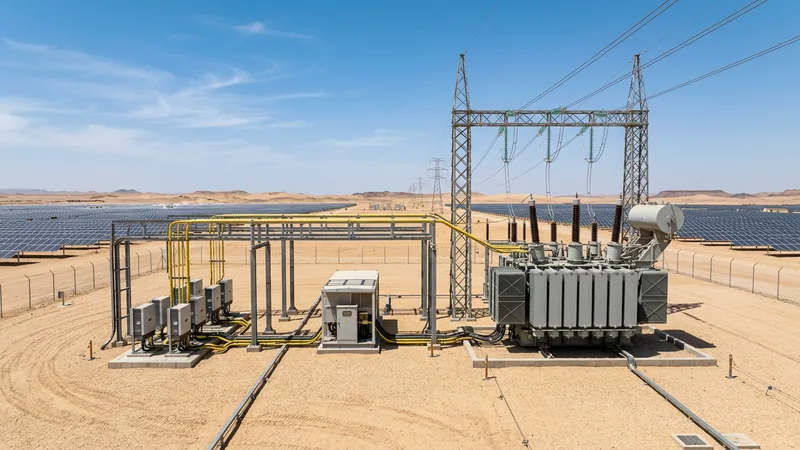
Mechanism: A standard oil-filled distribution transformer is a collection of ignition risks. A mineral oil tank can leak and spark. Bushings can fail. Internal arcing is a constant possibility. In a Zone 1 area, where an explosive atmosphere is likely to occur in normal operation, such a device is a resident incendiary bomb. The correct specification is a "flameproof" or "increased safety" transformer, often a dry-type or a special fluid-filled unit compliant with IEC 60079.
Consequence: This mistake is often caught late, during a HAZOP (Hazard and Operability) study or even a pre-commissioning site walk-down. The result is costly and causes significant delays. The incorrectly specified transformer must be replaced. A new, ATEX-compliant unit might have a lead time of 40 weeks or more. This single component, often a humble 1 MVA, 11/0.4 kV unit, can hold up the energisation of an entire process block. Furthermore, the civil foundations and cable connections for an ATEX unit may differ, requiring expensive rework.
Solution: Project procurement teams must engage with hazardous area specialists early. It boils down to three key steps:
1. Map it Out: Ensure the project's hazardous area classification drawings are finalized and distributed *before* the electrical team writes the specs for distribution equipment.
2. Specify Explicitly: The transformer specification sheet must explicitly state the required ATEX/IECEx classification (e.g., Ex db, Ex eb) and gas group (e.g., IIB). Vague terms like "suitable for refinery use" are an invitation for error.
3. Verify Certification: Insist on seeing the vendor's ATEX certificate for the specific model offered. Don't accept a general declaration of conformity. It must be third-party certified.
The Cascading Voltage Drop Miscalculation
Problem: The electrical system at DRPIC is a cascade: 230 kV -> 132 kV -> 33 kV -> 11 kV -> 400V. At each step, transformers and long cable runs introduce impedance, causing voltage to drop. A common design flaw is to analyse each voltage level in isolation, leading to a cumulative voltage drop that leaves the end equipment starved for power.
Mechanism: Consider a large motor driving a pump deep within a process unit, fed from a 400V motor control centre (MCC). That MCC is fed by an 11 kV/400V distribution transformer. The transformer is fed via a long 11 kV cable from a primary substation. That substation is fed from the 33 kV ring, and so on. A 2% voltage drop across the 33 kV cable, another 4% across the 33/11 kV transformer, 3% down the 11 kV cable, and 5% through the final transformer adds up. While each individual segment might seem acceptable, the cumulative effect can be a 10-15% voltage drop by the time power reaches the motor terminals.
Consequence: Low voltage at the terminals of a large induction motor is lethal. The motor will draw higher current to try and deliver its rated power, leading to rapid overheating of its windings. Thermal overload relays will trip, shutting down the process. In a worst-case scenario, the starting torque of the motor is proportional to the square of the voltage. A 15% voltage drop means a 28% reduction in starting torque. The motor may fail to start its load entirely, stalling and causing a cascade of process shutdowns. This isn't just an operational headache; it's a direct threat to plant availability and production targets.
Solution: The only way to prevent this is through integrated load-flow analysis using a complete, top-to-bottom model of the facility's electrical network. This requires discipline:
- Centralized Model: One team must own the master ETAP or PowerFactory model. Vendor-supplied data for transformers, cables, and switchgear must be fed into this central model.
- Multiple Scenarios: The analysis must cover various operating cases: normal operation, startup of the largest motors, and contingency scenarios (e.g., one of two parallel transformers being out of service).
- On-Load Tap Changers (OLTCs): Leverage OLTCs on the larger power transformers (e.g., 132/33 kV) to regulate voltage. The simulation will determine the necessary tapping range and control logic to maintain acceptable voltage profiles across the entire plant under all conditions.
For complex networks, exploring options like package substations can help by minimising cable lengths and standardising layouts, which simplifies the modelling process.
Value Engineering the Short-Circuit Ratings
Problem: In a rush to cut costs, a project may accept switchgear or transformers with a short-circuit withstand rating that is "good enough" for the initial grid connection, without considering future fault levels.
Mechanism: The fault level (the maximum current that flows during a short circuit) at a plant's busbars is determined by the "stiffness" of the upstream grid. When the DRPIC connection was first planned, the Omani grid in that region was relatively weak. However, OPWP is constantly strengthening its transmission system, adding new generation and transmission lines. Each grid reinforcement increases the prospective fault level. Switchgear rated for 31.5 kA today might be faced with a 40 kA fault current five years from now.
Consequence: A catastrophic failure. If a fault occurs that exceeds the switchgear's rating, the gear cannot safely interrupt it. The result is an arc flash explosion—a violent release of energy that destroys the equipment, poses a deadly risk to personnel, and can cause a sustained blackout of the entire facility. The financial loss from the equipment damage pales in comparison to the cost of the extended plant shutdown.
Solution: Think long-term. Don't just specify for the Day 1 fault level. The grid operator (OPWP in this case) can provide planning data on future network expansion and the projected evolution of fault levels over a 10-15 year horizon. The short-circuit rating for all major equipment—from the 230 kV Gas Insulated Switchgear (GIS) down to the 11 kV panels—must be specified to handle the highest projected fault level over the plant's operational life. This adds a marginal upfront cost but is infinitely cheaper than a mid-life replacement or a catastrophic failure. For guidance, you can always contact our engineering team to discuss future-proofing your designs.
Key Takeaways
- Model First, Buy Later: Comprehensive, integrated electrical system modelling (load flow, short circuit, harmonics) must precede procurement. A digital twin of the electrical system is your best insurance against late-stage design failures.
- Hazardous Areas Demand Precision: Vague specifications for equipment in ATEX/IECEx zones are a direct route to schedule delays and massive cost overruns. Nail down the classification and demand certified hardware.
- Design for the Future Grid, Not Today's: Specify short-circuit withstand ratings based on the grid operator's 10-15 year expansion plans, not just the current fault levels. The grid is always getting stronger.
The Engineer's Takeaway
Gigaprojects like the Duqm refinery are not just a collection of individual components; they are a single, integrated electrical machine. The most dangerous failures are rarely caused by a single faulty transformer or breaker. They are born in the interface between components, between design stages, and between the plant and the grid—the very gaps that a spreadsheet, but not a proper system study, will always miss.