



In the shimmering heat of the Arabian Peninsula, power levels usually climb with the sun. Engineers in the control rooms of major Gulf utilities are accustomed to the relentless rhythm of air conditioning demand, which tracks the mercury from dawn until its peak in late afternoon. But when the new moon is sighted, announcing the start of Ramadan, the physics of the grid undergoes a radical metamorphosis. Suddenly, the daytime valley of low consumption deepens, as commercial activity slows and the faithful fast. Then, at the moment of the Maghrib prayer, the demand spike arrives with the force of a tidal wave.
This phenomenon, known to operations teams as the Ramadan load curve, represents one of the most unique engineering challenges in the world. It is a period where the traditional rules of peak demand are rewritten. Instead of a gradual climb, the grid experiences a near-vertical surge as industrial-scale catering, residential lighting, and cooling systems reach maximum capacity simultaneously after sunset. For a utility, this isn't just a cultural shift; it is a high-stakes test of transformer resilience and switchgear reliability.
The Anatomy of the Post-Sunset Surge
Managing the Ramadan load curve requires a departure from standard seasonal modelling. In a typical summer month, the peak usually occurs between 2:00 PM and 4:00 PM. During the Holy Month, that peak shifts toward the late evening and early morning hours. This creates a "double bump" profile: the first spike at Iftar (the breaking of the fast) and a second, often more sustained peak during Suhoor (the pre-dawn meal).
This shift places immense thermal stress on distribution transformers. Transformers are designed to dissipate heat over a specific cooling cycle, typically governed by the ambient temperature profiles found in IEEE C57.91, the guide for loading mineral-oil-immersed transformers. However, when the peak demand occurs at night—when equipment is supposed to be cooling down—the "thermal memory" of the unit becomes a liability. If the ambient temperature remains high and the load does not drop off significantly between Iftar and Suhoor, the insulation life of the transformer can be degraded at an accelerated rate.
To combat this, Gulf utilities engage in a sophisticated dance of load forecasting. They utilise historical data to predict the exact minute the surge will hit, ensuring that spinning reserves are synchronised and ready. This isn't just about having enough megawatts; it's about the reactive power compensation required to keep the voltage stable as millions of inductive loads—mostly AC compressors—kick in at once.
Engineering for Thermal Extremes under IEC 60076
In the GCC region, equipment isn't just built to standard; it is over-engineered for survival. The International Electrotechnical Commission (IEC) provides the framework, but the localized variations used by regional utilities are what define the grid's backbone. Specifically, transformers destined for this environment must strictly adhere to IEC 60076-2, which dictates temperature rise limits for liquid-immersed transformers.
While the standard might suggest a 65K top-oil temperature rise for temperate climates, a utility in the UAE or Saudi Arabia often specifies much more stringent requirements to account for the Ramadan shift. Because the peak happens when the sun is down but the air is still hot, the lack of solar radiation is offset by the sheer volume of current flowing through the windings.
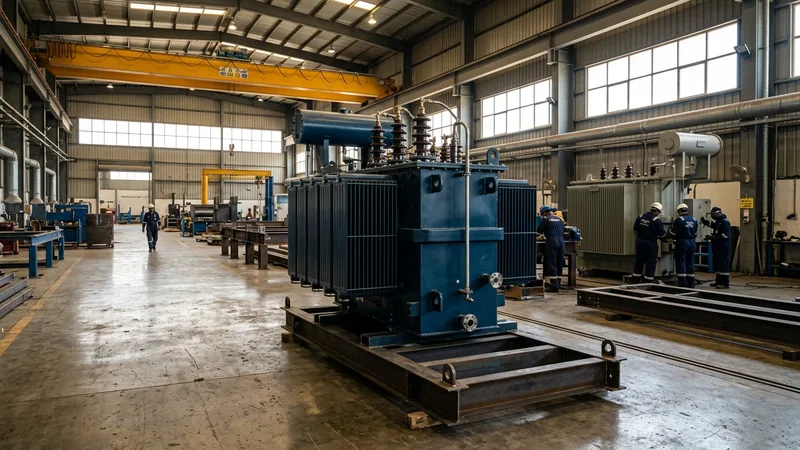
Engineers must account for "hot spot" temperatures within the windings. If the internal heat exceeds the limits of the thermally upgraded paper insulation, gas bubbles can form in the oil, leading to dielectric failure. ETS Group engineers focus on the precision of these thermal designs, ensuring that the cooling fins and radiator banks are sized not just for the average load, but for the aggressive cycling seen during these thirty days.
The Switchgear Challenge: High-Frequency Switching
It isn't just the transformers that feel the heat. The switchgear and protection systems across the distribution network are subjected to increased mechanical and electrical operations during Ramadan. As load centres shift from industrial zones to residential and commercial "tents" or festive lighting districts, the network configuration must be agile.
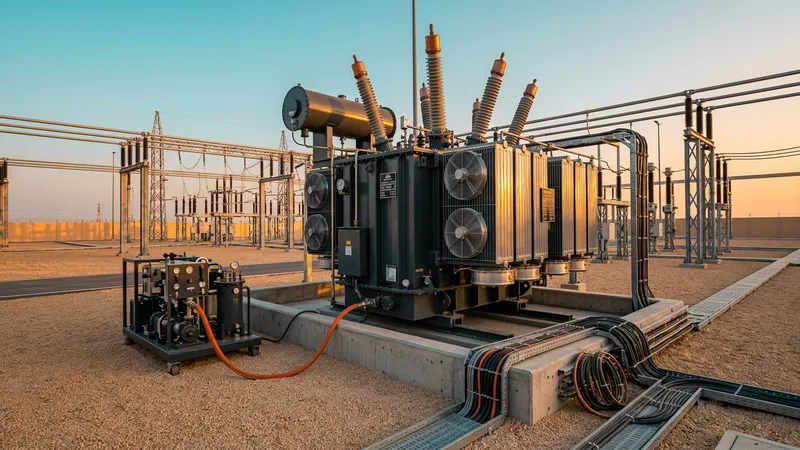
Medium voltage switchgear, governed by IEC 62271-200, must be capable of handling these fluctuating loads without excessive wear on the circuit breaker contacts. In many Gulf cities, utilities deploy temporary substations—often referred to as "package subs"—to bolster the grid in areas where communal gatherings happen. These mobile units must be robust enough to be dropped into a sandy environment, connected, and run at 100% capacity for hours on end.
The reliability of the SF6 or vacuum interrupters is paramount. A failure in a primary substation during a peak Ramadan evening is more than a technical glitch; it is a major disruption to the social fabric. Therefore, preventative maintenance cycles are usually completed months in advance, ensuring that every bolt is torqued and every relay is calibrated before the crescent moon appears.
Harmonic Distortion in the Festive Grid
An often-overlooked aspect of the Ramadan load curve is the change in the quality of the power being consumed. With the massive influx of LED decorative lighting, large-scale LED screens, and a myriad of electronic devices used during the evening hours, the harmonic profile of the load changes. This is where standards like IEEE 519 come into play, which sets the limits for harmonic distortion on the power system.
Non-linear loads pull current in pulses rather than smooth sine waves. This creates "triplen harmonics" (the 3rd, 9th, 15th, etc.) which can build up in the neutral conductor of a three-phase system. In a distribution transformer, these harmonics cause increased eddy current losses and anomalous heating.
To mitigate this, utility planners often specify transformers with a specific "K-Factor" rating or utilise Dzn11 (Delta-Zigzag) vector groups. The Zigzag winding is particularly effective during Ramadan because it can handle the unbalanced loads and harmonic currents that characterise residential surges, preventing the "neutral shift" that could otherwise damage sensitive household electronics.
Resilience Through Redundancy and Grounding
Grounding and bonding in the desert soil of the GCC is notoriously difficult due to high soil resistivity. During the high-intensity loads of Ramadan, the integrity of the earthing system becomes critical for safety and system stability. Utilities follow BS EN 50522 or ENATS 35-1 for the design of earthing systems, often employing deep-driven electrodes or earth-enhancement materials to ensure a low-impedance path to ground.
If a fault occurs during the peak Iftar surge, the grounding system must be able to dissipate the fault current safely. Without it, the "step and touch" potentials in a crowded urban area could be lethal. Furthermore, the sheer density of the load requires a high degree of "N-1" redundancy. If one transformer in a secondary substation fails under the heat, the remaining units must be able to pick up the slack without cascading into a localized blackout.
This redundancy is why many Gulf utilities favour the use of Ring Main Units (RMUs) in their distribution networks. The ability to quickly reconfigure the loop ensures that even if one segment of the cable or one transformer fails, power can be restored via an alternative path in minutes, often before the meal has even ended.
The Evolution of Load Forecasting
The digital transformation of the grid has changed how utilities view the Holy Month. In previous decades, engineers relied on "brute force" engineering—simply building bigger, heavier transformers. Today, the approach is more surgical. Smart meters and IoT sensors provide real-time data that is fed into AI-driven load forecasting models.
By analysing the movement of people and the specific timing of prayers, utilities can predict exactly where the next "hot spot" on the grid will be. This allows for proactive load shedding in non-critical industrial sectors to prioritise residential and hospital feeders. It also allows for the strategic deployment of Battery Energy Storage Systems (BESS) to shave the peak of the Ramadan curve, reducing the thermal strain on the aging infrastructure.
The result is a grid that feels invisible. Families gather, cities glow, and the machinery of the modern world continues to hum quietly in the background. It is a testament to the stringent adherence to engineering standards and the foresight of planners who understand that the grid is not just a static set of wires, but a living reflection of the culture it serves.
The Ramadan load curve is perhaps the ultimate case study in why "standard" equipment is rarely enough for the Middle East. It requires an understanding that 50 degrees Celsius is not an outlier, but a baseline, and that a peak that arrives at midnight is just as demanding as one that arrives at noon. Through the precision of IEC-compliant manufacturing and the rigors of utility-grade testing, the lights stay on, ensuring the focus remains on the spirit of the month rather than the mechanics of the power.
When the grid breathes in after sunset, it does so through the copper and steel of transformers built to endure. The thermal cycles may be punishing and the harmonics complex, but the engineering holds firm. Under the desert stars, the silent guardians of the grid ensure that the only thing fluctuating is the spirit of the season.