


It's 02:14 on a Tuesday in Riyadh and the GCCIA frequency just dipped to 49.82 Hz. Across six countries, from the mountains of Oman to the shores of Kuwait, thousands of relays and controllers stir. A generator trip in Qatar? A sudden load increase in Dubai? For a moment, it doesn't matter. What matters is the coordinated response of a system stretching 1,200 kilometers, a silent, automated ballet of electrons across the sand. This is the Gulf Cooperation Council Interconnection Authority (GCCIA) grid in action, and its quiet successes are as instructive as its occasional alarms.
The Spine of the Gulf
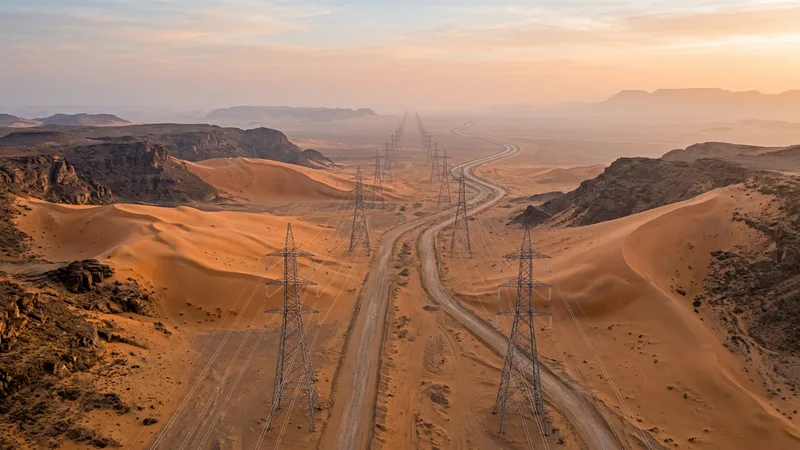
The GCCIA network isn't just another high-voltage transmission line; it's one of the most ambitious cross-border power projects in the world. At its core is a 400 kV, 50 Hz double-circuit backbone. This isn't some local distribution feeder. This is the arterial system designed to hold a region together. The main spine runs from Al-Fadhili in Saudi Arabia, arcs down through Ghunan, and connects into Salwa on the Qatari border. From these main nodes, spurs connect Kuwait, Bahrain, the UAE, and Oman, creating a unified electrical bloc.
Why does this matter? Reserve sharing. Before the interconnect, each of the six member states had to maintain its own spinning reserve—typically 15-20% of its largest generating unit—just in case of a sudden trip. That's a lot of megawatts sitting idle, burning fuel just to be ready. By pooling their reserves, the GCCIA countries can share this burden. A single, larger pool of spinning reserve, accessible to all, is vastly more efficient. The economic case is compelling: the interconnect is estimated to save the member states a collective USD 2-3 billion by reducing the need for redundant generation capacity. We're talking about deferring the construction of an estimated 2,000 MW of new power plants. Yes, really.
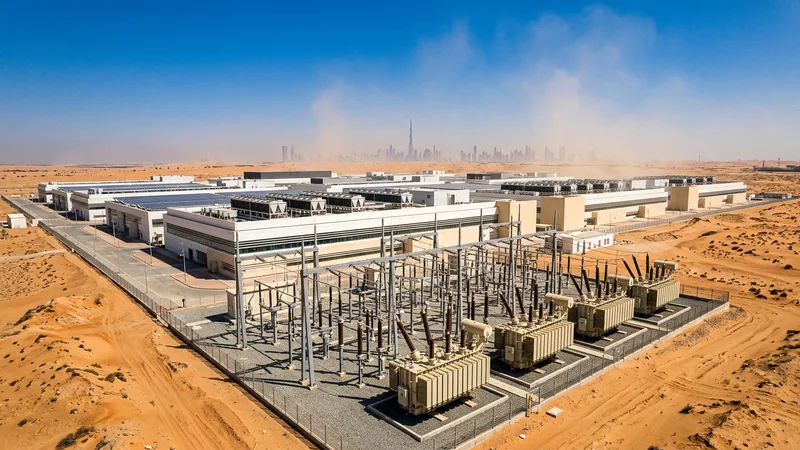
This grand design hinges on the Al-Fadhili HVDC station. Saudi Arabia's national grid operates at 60 Hz, an island in a 50 Hz sea. To bridge this gap, the Al-Fadhili station acts as a sophisticated frequency converter. It's a back-to-back HVDC link capable of pushing 1,800 MW between the 60 Hz Saudi grid and the 50 Hz GCCIA network. This isn't just a simple AC-DC-AC conversion; it's a precisely controlled gateway that allows power to flow in either direction, damping oscillations and ensuring stability between two asynchronous giants. For engineers specifying equipment on either side of this divide, understanding its behaviour is not optional. Find out more about our HVDC transformers.
A Tale of Two Frequencies
The Al-Fadhili station is where the magic happens. It's a monument to power electronics, but for the plant operator in, say, Sharjah or Manama, its existence creates subtle but critical new realities. The stability of your local 50 Hz network is now inextricably linked to a machine hundreds of kilometers away.
The core of the matter is frequency regulation. When a large generator trips in Oman, the frequency of the entire 50 Hz interconnect begins to droop. Before the interconnect, Oman's grid would have had to handle this alone, potentially leading to load shedding. Now, the inertia of the entire connected system—from Kuwait to the UAE—helps to slow the rate of frequency decay. More importantly, governors on turbines across the region respond automatically, increasing their output to arrest the fall. This is Primary Frequency Response, the first line of defence.
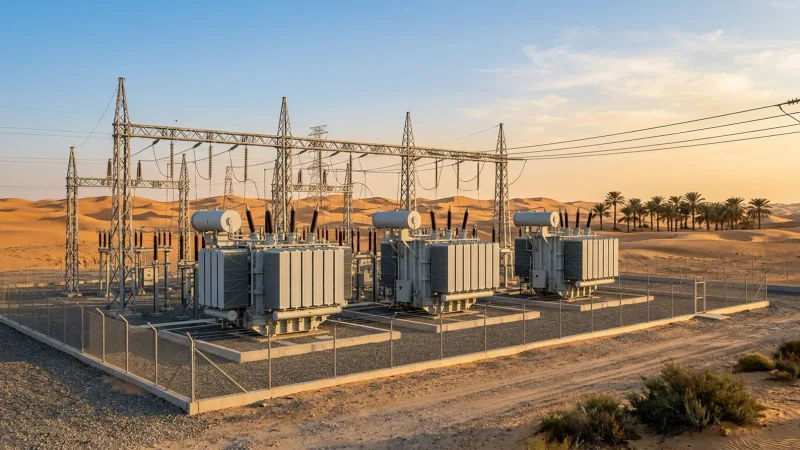
This shared responsibility has profound implications for specifying major equipment, particularly large power transformers. Transformers connected to the 400 kV backbone must be robust enough to handle the dynamic power swings inherent in such a large, interconnected system. It's not just about the MVA rating anymore.
Key considerations for transformer specification now include:
- Dynamic Overload Capability: Can the transformer handle short-term overloads as power flows shift to cover a contingency in a neighbouring country? The thermal and mechanical stresses are significant. Standards like IEC 60076 are the starting point, but the GCCIA's own grid code adds another layer of requirements.
- Voltage Regulation: With power flowing over long distances, maintaining a stable voltage profile is a constant challenge. On-load tap changers (OLTCs) on these transformers are working harder than ever. Their design, control logic, and maintenance cycles must be specified with this in mind.
- Harmonic Content: The HVDC link, for all its benefits, introduces harmonic distortions. While filters at Al-Fadhili mitigate the worst of it, any transformer connected to the 400 kV system must be designed to cope with a higher-than-normal level of harmonic content, as per IEEE C57 standards. This affects winding and core design to prevent overheating and premature aging. Need a hand with your next transformer spec? Check our design resources.
Not All kV Are Created Equal
It's a common mistake for engineers moving to the region to assume that a 400 kV transformer is a 400 kV transformer, regardless of location. The reality of the GCCIA interconnect means the context is king. A transformer destined for a generating plant in Kuwait directly tied to the interconnect backbone lives a very different life from one in a downstream distribution network.
Consider the fault levels. The combined short-circuit capacity of six interconnected grids is immense. Any switchgear or transformer connected at the 400 kV level must be rated for a dramatically higher fault level than a similar unit on a purely national grid. A breaker that could safely clear a fault on the pre-interconnect Kuwaiti grid might be wholly inadequate for the post-interconnect reality. This has been a steep learning curve for many procurement teams.
Let's talk about insulation coordination. The sheer length of the 400 kV lines makes them more exposed to lightning strikes and switching surges. While the arid climate reduces lightning density compared to other regions, the risk is not zero. A switching operation in Saudi Arabia can propagate a transient overvoltage that stresses insulation in a substation in Bahrain. This requires a holistic view of surge arrester application and BIL (Basic Insulation Level) specifications across the entire system. You can't just look at the local substation; you have to consider the neighbourhood, and the neighbourhood is now half the Arabian peninsula.
Here are a few insider "gotchas" that can trip up even seasoned engineers when specifying for the GCCIA context:
1. Ignoring the GCCIA Grid Code: It's a dense document, but it's the bible. It contains specific requirements for everything from reactive power capability to Fault Ride Through (FRT) performance that go beyond national standards. Many a G99-style application (to use a UK parallel) has been rejected for not meeting these stringent FRT requirements.
2. Underestimating Reactive Power Needs: Long transmission lines are hungry for reactive power. The interconnect relies on a distributed network of shunt reactors and STATCOMs to manage voltage. But generating plants and major substations are also required to contribute. Your transformer and generator specs must account for the required Mvar range, both leading and lagging.
3. Forgetting about N-1 (and N-2) Contingencies: The system is designed to be 'N-1' secure, meaning it can withstand the loss of any single major component (like a line or large generator). But planners are increasingly looking at N-2 scenarios. This means your equipment may need to function under even more stressed voltage and frequency conditions than the baseline models suggest. Explore our range of compliant switchgear for these demanding environments.
The View from the Control Room
For the system operator, the GCCIA interconnect is both a blessing and a complex puzzle. The enhanced stability and reserve sharing are undeniable wins. But the increased interconnectivity also means that a disturbance can propagate further and faster. A cascading failure, while less likely overall, has the potential to be far more widespread.
This places a premium on high-speed communications and coordinated control. The GCCIA's control centre in Ghunan is the nerve centre, monitoring thousands of data points in real-time. But effective control also depends on the local level—the settings on a distance relay in a substation near Muscat, the governor response of a turbine in Abu Dhabi, the OLTC controller on a transformer Bank in Doha.
This interconnectedness should change how plant operators and maintenance managers think. That transformer oil analysis or busbar inspection is no longer just about local reliability; it's about contributing to the stability of a regional super-grid. An unexpected trip of a major asset can have financial and stability implications for five other countries. It's a level of shared responsibility that is still a relatively new concept in a region historically defined by sovereign grid operations.
Key Takeaways
- The 400 kV GCCIA backbone enables massive spinning reserve savings by pooling the generation capacity of six countries, but places new demands on equipment.
- The Al-Fadhili HVDC station is the critical link, bridging the 60 Hz Saudi grid and the 50 Hz GCC grid, but also introducing power quality considerations like harmonics.
- Specifying transformers and switchgear for the GCC grid requires a deep understanding of the GCCIA Grid Code, which has stringent requirements for fault levels, voltage regulation, and dynamic performance that exceed typical national standards.
The Engineer's Takeaway
The GCC Interconnect is a masterclass in seeing the bigger picture. It proves that grid-level thinking can't stop at the border. For the engineer on the ground, it means your specifications for a transformer or a circuit breaker are no longer just a local decision; they are a contribution to one of the most complex and critical energy systems in the world.