




It’s 03:17 on a Sunday morning, and somewhere in a makeshift office overlooking the construction site at NEOM, a lead electrical engineer is staring at a simulation. It’s not the 4 GW of solar and wind input that’s causing the frown, nor the 2 GW of target electrolyser load. It’s a single, stubborn number on the screen: a Total Harmonic Distortion projection hovering just north of 7%. For a grid connection that legally demands under 5%, that number is a project-killer hiding in plain sight, born from the innocuous-sounding rectifier transformer.
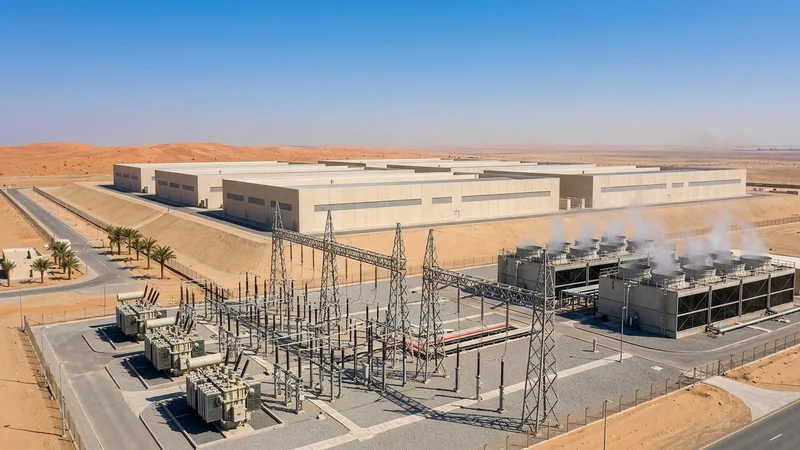
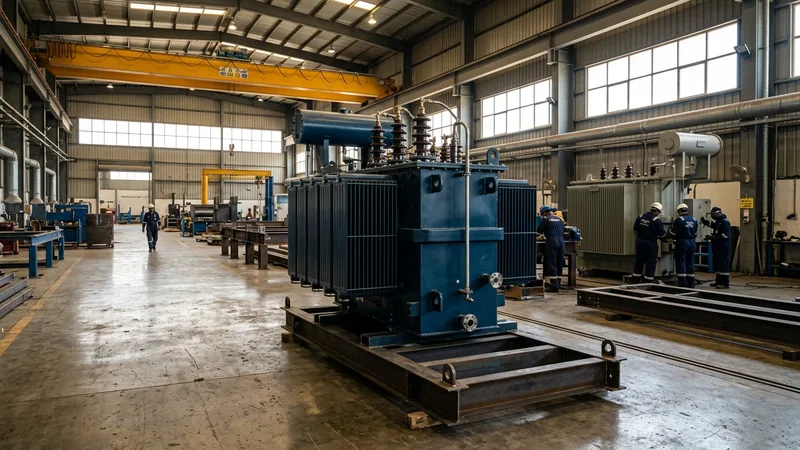
Green hydrogen headlines are filled with gigawatts, billions of dollars, and epic export ambitions. From Oman's Hyport Duqm to Masdar's planned mega-projects, the vision is grand. But for the engineers tasked with building it, the success or failure often comes down to the unglamorous, house-sized steel boxes that sit between the renewable generation and the electrolysers themselves. Get the transformer specification wrong, and you don’t just risk inefficiency; you risk non-compliance, catastrophic failure, and delays that make multi-billion-dollar investments shudder.
The Unseen Culprit: Harmonic Distortion
The Problem: Your multi-gigawatt electrolyser bank isn’t a simple resistive load. It’s a giant power electronics device—a non-linear load. The rectifier units, which convert massive amounts of AC power from the grid or dedicated renewables into the DC power needed for electrolysis, don’t draw current in a clean sine wave. Instead, they take gulps of current at the peaks of the voltage waveform.
The Mechanism: This process, managed by high-power thyristors or IGBTs, injects harmonic currents back into the AC system. These are currents at multiples of the fundamental frequency (50 Hz in the GCC). Think of it as electrical noise. A standard 6-pulse rectifier, the simplest configuration, is a notorious generator of 5th, 7th, 11th, and 13th harmonics.
The Consequence: These harmonic currents distort the voltage waveform for everyone else connected to that part of the grid. The effects are insidious:
- Equipment Overheating: Other transformers, motors, and cables start to heat up as they are forced to carry these junk frequencies.
- Protection Malfunctions: Sensitive relays can misinterpret the distorted waveforms, leading to nuisance tripping.
- Grid Code Violations: The GCC Interconnection Authority Grid Code, like most grid codes, is strict. It sets a limit for Total Harmonic Distortion (THD) at the point of common coupling, typically 5% for voltage. A 2 GW plant that pollutes the grid is a non-starter.
The Solution: You cannot use a "standard" transformer and hope for the best. The solution lies in the rectifier transformer’s design itself and a system-level approach. Engineers can specify multi-pulse rectifier configurations. By using phase-shifting windings in the transformer to create multiple, phase-displaced 6-pulse rectifier outputs, you can cancel out lower-order harmonics.
1. 12-pulse: Uses two secondary windings, one wye and one delta, creating a 30-degree phase shift. This cancels the 5th and 7th harmonics.
2. 24-pulse: Combines four 6-pulse bridges with precise phase-shifting windings to cancel the 11th and 13th harmonics as well.
3. 48-pulse and higher: For gigawatt-scale projects, these highly specialised designs become necessary to meet stringent grid codes without relying entirely on expensive external filters.
The transformer is no longer just a transformer; it’s an active harmonic-mitigation device. Specifying this upfront is the difference between a clean grid connection and a very expensive filtering problem. Find more on transformer architectures on our main transformer products page.
Your Power Factor is Appalling
The Problem: The same power electronics that create harmonics also tend to wreak havoc on power factor—the measure of how efficiently current is converted into useful work.
The Mechanism: Simple, phase-controlled rectifiers draw reactive power from the grid in addition to the real power (kW) doing the work of electrolysis. Reactive power (kVAr) does no useful work but still requires current, meaning the overall "apparent power" (kVA) drawn from the grid is much higher than the power being used.
The Consequence: A poor power factor (e.g., 0.8) means for every 1 MW of useful power, you are drawing 1.25 MVA of apparent power. This has a direct financial and engineering impact. It means higher currents, which in turn means fatter, more expensive cables, larger switchgear ratings, and higher resistive losses (I²R losses) in every component upstream. Your entire electrical infrastructure, from the substation switchgear to the GSU, must be oversized—and paid for—just to carry current that does no work. Utility providers in the region also often impose stiff financial penalties for poor power factor.
The Solution: You cannot simply ignore it. The specification must attack reactive power compensation head-on. Modern rectifier systems (using technologies like PWM - Pulse Width Modulation) can be designed for near-unity power factor. For more traditional systems, large static VAR compensators (SVCs) or STATCOMs may be required. These are significant pieces of equipment in their own right. A more elegant solution is to demand better performance from the rectifier package itself, placing the burden on the vendor to deliver real power without the reactive power penalty.
A Load Unlike Any Other
The Problem: An electrolyser is a relentlessly punishing electrical load. For a transformer, this is a far cry from the variable loading of a typical distribution network.
The Mechanism: To make green hydrogen economically viable, the electrolysers must run at very high capacity factors, often aiming for >90% utilisation. This means the rectifier transformers will be running at or near their nameplate rating, 24/7, for years. Furthermore, any slight imbalance in the DC-side can result in a small DC current component being reflected into the transformer’s AC windings.
The Consequence: A standard distribution or power transformer is not designed for this duty.
- Constant High Load: Continuous operation at maximum rating generates immense thermal stress. It finds the weakest point in your cooling system and accelerates the aging of insulation paper, drastically shortening the transformer’s life.
- DC Flux: Even a small amount of DC current can begin to saturate the transformer core. This leads to a sharp increase in magnetising current, core overheating, and a distinct, unpleasant audible hum. It’s a sign of a transformer in distress.
The Solution: You must specify a true rectifier-duty transformer, built to standards like IEC 61378 ("Converter Transformers"). These are not off-the-shelf items. They are engineered with specific features to handle the abuse:
- Uprated Cooling: Often designated ONAN/ONAF/OFAF, with multiple stages of cooling to handle the constant thermal load.
- Reinforced Windings: Mechanical bracing to withstand the electromagnetic forces unique to rectifier operation.
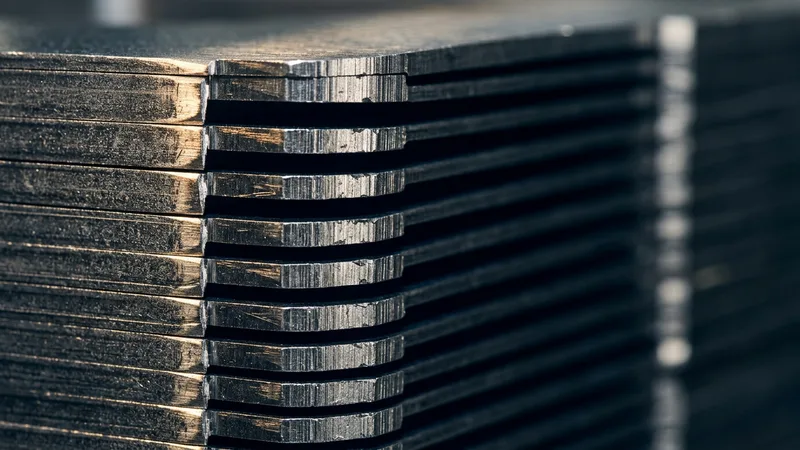
- Special Core Design: Cores designed with a higher magnetic flux density margin to avoid saturation from potential DC components.
Buying a standard IEC 60076 transformer for a 2 GW electrolysis plant is like using a family sedan to haul two tonnes of gravel. It works, for a while, until it doesn’t.
Stepping Up is Hard to Do
The Problem: The power has to get from the electrolyser complex to the high-voltage grid. This involves a Generator Step-Up (GSU) transformer, but the "generator" in this case has a very peculiar character, driven by the intermittent nature of its renewable fuel source.
The Mechanism: A 4 GW renewable park feeding a 2 GW electrolyser has a complex relationship. On a perfect, sunny, windy day, you’re running at full tilt. But when a cloud bank rolls in, solar output can drop by 70% in minutes. The electrolyser control system will react, ramping down the DC load. This variability is seen by the GSU connecting the plant’s 33 kV or 66 kV collector bus to the 132 kV or 400 kV transmission network.
The Consequence: This creates a punishing cyclic load on the main GSU. Unlike a conventional power plant with a steady steam turbine, this GSU will see frequent, rapid load fluctuations. This causes thermal cycling—expansion and contraction of the windings and core—which is a primary aging factor. It stresses the winding insulation and can lead to premature failure. Furthermore, large voltage swings on the medium-voltage bus due to load changes need to be managed to maintain a stable export voltage, as mandated by the grid operator.
The Solution: The GSU must be specified for this specific duty. This means ordering a transformer designed for a high number of thermal cycles. An on-load tap changer (OLTC) is also critical, but it too must be specified for a much higher number of operations than a typical GSU would see in its lifetime. The entire system—renewable resource, battery storage (if any), electrolyser control, and GSU—must be modelled as a single dynamic entity to ensure the components aren’t specified in isolation. For complex projects, our team is ready to assist; you can contact our regional experts for a consultation.
Key Takeaways
- Harmonics & Power Factor Are Not Details: For gigawatt-scale electrolysis, they are foundational design problems. Solving them with transformer specifications is vastly cheaper than solving them with large, external filter banks and STATCOMs after the fact.
- Not All Transformers Are Equal: A rectifier transformer for an electrolyser is a bespoke piece of engineering, fundamentally different from a standard power transformer. Specifying to IEC 61378 is a starting point, not an afterthought.
- System-Level Thinking is Mandatory: The GSU, rectifier transformer, and electrolyser controls are one dynamic system. Specifying them in isolation is a recipe for reliability issues, thermal-cycling-induced failures, and a shortened asset life.
The Engineer's Takeaway
The headlines will always focus on the gigawatts of hydrogen produced. But the success of these monumental projects will be written in the quiet, exacting language of a transformer specification sheet. Get that right, and you’re not just building a plant; you’re building the future’s energy backbone.