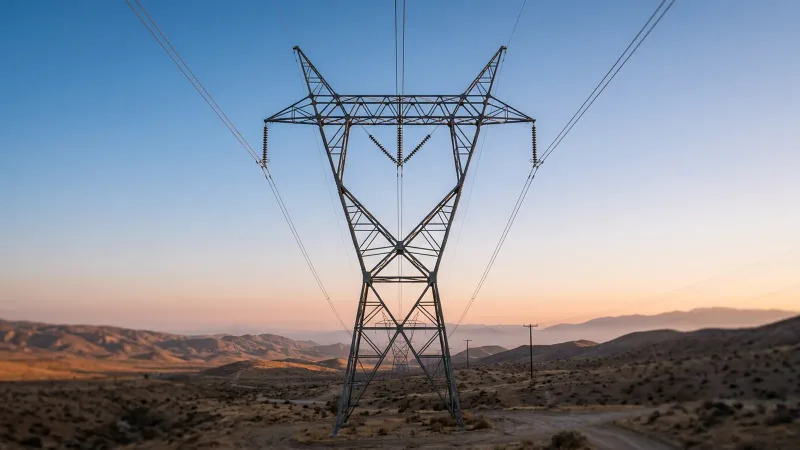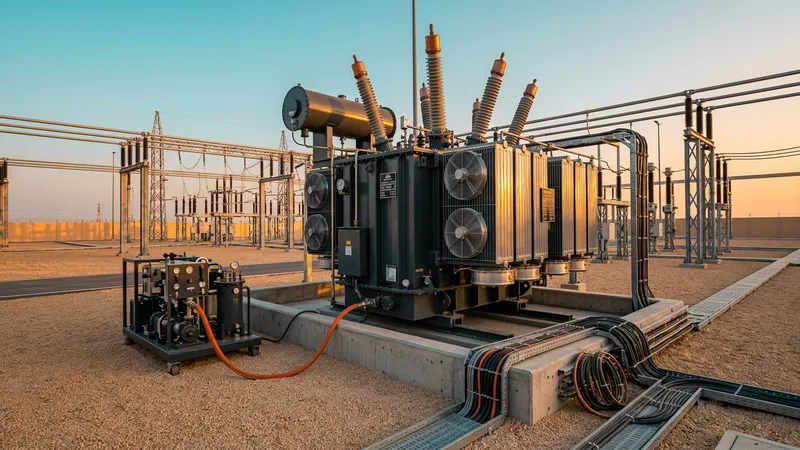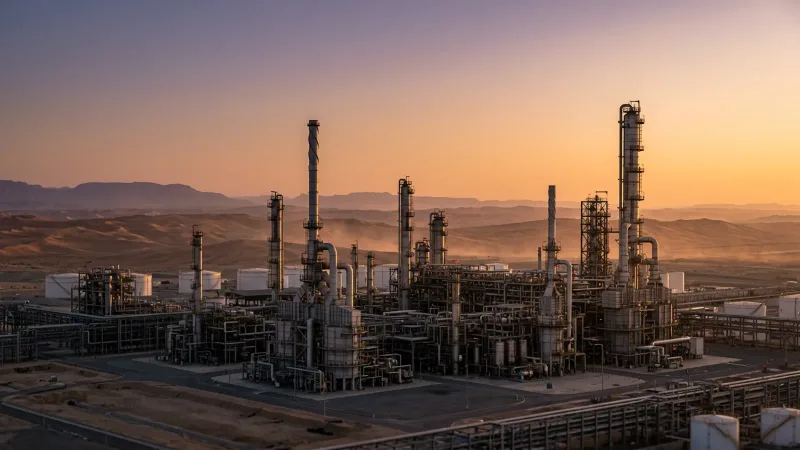






Imagine standing in the middle of a substation in the outskirts of the Empty Quarter. The air is not just hot; it is a physical weight, shimmering at a relentless 50°C in the shade. For a human, this is a survival scenario. For a power transformer, it is a thermodynamic battlefield. Inside that steel tank, thousands of litres of oil and miles of copper winding are generating their own internal furnace, fighting against an external environment that refuses to accept their waste heat. This is the reality of the GCC substation, where the laws of physics and the harshness of the desert sun converge to test the limits of electrical engineering.
In temperate climates, cooling is often treated as a steady-state secondary concern. In the Gulf, cooling is the primary design constraint. It dictates the footprint, the cost, and ultimately, the lifespan of the most critical node in the grid. To understand how these giants survive, we must look past the heavy steel and into the microscopic degradation of cellulose, the fluid dynamics of convection, and the rigorous standards that keep the lights on when the mercury hits the ceiling.
The Silent Killer: Thermal Degradation and the 6-Degree Rule
To a power transformer, temperature is not just a measurement—it is a countdown. The core and windings are wrapped in high-quality cellulose paper, submerged in insulating oil. This paper is the transformer's Achilles' heel. While the steel core can theoretically last for centuries, the organic insulation degrades over time, becoming brittle and losing its dielectric strength. This process of aging is governed by chemical kinetics, specifically the Arrhenius equation.
Well-established industry guidance from the IEEE and IEC provides a sobering rule of thumb for utility engineers: for every 6°C to 8°C that the winding hot-spot temperature exceeds its design limit, the thermal life of the insulation is roughly halved. In a region where the ambient air temperature can already sit 20 degrees higher than European design norms, the margin for error evaporates. If a transformer designed for a 20°C average ambient is dumped into a 50°C desert environment without significant modification, its decades-long expected lifespan can be reduced to a handful of years.
This is why the "hot-spot temperature" is the most scrutinized metric in GCC substation operations. It isn't just about the average oil temperature; it is about the most thermally stressed point deep within the winding assembly. If that point crosses the threshold where the cellulose begins to decompose rapidly, the transformer is effectively eating itself from the inside out. Preventing this requires a fundamental shift in how we apply international standards like IEC 60076-2.
Challenging the Standard: IEC 60076-2 in the Gulf Context
The IEC 60076-2 standard is the global benchmark for temperature rise testing, but it assumes a set of "normal" operating conditions that are rarely met in the heart of the Middle East. Standard reference ambient temperatures typically assume a 20°C yearly average and a 30°C peak. In the UAE and neighbouring states, those figures are fundamentally mismatched with reality, where summer afternoon peaks frequently eclipse 50°C and even the 'average' ambient over 24 hours can stay well above the 40°C mark.
Consequently, a transformer rated for 100MVA in a temperate climate cannot be rated for 100MVA in a GCC desert substation. The "rated capacity" in this context is a more conservative, hard-won figure. Engineers must de-rate the equipment or, more commonly, over-engineer the cooling systems to compensate for the lack of a thermal gradient. Heat transfer relies on the difference between the temperature of the radiator surface and the ambient air. When that air is already at 50°C, the "delta" is significantly narrowed, making it much harder to push heat out of the system.
To bridge this gap, designers utilise a hierarchy of cooling stages, moving from passive to active systems:
- ONAN (Oil Natural, Air Natural): The baseline state where oil circulates via thermosiphon effect and air moves across radiators by natural convection. In the Gulf, this is rarely sufficient for any significant load during daylight hours.
- ONAF (Oil Natural, Air Forced): The first line of defence. High-velocity fans are triggered to blast air across the radiator fins. This increases the heat transfer coefficient, allowing the unit to maintain its rating as the sun rises.
- OFAF (Oil Forced, Air Forced): In the most demanding high-capacity units, pumps are introduced to drive the oil through the heat exchangers at a specific flow rate. This ensures that the oil doesn't just sit in the tank and soak up heat, but actively carries it to the radiator banks for expulsion.
Engineering the Desert-Tough Transformer
Compensating for a 50°C ambient environment requires more than just bigger fans. It demands a holistic redesign of the transformer's physical and chemical makeup. The first and most visible change is the size of the radiator banks. To achieve the same cooling effect in the desert as in a cooler climate, the surface area must be significantly increased. It is not uncommon to see desert-spec transformers with radiator arrays that appear disproportionately large compared to the main tank.
Beyond surface area, materials science plays a critical role. High-class insulation materials, such as thermally upgraded paper (TUP), are standard. These materials are chemically treated to be more resistant to the hydrolytic and oxidative degradation that occurs at elevated temperatures. Furthermore, the choice of insulating fluid is shifting. While traditional mineral oil is the workhorse of the industry, synthetic and natural esters are gaining traction in GCC substations. Esters have a much higher fire point and flash point, providing an inherent safety margin in extreme heat, but they also offer superior moisture-wicking properties, which helps protect the paper insulation from the accelerated aging caused by moisture in a hot environment.
Another critical factor is the "Skin Effect" and eddy current losses. At high temperatures, the resistivity of the copper windings increases, which in turn increases the load losses (I²R). This creates a vicious cycle: heat leads to more heat. Engineering for the Gulf means minimising these losses through optimised winding profiles and using continuously transposed conductors (CTC) to reduce circulating currents and localized hot-spots.
The Dust Factor: Maintenance in the Arid Zone
In the desert, heat has a silent accomplice: dust. Fine, silica-rich sand is ubiquitous, and it is the enemy of every ONAF cooling system. As fans pull massive volumes of air through radiator fins, they also pull in dust. This dust settles on the cooling surfaces, creating a literal thermal blanket that insulates the radiator and prevents heat from escaping.
Even a thin layer of desert silt can degrade radiator effectiveness by a significant margin. If left unchecked, the transformer's internal temperature will creep upward, even if the fans are running at full speed. This makes washing schedules a critical part of utility maintenance in the GCC. Unlike transformers in rain-heavy regions where nature provides a free cleaning service, desert units require pressurized water washing to clear the fins. Furthermore, the design of the radiators themselves must account for this; fins are often spaced more widely to prevent clogging and to allow for easier cleaning access.
Corrosivity is another concern. In coastal areas of the UAE, the combination of high heat, humidity, and airborne salts creates one of the most corrosive environments on Earth. Here, the cooling engineering must include high-spec C5-M (Marine) grade paint systems or even galvanized radiators to ensure that the cooling fins don't disintegrate before the transformer reaches its mid-life point.
A Conservative Philosophy of Power
Ultimately, the engineering of a power transformer for a 50°C ambient environment reflects a more conservative, resilient philosophy of power distribution. When a utility engineer in the Gulf looks at a nameplate rating, they know that every kilowatt of that capacity has been fought for against the elements.
While a transformer in a temperate climate might be pushed to its limits during occasional heatwaves, a GCC unit lives at those limits for months every year. The result is a machine that is, by necessity, a triumph of over-engineering. It features larger enclosures, more robust fluid systems, and advanced monitoring sensors—such as fibre-optic probes embedded directly in the windings—to provide real-time data on the true hot-spot temperature. In the unforgiving heat of the desert, white-box engineering gives way to specialised expertise, ensuring that even as the landscape swelters, the infrastructure remains cool, composed, and connected.