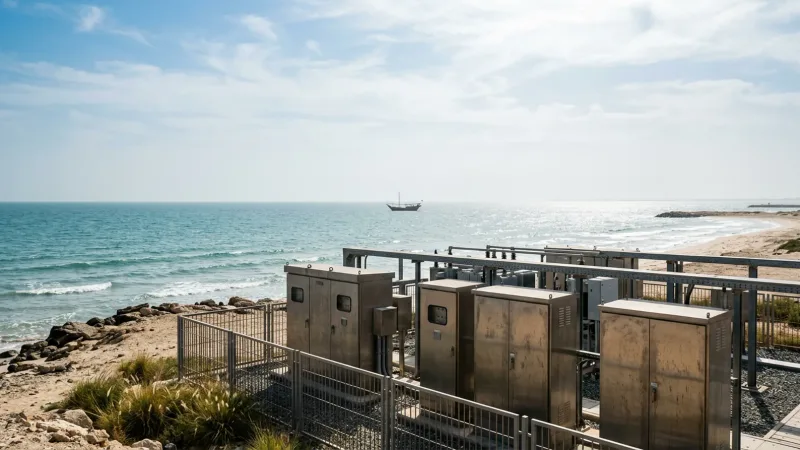
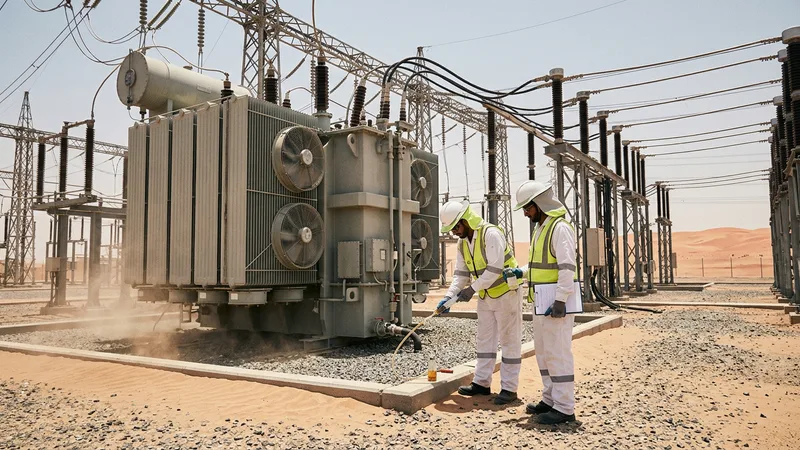
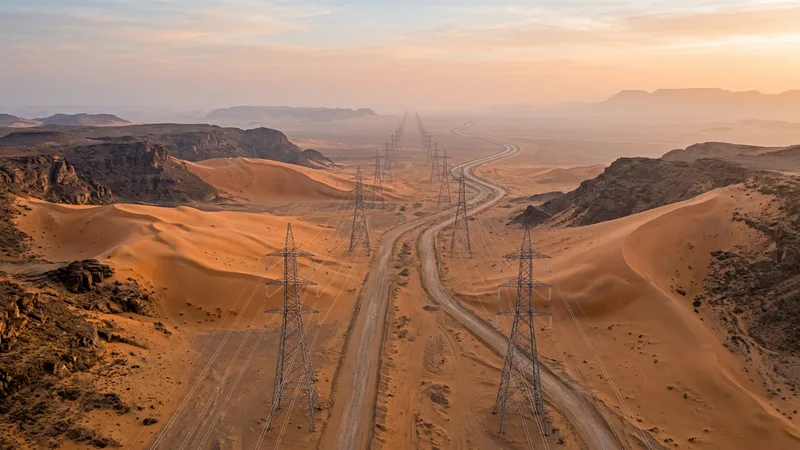
's 14:37 on a Wednesday in Jubail, the industrial heart of Saudi Arabia, and a 115/13.8 kV transformer trips offline. It is, to put it mildly, a very bad time for a fault. Downstream, a critical processing unit begins the costly sequence of a shutdown. For a moment, the local grid flickers. The ripple effect isn't just a technical inconvenience; it’s a multi-million-dollar cascade failure measured in lost production, emergency manpower, and the distinct displeasure of the world's most valuable company. This is why supplying equipment to Saudi Aramco is not like any other procurement process on earth.
The High Cost of ‘Close Enough’
For an entity whose daily operations underwrite a significant portion of a nation's GDP, equipment reliability is not a feature; it is *the* feature. A single percentage point of unplanned downtime can translate into staggering financial losses. This reality has forged an engineering and procurement culture at Saudi Aramco that is meticulous, demanding, and, to outsiders, borderline impenetrable. The cost of failure is simply too high to accommodate suppliers who believe "good enough" is good enough. Aramco’s entire qualification system is designed to filter out ambiguity. They are not buying a transformer; they are buying 30 years of uninterrupted service in one of the planet’s harshest operating environments, where ambient temperatures can kiss 50°C and airborne dust and salinity are a constant assault. Your standard IEC 60076-compliant transformer, while a perfectly respectable piece of engineering for a temperate climate, might not survive a decade in the field here without specific, mandated modifications. This is the core problem: many manufacturers, even those with decades of experience, fundamentally misunderstand what is being asked of them. They see a technical specification; Aramco sees a risk mitigation document. Decoding the 9COM and JIPP-3 Gauntlet
To control this risk, Aramco deploys two key instruments: the 9COM material codification system and the Joint Industrial Procurement Program (JIPP). Think of them as the gatekeeper and the key. The 9COM is a unique 9-digit number assigned to every single approved material item, from a screw to a 500 MVA power transformer. If your product doesn’t have a 9COM, it doesn’t exist in Aramco’s world. Getting one is the prize. The JIPP is the process of earning that prize. It is a rigorous, multi-stage, third-party qualification program that validates a manufacturer’s capability to consistently produce equipment to Aramco’s standards. It’s not a one-time type test. It’s an exhaustive audit of your design, your manufacturing process, your quality control, and your supply chain. This is where most aspiring suppliers meet their first wall. They fail to appreciate that JIPP-3 qualification is less about the transformer itself and more about the institutional discipline of the company that builds it. When Good Transformers Get Rejected
The consequence of failing to navigate this system is brutal and swift: your bid is rejected. Often without detailed feedback. You may have the most efficient, technologically advanced transformer on the market, but if it fails to meet a specific clause in a Saudi Aramco Engineering Standard (SAES) or Material System Specification (SAMSS), it is non-compliant. Case closed. This leads to immense frustration. We’ve seen world-class European manufacturers get disqualified for something as seemingly minor as the paint finish or the brand of the buchholz relay. The common thread is a failure to read and adhere to the letter of the standard. Here are some of the most common failure modes for transformer suppliers: * Incomplete Test Dossiers: Submitting a standard factory acceptance test (FAT) report is not enough. Aramco requires a comprehensive dossier including all routine tests, type tests (like temperature rise and lightning impulse), and special tests as mandated by the relevant SAMSS, often witnessed by a third-party inspector. * Non-compliant Components: Using a winding temperature indicator or pressure relief device from a vendor not on Aramco’s Approved Vendor List (AVL) is an automatic disqualification. * Incorrect Paint and Coating Systems: The specifications for corrosion protection (e.g., APCS-26) are incredibly detailed and designed for extreme maritime and desert environments. Using a different system, even a high-quality one, is a non-starter. * Documentation Errors: Submitting drawings, calculations, and documents with incorrect naming conventions or incomplete information. The review process is a test of your attention to detail. This isn’t just about losing a single order. A an unsuccessful JIPP qualification can effectively lock a manufacturer out of the direct Aramco supply chain for years, relegating them to the lower tiers of the market. And word gets around. 7 Pitfalls to Avoid in Your Aramco Submission
Navigating the specifics of the 9COM/JIPP-3 process is an exercise in precision. Based on our experience guiding manufacturers through the process, these are the seven most common—and avoidable—mistakes. 1. Ignoring the SAMSS: You must treat the specific 32-SAMSS document (e.g., 32-SAMSS-004 for power transformers) as your bible. It supersedes the IEC standard. Where they conflict, the SAMSS wins. Every. Single. Time. 2. Underestimating Local Content (IKTVA): Aramco’s In-Kingdom Total Value Add program is not a suggestion. A significant portion of your bid evaluation will depend on your IKTVA score, which measures your contribution to the local Saudi economy. A bid with a low IKTVA score is at a huge disadvantage, even with a lower price. 3. Using Non-Approved Sub-Vendors: That buchholz relay, that tap changer, those bushings—every critical component must come from a vendor on Aramco’s own approved list. No exceptions. It’s your responsibility to check the list, not the EPC’s. 4. Failing the Factory Audit: The JIPP audit team will scrutinize your entire process, from how you receive raw copper to how you calibrate your torque wrenches. They are looking for documented, repeatable, and verifiable quality control at every step. A clean workshop and a thick quality manual are not enough. 5. Submitting Generic Technical Data: Your submitted drawings, datasheets, and calculations must be specific to the project and reflect every requirement in the SAMSS. Copy-pasting from a previous project is a recipe for rejection. They will check. Yes, really. 6. Skipping the Pre-Qualification: Before you even think about bidding, engage with the qualification bodies and understand the exact requirements. Seeking pre-qualification or a preliminary review can save months of wasted effort and expense. Don’t be afraid to ask for clarification. 7. Treating EPCs as Your Customer: When supplying through an EPC contractor, it’s easy to think they are the end client. They are not. Aramco is the ultimate client, and their standards are the only ones that matter. The EPC is merely the channel. You must ensure your offer is fully compliant with Aramco’s standards, even if the EPC’s initial RFQ is less detailed. For those who find the direct route too daunting, there is another way in. Many successful suppliers enter the market by working with approved package substation manufacturers who have already mastered the standards and can integrate third-party equipment into their qualified designs. This can be a strategic entry point to build experience and credibility within the Kingdom. The Engineer's Takeaway
The stringency of Saudi Aramco’s procurement process is not bureaucracy for its own sake. It is a carefully engineered defence mechanism born from decades of operating critical infrastructure in an unforgiving environment. The immense paperwork, the relentless audits, and the microscopic attention to detail are the price of admission to a market that values certainty above all else. For the engineer, the lesson is clear: in this arena, compliance is a more valuable currency than innovation. First, you master the rules. Then, and only then, you play the game.