





February 2021 took 26.5 GW of generation off the ERCOT system and held it off for ninety-six hours. The forensic story below the transmission level is rarely told: pad-mount transformers that survived the storm continued to fail months later, the cumulative damage of a single deep-cold cycle exceeding what the standards anticipated. This piece documents how Texas distribution utilities rewrote the spec.
The Billion-Dollar Blind Spot
For decades, specifying a distribution transformer in Texas, and indeed most of the US, was an exercise in managing heat. Engineers rightly focused on winding temperature rise, peak loading, and high ambient temperatures. The entire thermal design philosophy, codified in standards like IEEE C57, was about getting heat *out*. Little thought was given to what happens when extreme cold gets *in*. The default insulating fluid, conventional mineral oil, has served the industry for a century. It’s well-understood, effective, and cheap. But it has an Achilles’ heel: a high pour point, the temperature at which it ceases to flow.
During the prolonged deep freeze of Winter Storm Uri, this blind spot cost billions. As ambient temperatures plunged and held below freezing for days, the mineral oil in transformers began to thicken. This is not a subtle change. Its viscosity climbs exponentially as it cools, eventually reaching a gel-like state. When this happens, the fluid can no longer properly circulate and perform its two primary jobs:
- Insulating: The gelled fluid can contract and pull away from bushings and windings, creating voids that compromise dielectric strength and lead to internal faults.
- Cooling: Convection, the natural circulation of fluid that transfers heat from the core and coils to the tank walls, stops completely. Any load on the transformer creates hot spots that cannot be cooled, leading to rapid overheating and failure.
Thousands of transformers, perfectly healthy on paper, effectively choked themselves. Crews dispatched to restore power to a neighborhood would find the upstream breaker tripped. They’d test the line, find no obvious fault, re-energize, and the feeder would immediately trip again. The culprit was often a transformer that, under load, was experiencing an internal fault due to solidified oil, creating a dead short. The scale of the problem was staggering, leaving utilities like Oncor and CenterPoint scrambling to diagnose and replace units in the midst of a historic blackout.
A Thick Problem: Yesterday’s Oil
The physics of cold-weather transformer failure isn’t new, but the widespread impact in a typically hot climate like Texas was unprecedented. The key variable is the pour point of the insulating liquid. Standard Type II mineral oil often has a pour point around -20°C (-4°F), but its viscosity begins to skyrocket long before that. At 0°C (32°F), it’s already significantly thicker than at its operating temperature. By the time it reaches -15°C (5°F), it can be too thick to permit natural convection.
In February 2021, large swaths of Texas spent over 96 consecutive hours below freezing. This prolonged "cold soak" was the critical factor. A short dip in temperature wouldn't be enough to cool the entire oil volume of a transformer, but multiple days gave the cold time to penetrate fully. Once the oil’s mobility was compromised, even a modest return of load as the grid attempted to recover was enough to trigger failure. Hot spots on the windings would form in minutes. The result was a cascading effect: a transformer fails, its load is shed to adjacent transformers (if on a loop feed), which then become more likely to fail themselves.
This is where the material science conversation shifted. For years, natural and synthetic ester fluids have been available as high-performance alternatives to mineral oil. Their primary selling point was their high fire point (over 300°C vs. mineral oil’s ~160°C), making them ideal for indoor, high-risk, or densely populated locations. But they have another property that was suddenly mission-critical: vastly superior cold-weather performance. A typical natural ester fluid has a pour point below -20°F and maintains a low enough viscosity to allow convection even at temperatures that would turn mineral oil into wax.
From Blackout to Blueprint: Mandates and Retrofits
The legislative and regulatory response was swift. The Texas Legislature passed Senate Bill 3, a sweeping piece of legislation mandating the weatherization of the state’s energy infrastructure. While much of the focus was on generation and gas supply, the bill empowered the Public Utility Commission of Texas (PUC) to set new weatherization standards for transmission and distribution systems. ERCOT, in turn, began incorporating these requirements into its protocols.
This put the onus on utilities to address the transformer vulnerability. For asset managers at major distribution network operators (DNOs), the question became: what does "weatherization" for a pad-mounted transformer actually mean? It spawned a massive effort to identify, triage, and harden the most at-risk assets. The approach generally involves a combination of three strategies:
1. Identification: Using GIS data and asset records, utilities began mapping the location of all transformers filled with standard mineral oil, often prioritizing those in critical locations like hospitals, fire stations, and key commercial corridors.
2. Strategic Replacement: In many cases, the most cost-effective solution is a full replacement of an old or vulnerable mineral oil-filled unit with a new transformer filled from the factory with natural ester fluid. This is often scheduled to coincide with other system upgrades or end-of-life replacements. Check out our transformer products to see the latest specs.
3. Fluid Retro-filling: For newer or larger transformers where a full replacement is not economical, crews can perform a "drain-and-fill." The existing mineral oil is drained, the transformer is flushed, and it is then refilled with ester fluid. This is a complex procedure that requires specialized equipment to maintain the dielectric integrity of the transformer.
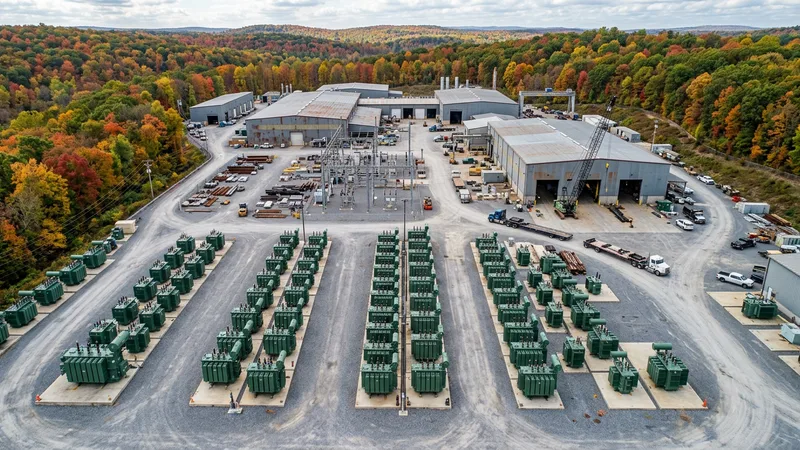
This is more than just an academic exercise. Major Texas utilities have initiated multi-year, multi-million-dollar programs to harden their distribution grids. They are systematically working through their service territories, creating a more resilient system one green box at a time. For engineers on the ground, this means new procedures, new training on handling ester fluids, and a new way of thinking about thermal management that now includes a floor as well as a ceiling. It’s a foundational shift in asset strategy.
The Future: An Ester-Filled Grid?
The push toward ester fluids is not just a cold-weather solution; it represents a broader trend. As utilities become more focused on environmental, social, and governance (ESG) goals, the properties of natural esters become even more attractive.
- Fire Safety: The high fire point dramatically reduces the risk of pool fires, a major concern in dense urban and suburban areas. This simplifies siting requirements and can lower insurance costs.
- Environmental Profile: Natural esters are biodegradable and non-toxic. A spill from a mineral oil transformer can require costly and disruptive environmental remediation. An ester fluid spill does not.
- Performance: Esters have a high moisture tolerance, which can extend the life of the cellulose insulation inside the transformer, potentially deferring replacement costs.
Of course, no solution is a silver bullet. Ester fluids are more expensive than mineral oil on a per-gallon basis, and until recently, their supply chain was not as robust. However, as adoption increases and production scales, that cost differential is narrowing. The calculus for utility planners is changing. The upfront cost of an ester-filled transformer is now weighed against the avoided cost of a cold-weather failure, the reduced fire risk, and the environmental benefits. Need to run the numbers for your next project? Our team can help you analyze the total cost of ownership; start the conversation on our /us/en/contact page.
The adoption of these fluids is indicative of a larger philosophy taking hold in grid design: building for resilience against a wider range of threats. The weatherization standards born from SB 3 are just the beginning. The next frontier will involve hardening the entire system, from the SCADA software that models load to the physical components like the switchgear and reclosers that operate in these extreme conditions.
Key Takeaways
- Pre-Uri transformer specifications focused almost exclusively on heat dissipation, creating a systemic vulnerability to prolonged cold-soak events which cause mineral oil to gel.
- The primary physical failure mechanism was the cessation of convective cooling due to high oil viscosity, leading to rapid overheating and internal faults under load.
- Natural ester fluids provide a direct solution, offering superior cold-weather performance (lower pour point) and the co-benefit of a much higher fire point, enhancing safety and aligning with ESG goals.
The Engineer's Takeaway
For a generation, "reliability" in distribution planning was about redundancy and managing summer peaks. Winter Storm Uri proved that resilience is a different beast entirely. It means interrogating century-old assumptions, like the universal suitability of mineral oil, and designing for the brutal edges of the bell curve, not just the comfortable middle.