





A 345 kV transformer with a 1,300 kV BIL is only as protected as the arrester twelve feet away from it. American utilities have spent four decades refining IEEE C62.22 application guidance, and the engineering still comes down to three measurable quantities: discharge voltage at 10 kA, lead inductance, and separation distance. This article walks through each in the order a P.E. would lay them out on a one-line.
The Ghost of Coordinations Past
Thirty years ago, insulation coordination was a simpler, albeit blunter, affair. The workhorse of overvoltage protection was the gapped silicon-carbide (SiC) arrester. By modern standards, these were crude devices. Their sparkover voltage—the point at which they began to conduct—was significantly higher and less consistent than today's metal-oxide varistors (MOVs). More importantly, once they sparked over, they would continue to conduct until the system voltage dropped low enough for the internal gaps to extinguish the arc, subjecting the arrester and the system to significant follow current.
This behavior forced a philosophy of brute force. To ensure the arrester always sparked over well below the equipment's damage threshold, engineers had to specify transformers and breakers with enormous Basic Insulation Levels (BIL). On a 345 kV system, it wasn’t uncommon to see transformers rated for 1300 kV or even 1550 kV BIL. The protective margins were huge, often 40% or more. The system was robust because it was over-specified.
Engineers had well-worn rules of thumb, often captured in company handbooks, that were passed down through generations. These rules were effective because the high BIL of the equipment papered over the performance variances of the SiC arresters and other system uncertainties. You didn’t need to model the precise impact of a 50-foot bus run between the arrester and the transformer, because the margin for error was measured in hundreds of kilovolts. It was an effective, if capital-intensive, way to build a reliable grid.
The MOV Revolution and Its Double-Edged Sword
The arrival of the gapless MOV in the late 1970s and its widespread adoption through the 1980s changed everything. Unlike SiC, an MOV is a non-linear resistor. It presents a very high resistance at normal system voltage but an extremely low resistance during an overvoltage event, clamping the voltage to a predictable protective level. There is no gap, no sparkover, and dramatically lower follow current.
This technological leap was a boon for utility procurement managers. The precision and reliability of MOVs meant that equipment BIL could be safely reduced. That 1300 kV BIL transformer on the 345 kV system could now be replaced by a 1050 kV or even a 900 kV BIL unit. Shaving 200-400 kV off the insulation requirement results in a smaller, lighter, and, most importantly, millions of dollars cheaper transformer. This trend, known as "reduced BIL," became standard practice across the industry.
However, this economic efficiency came at the cost of that old, forgiving, brute-force margin. With reduced BIL, insulation coordination became a game of percentages and precision. The IEEE C62.22 standard, "Guide for the Application of Metal-Oxide Surge Arresters for Alternating-Current Systems," became the essential text. It lays out a clear, multi-step process for arrester selection and margin verification:
1. Determine MCOV: First, establish the Maximum Continuous Operating Voltage the arrester will see. This is typically 5-10% above the nominal system voltage to account for normal operational variances.
2. Evaluate TOV: Analyze the Temporary Overvoltage conditions during system faults (e.g., single line-to-ground faults). The chosen arrester must be able to withstand these TOVs for their expected duration without damage. This step is critical; misjudging the severity or duration of a TOV is a primary cause of premature arrester failure.
3. Select Arrester Rating: Based on the MCOV and TOV analysis, an arrester duty-cycle rating is chosen. For a 345 kV system, a rating around 258 kV to 294 kV is typical, depending on system grounding.
4. Establish Protective Levels: Using the manufacturer's data for the selected arrester, find its maximum protective levels. The two key values are the Front-of-Wave Protective Level (FOWPL) for steep-front lightning strikes and the Switching Impulse Protective Level (SIPL) for slower-front switching surges.
5. Calculate Protective Margin: Finally, compare the arrester’s protective levels to the equipment BIL. The standard protective margin is defined as `((BIL / PL) - 1) x 100%`, where PL is the arrester's protective level. IEEE recommends a margin of at least 20% for switching surges and 15% for lightning surges.
This process seems straightforward. But a critical detail hides in plain sight: separation distance. The arrester’s protective level is valid only at its own terminals. For every foot of conductor separating the arrester from the equipment it’s protecting, the voltage seen by the equipment during a surge event increases. This added voltage can—and does—eat into your calculated margin.
Where the Margin Vanishes in Plain Sight
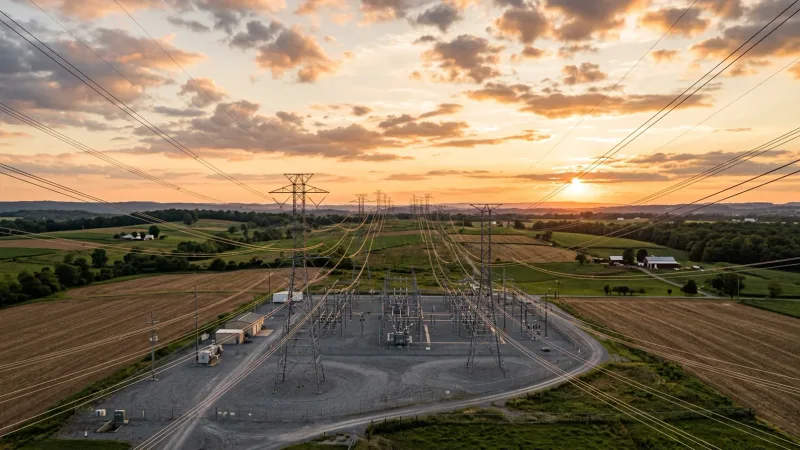
Nowhere is the risk of disappearing margins greater than in brownfield substation modifications and retrofit projects. An engineer may be tasked with replacing a single piece of equipment in a yard that was commissioned in 1988. This is where assumptions based on the original design documentation can lead to trouble.
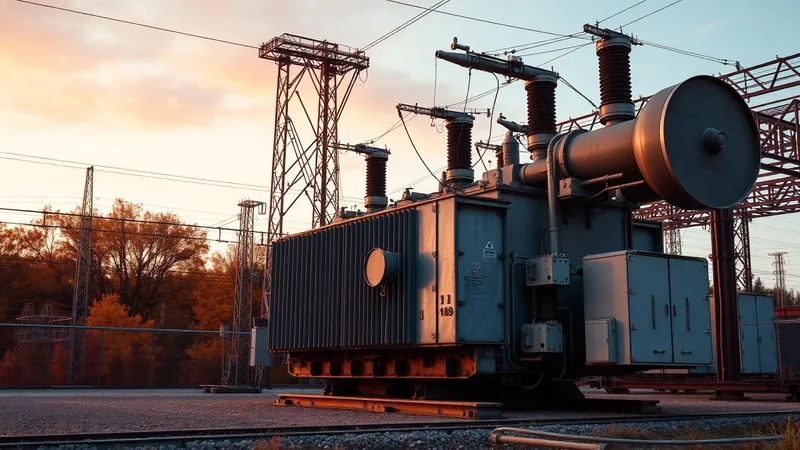
Consider a scenario: a 35-year-old, 1050 kV BIL power transformer at a 345 kV substation fails. The utility decides to replace it with a modern, cost-optimized 900 kV BIL unit. The project engineer, facing time and budget constraints, makes a series of seemingly logical, but ultimately flawed, assumptions.
- Legacy Arrester Performance: The engineer looks at the nameplate of the existing station-class arresters. They were appropriately sized for the original 1050 kV BIL transformer. The assumption is made that they will be sufficient for the new 900 kV BIL unit. But are they? The old arresters may have slightly degraded. More likely, their published performance data from 1988 is simply not as aggressive as a modern arrester’s. The original design may have counted on a 25% margin that, with the new lower BIL, shrinks to a precarious 10%.
- The Tyranny of Separation Distance: The new transformer’s footprint is slightly different. The low-side bushings are five feet further from the bus than the old unit. To accommodate this, the connecting switchgear is shifted, and the total bus run from the arrester to the new transformer terminals increases by 20 feet. On a fast-front lightning surge, this extra distance can add another 30-50 kV of voltage at the transformer terminals, directly eroding the protective margin.
- A "Living" System: The biggest oversight is treating the station as a static entity. The grid of 2024 is not the grid of 1988. The addition of new generation sources, the retirement of old ones, and the construction of new transmission lines have changed the system’s fault characteristics. The TOV profile calculated 35 years ago may no longer be valid. A line-to-ground fault today might produce a higher, longer-lasting overvoltage, placing the legacy arresters outside their design envelope.
Suddenly, that comfortable 20% margin calculated on a spreadsheet has been whittled down to single digits in reality. The first lightning storm of the season, or a routine switching event from a nearby capacitor bank, can now produce a surge that flashes over inside the new transformer’s windings. The result is a multi-million dollar failure, a prolonged outage, and a root cause analysis that points back to a seemingly minor retrofit project.
Recalculating Your Way to Reliability
The antidote to this slow creep of inadequacy is to abandon the old rules of thumb and component-level thinking, especially for retrofit projects. Insulation coordination in a modern, economically optimized grid requires a holistic, system-level approach.
This means leveraging modern simulation tools. Software packages that run the Electromagnetic Transients Program (EMTP) are no longer just for academic research or R&D departments. They are essential tools for the working substation engineer. An EMTP study allows you to model the entire station—bus capacitance and inductance, equipment locations, and arrester V-I curves—with high fidelity.
Instead of just using a single "protective level" value from a spec sheet, you can simulate a lightning strike at the station entrance and see the actual voltage waveform as it appears at the transformer terminals, nanosecond by nanosecond. You can model a switching surge from a breaker operation and see how it reflects and amplifies through the yard. You can accurately quantify the impact of that extra 20 feet of bus, confirming whether your margin is a robust 20% or a dangerous 8%.
For a few thousand dollars and a few days of an engineer’s time, a proper insulation coordination study provides certainty. It can validate the use of a lower BIL transformer or demonstrate the need to upgrade the surge arresters as part of the same project. This is not gold-plating; in the context of assets worth tens of millions of dollars, it is fundamental due diligence required to meet NERC reliability standards.
Key Takeaways
- The move from SiC to MOV arresters allowed for reduced, more economical BILs, but also removed the large, forgiving safety margins of older, over-specified infrastructure.
- Retrofit projects are the highest-risk area for inadequate BIL margins. Replacing components like transformers without a full re-evaluation of the existing arresters and system changes is a primary cause of failure.
- Simple protective margin calculations are insufficient. They must be corrected for arrester separation distance and, ideally, verified with a full EMTP simulation study for all EHV projects.
The Engineer's Takeaway
The spec sheet gives you a component. The simulation gives you a system. In a 345 kV yard, the difference between the two is measured in millions of dollars, a single lightning strike, and a long conversation with the head of asset management. Plan accordingly, or contact a specialist before you specify.