





Imagine standing in the middle of a four-million-square-foot facility where the air is dry enough to crack your skin and the floor is polished to a surgical sheen. This is the heart of a modern EV battery plant, a gargantuan consumer of electricity that transitions from a quiet construction site to a concentrated load center the size of a mid-sized city in a matter of months. When the drying ovens kick in and the formation and aging racks begin their relentless cycling, the local utility doesn't just feel a nudge; it feels a seismic shift. For the substation engineer tasked with powering this transition, the challenge isn't just about the sheer volume of megawatts. But the excruciating precision required to keep a multi-billion-dollar chemical process from turning into a pile of high-tech scrap.
The Massive Scale of an EV Battery Plant Load
In the wake of the Inflation Reduction Act (IRA), the rush to localize the battery supply chain has turned rural landscapes into industrial hubs practically overnight. An EV battery plant is not your typical industrial load. Unlike a traditional automotive assembly plant that might peak during a single shift and drop off at night, a gigafactory is a base-load beast.
It operates 24/7 with a load factor that would make a data center operator blush. We are talking about facilities that require anywhere from 100MW to 300MW of continuous power, often delivered at transmission-level voltages before being stepped down through a hierarchy of transformers to the equipment level.
The complexity begins with the "Formation and Aging" process. This is the stage where the battery cells are first charged and discharged to establish their electrochemical stability. It is an energy-intensive cycle that demands hundreds of thousands of individual charge/discharge points.
If the grid flinches, thousands of cells can be ruined instantly. This necessitates a substation design that prioritizes redundancy and power quality above all else. Engineers aren't just looking for standard distribution. They are looking for "five nines" of reliability, often requiring dual-feed configurations from independent utility substations to ensure that a single fault on the primary line doesn't bring the entire cathode production line to a grinding halt.
Engineering the Medium Voltage Backbone
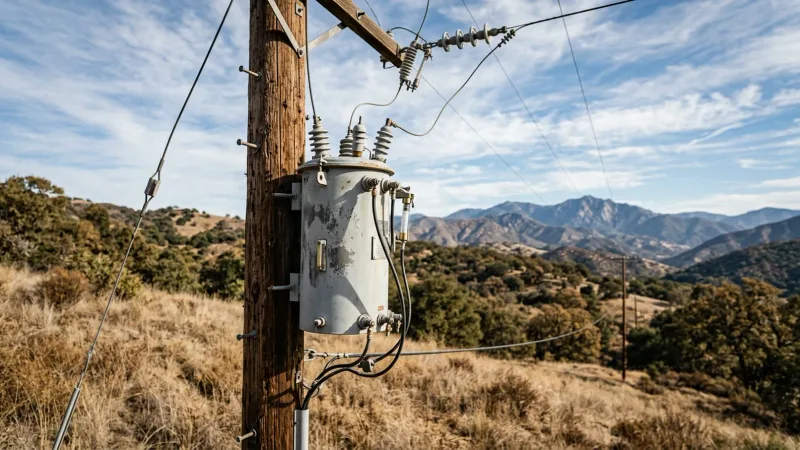
To handle the concentrated current required by these facilities, the internal power distribution network relies heavily on the MV transformer. These aren't your standard shelf-stable units. Because the environment inside a battery plant often involves "clean room" conditions or specific dry-room requirements, the transformers must be meticulously specified.
We see a significant shift toward cast resin dry-type transformers for indoor applications, governed by IEC 60076-11 or IEEE C57.12.01 standards. These units eliminate the risk of oil leaks and fire hazards in proximity to sensitive chemical processes, a critical safety consideration when thousands of liters of volatile electrolyte are present just a few meters away.
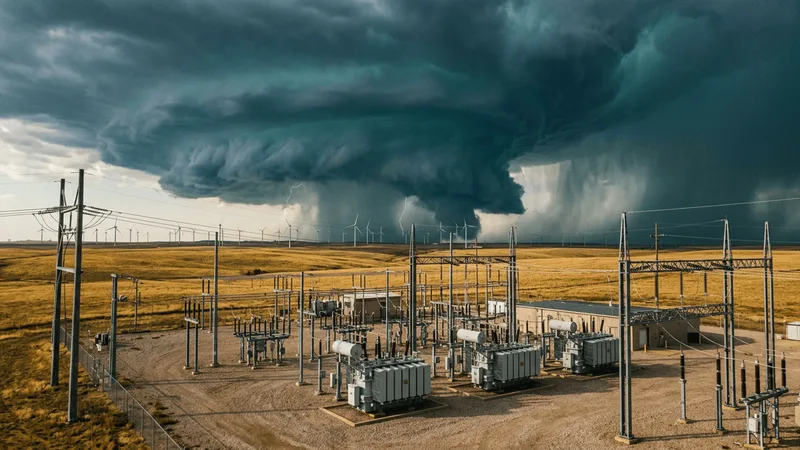
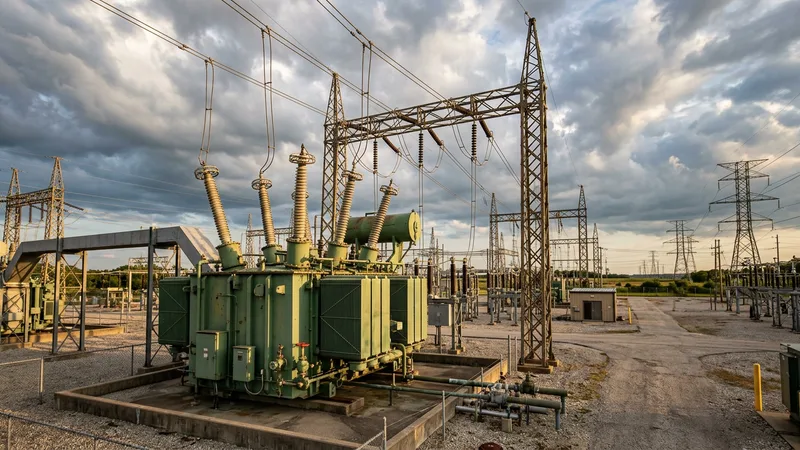
However, for the main step-down substations situated outdoors, oil-filled power transformers remain the workhorses. These units must adhere to rigorous thermal performance standards, such as those outlined in IEEE C57.12.90. The thermal stress on these transformers is immense because the load is non-linear.
The sheer volume of power electronics—inverters, converters, and rectifiers—used in the cell formation process introduces significant harmonic distortion into the system. Without over-specifying the K-factor of the transformers, the core and windings would face premature insulation degradation due to the eddy current losses generated by these harmonics.
Power Quality and the Harmonic Nightmare
If quantity is the first challenge, quality is the second, more insidious one. An EV battery plant is effectively a giant array of rectifiers and inverters. This setup creates a massive amount of "noise" or harmonic distortion, which can wreak havoc on sensitive control systems if not properly mitigated.
From a standards perspective, the facility must comply with IEEE 519, which limits the total harmonic distortion (THD) that a customer can inject back into the utility grid. Achieving this requires a sophisticated dance between active harmonic filters and the design of the transformer itself.
Voltage sags are the silent killers in this industry. In a high-precision manufacturing environment, a sag of even 10% for a few cycles can cause variable frequency drives (VFDs) to trip, stopping the delicate coating process where active materials are applied to copper or aluminum foils. If the foil stops moving while in the drying oven, you don't just lose time. You lose a massive amount of expensive raw material and face hours of downtime for cleanup. This is why we see a heavy emphasis on secondary substation equipment that includes fast-acting bus transfer switches and robust protective relaying schemes designed to isolate faults within milliseconds.
Meeting the Demands of Rapid Deployment
One of the most jarring aspects of the current manufacturing boom is the compressed timeline. Traditional utility infrastructure projects used to operate on five-to-ten-year horizons. Today, an EV battery plant expects to be energized and producing cells in less than twenty-four months.
This puts an incredible strain on the supply chain for critical hardware like switchgear and power transformers. To bridge this gap, engineers are increasingly turning to modular, skid-mounted substation solutions.
These integrated units—comprising the MV transformer, primary switchgear, and secondary distribution—are factory-assembled and tested to standards like IEC 62271-202. By moving the integration from the field to a controlled factory environment, manufacturers can ensure that the interconnections are flawless and that the system is ready for "plug-and-play" installation. This modularity also allows for scalability. As the plant adds more production lines to meet rising EV demand, the electrical infrastructure can be expanded in discrete, manageable increments without requiring a total redesign of the primary substation.
Resilience and the Grounding Philosophy
In a facility of this scale, the grounding system is not an afterthought; it is a fundamental safety component. Given the high fault levels associated with 100MW+ loads, the grounding design must be impeccable to prevent dangerous touch and step voltages. Engineers often look to BS EN 50522 or IEEE 80 for the design of these complex earthing mats. In a gigafactory, the grounding system also serves a secondary purpose: providing a clean "signal ground" for the vast network of sensors and automated guided vehicles (AGVs) that roam the floor.
The integration of renewable energy further complicates this picture. Many battery manufacturers are under pressure to prove the "green" credentials of their cells, leading them to install massive on-site solar arrays or battery energy storage systems (BESS). Managing the bi-directional flow of power and the synchronization between the utility grid and the on-site DERs (Distributed Energy Resources) requires sophisticated microgrid controllers. This adds another layer to the substation, demanding switchgear that can handle frequent switching operations and transformers that are rated for the unique thermal profiles of energy storage cycling.
Navigating the Standards Landscape
The global nature of the EV industry means that an EV battery plant built in the United States often utilizes equipment designed to international standards. Reconciling a facility designed to European IEC standards with a local utility grid built on IEEE and NEMA C57 principles requires a deep technical understanding of equipment testing and ratings. For instance, the difference in temperature rise limits or short-circuit withstand capabilities between these two worlds can lead to significant engineering hurdles during the commissioning phase.
Every component, from the high-voltage circuit breakers down to the medium-voltage cable terminations, must be scrutinized. We see rigorous adherence to ENATS 35-1 for distribution equipment in certain regions, or NEMA TP-1 for energy efficiency in dry-type units. The goal is to create a seamless interface between the macro-grid and the micro-processes of the plant. When the stakes involve billions of dollars in capital expenditure and the strategic energy independence of a nation, there is no room for a "standard" off-the-shelf approach.
The electrification of the heat and transport sectors is not a gradual ramp; it is a vertical climb. For the transformer and switchgear industry, the emergence of the gigafactory represents a new frontier where industrial capacity meets laboratory-grade precision. As we continue to build the infrastructure that powers the cells of the future, the focus remains on the invisible backbone—the copper, steel, and oil that keep the machines hummimg and the lights steady.
Engineering these systems requires balancing the brute force of massive industrial loads with the delicate requirements of electrochemical production. By integrating advanced transformer design with modular distribution and rigorous power quality standards, the industry ensures that the heart of the EV revolution remains beating, cycle after cycle, without interruption. It is a metamorphosis of the grid, one megawatt at a time.