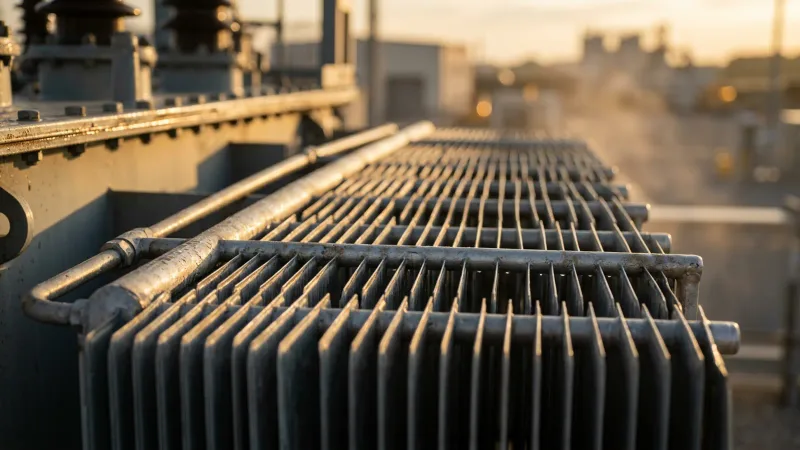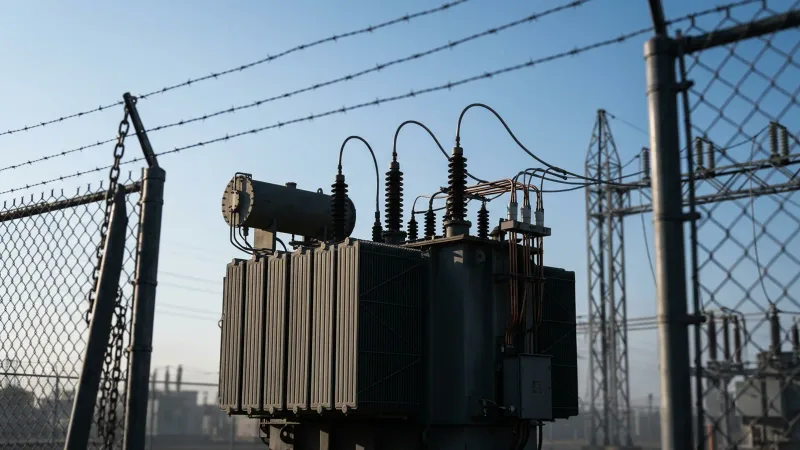






The Northwest grid operates on a hydrology calendar that no other interconnect would tolerate. April through June, federal dam operators spill water rather than pass it through the turbines, and the resulting export curve on the AC and DC inter-ties hits 500 kV autotransformers across the Pacific Northwest with a thermal profile no probabilistic load study would predict. This is the engineering of the salmon-spill season.
A Judicial History of Spilled Megawatts
To understand why a grid operator would voluntarily dump gigawatt-hours of clean energy, you have to go back to the 1990s. The Endangered Species Act (ESA) listing of several salmon and steelhead populations in the Columbia River Basin triggered a decades-long series of legal and biological battles. Federal court rulings, driven by the need to improve juvenile salmon survival rates during their downstream migration to the Pacific Ocean, landed on a simple but hugely consequential strategy: spill.
Instead of directing water through the power-generating turbines, operators were ordered to send a significant fraction of the spring runoff over the dams' spillways. The theory is that this provides a more natural, less perilous route for young fish, helping them avoid the pressure changes and physical blades of a Francis or Kaplan turbine. The operational mandate applies to the massive federal dams on the Columbia and Snake Rivers, cornerstones of the Pacific Northwest’s energy landscape. For grid planners at the BPA, the biological opinion of the National Marine Fisheries Service became as important as any NERC reliability standard.
This created a new, non-negotiable boundary condition for hydro generation. From roughly April through August, generation is no longer dictated purely by load demand or market price. It is governed by river flow and salmon migration. When the snowpack is deep and the spring melt is fast, the volume of mandated spill can be enormous, forcing dozens of large hydro generators offline for extended periods. And that’s where the trouble starts for the hardware in the switchyard.
When 'Off' Is More Stressful Than 'On'
A generator step-up (GSU) transformer is built for one thing: to run, steadily, for decades. These behemoths, often weighing over 400 tons and stepping voltage up to 500 kV for long-distance transmission, are happiest at or near their nameplate MVA rating. What they are decidedly *not* designed for is being treated like a light switch.
During heavy spill operations, a hydro turbine-generator unit goes offline. The GSU connected to it is de-energized. Hours or days later, as river flows change or a lucrative EIM market opportunity appears, the unit is called back online. The GSU must be re-energized. This de-energization/re-energization cycle, once a rare event for maintenance, has become a daily routine at some facilities during spill season. This operational pattern induces stresses that transformer designers never intended the equipment to handle on a regular basis.
These stresses fall into two main camps:
- Mechanical Stress: On-load tap changers (LTCs), the intricate mechanical devices that regulate output voltage, can be subject to "hunting" on a lightly loaded grid, leading to excessive operations and accelerated wear on their contacts and drive mechanisms. More profoundly, the energization event itself delivers a significant mechanical shock to the windings.
- Electrical Stress: The act of energizing a large transformer is one of the most severe events it ever experiences. The phenomenon, known as magnetizing inrush, is a transient current spike that can be many times the transformer's rated current. While a single event is accounted for in design, hundreds of them in a short period is another matter entirely.
For an asset designed with a 40-year service life in mind, this new duty cycle is a form of premature aging. It’s the electrical equivalent of running a classic car in a drag race every morning. The machine can do it, but not for long without something giving way. You can find our full range of robust power transformers designed for modern grid challenges.
The Physics of a Five-Hundred-Ton Kick
Magnetizing inrush isn't a fault. It's a consequence of physics. When a transformer is disconnected, its iron core can be left with a certain level of residual magnetism, or remanent flux. If the transformer is re-energized at a moment in the 60 Hz AC cycle where the voltage waveform drives the core’s magnetic flux in the same direction as the remanent flux, the core is pushed immediately and deeply into saturation.
A saturated core cannot contain the magnetic field, and its inductance collapses. With nothing but the low DC resistance of the primary winding to limit it, the current spikes to enormous levels. This inrush current is what causes the problems.
1. Extreme Current Magnitudes: The peak inrush current can reach 8 to 12 times the transformer’s nominal full-load current. For a large 500 MVA GSU at 500 kV, this can mean an instantaneous peak of thousands of amps on the primary side.
2. Harmonic Distortion: The asymmetric, non-sinusoidal inrush current is rich in harmonics, particularly the 2nd harmonic. This can cause issues with protection systems and create voltage quality problems on the local power system.
3. Mechanical Forces: The most damaging effect. The immense current flowing through the windings interacts with the strong magnetic fields to produce powerful mechanical forces, governed by the Biot-Savart law. These forces, proportional to the square of the current, manifest as a violent "kick" that attempts to push the windings apart. Repeatedly subjecting the winding insulation, clamping structures, and coil supports to these forces can lead to micro-fractures, insulation wear, and eventual deformation.
4. Sympathetic Inrush: Energizing one large transformer can induce a voltage dip on the system sufficient to cause sympathetic inrush in adjacent, already-energized transformers, compounding the problem.
These repeated mechanical shocks are a direct threat to the transformer's dielectric integrity and long-term health. Standards like IEEE C57.12.00 define the limits for short-circuit withstand, but the cumulative damage from thousands of "lesser" inrush events is a more insidious failure mode that isn't as well codified. This is the slow-motion killer stalking the BPA hydro fleet, driven by the needs of fish. Associated high-voltage switchgear also sees accelerated wear from the increased number of operations.
Can a Pumped-Hydro Battery Absorb the Problem?
If the problem is turning generators off, the logical solution is to find a way to keep them on. But how, when you’re mandated to spill the water that would normally power them? The answer may lie in creating a new, controllable load that is large enough to absorb the otherwise curtailed generation.
Enter variable-speed pumped storage hydro (PSH). Traditional PSH uses surplus grid power to pump water to an upper reservoir, releasing it later to generate power when needed. It acts like a giant battery. Critically, however, most existing PSH systems are fixed-speed, meaning they are either "on" (pumping at full power) or "off."
Variable-speed PSH, using modern power electronics like a variable frequency drive (VFD), can act as a fully modulatable load. It can precisely adjust its power consumption second-by-second. In the context of the BPA spill, this is a perfect match. Instead of shutting down a 600 MW hydro unit, you could keep it running and direct its output to a nearby variable-speed PSH facility. The PSH would absorb the 600 MW, pumping water to its upper reservoir.
The GSU stays online, warm, and stably loaded. The damaging energization cycles disappear. The "spilled" energy isn't lost to the Pacific; it’s stored a few hundred feet uphill, ready to be released during high-demand evening hours. You’ve taken an environmental mandate that creates a reliability problem and transformed it into a grid-scale energy storage solution. This turns a multi-million-dollar annual headache into a revenue-generating asset that enhances grid stability.
Key Takeaways
- Court-mandated spill operations for salmon protection at BPA dams force frequent shutdowns and startups of large hydro generators.
- This operational pattern subjects the associated GSU transformers to thousands of highly damaging magnetizing inrush events, dramatically accelerating asset aging.
- Variable-speed pumped hydro offers a potential solution by creating a large, controllable load to absorb the must-run hydro generation, keeping the units and their transformers online and stable.
The Engineer's Takeaway
The most elegant engineering solutions often don't just solve a single problem—they transform a constraint into an advantage. The BPA spill dilemma shows that our greatest grid reliability challenges are sometimes not in a single component, but in the intersection of biology, law, and physics. The answer isn't a better transformer, but a smarter system. If you're facing a complex grid integration challenge, our team is ready to talk. You can reach us here.