





For a few minutes every evening, as the sun dips below the horizon, an entire power system reverses direction. The massive fleet of photovoltaic (PV) generation across the state disconnects in unison, just as millions of lights and appliances turn on. In this brief window, the fundamental physics of the electrical distribution network flip, presenting a unique voltage management challenge that requires a coordinated response from both legacy mechanical systems and modern power electronics.
The Great Reversal in Voltage Profile
During daylight hours, particularly in the spring and autumn, high solar generation creates a condition of reverse power flow on many distribution circuits. Instead of power flowing downwards from the substation to customers, it flows from rooftop PV systems back up the feeder lines. This localised generation has the effect of elevating voltage levels along the circuit. In this state, the network is effectively voltage-supported by thousands of distributed energy resources (DERs), with substation equipment often working to lower voltage to keep it within statutory limits. When sunset occurs, this scenario unravels with remarkable speed. The output of PV systems collapses, removing the source of voltage support. Simultaneously, the evening residential load ramps up, drawing significant power down the feeders from the substation. The very same circuits that experienced high voltage minutes earlier now face a rapid voltage drop. Managing this swift transition from a condition of voltage surplus to voltage deficit is one of the most critical operational tasks on the modern distribution grid, defining a daily cycle of reversal that is testing the limits of conventional control philosophies.
OLTCs: The First Line of Mechanical Response
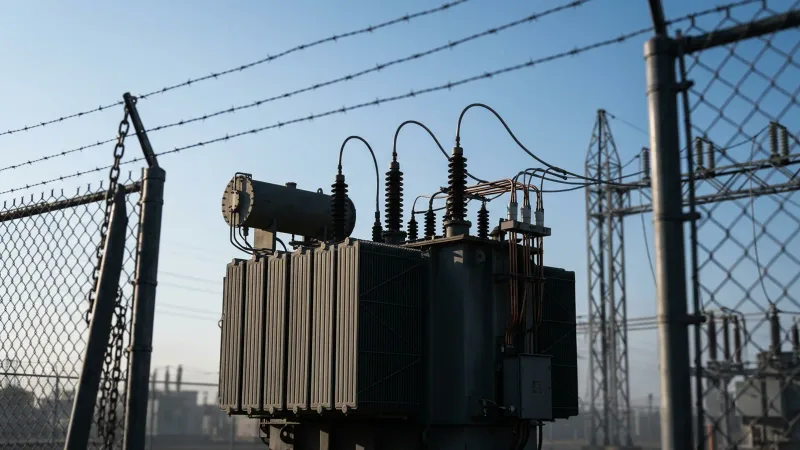
In the face of this daily voltage swing, the primary tool for grid operators remains the On-Load Tap Changer (OLTC). Housed within primary substation transformers that step voltage down from transmission levels (e.g., 132 kV) to distribution levels (e.g., 11 kV), the OLTC is a robust electromechanical device. Its function is to adjust the transformer’s turns ratio, increasing or decreasing the secondary voltage in discrete steps to compensate for system changes. As the evening voltage sag begins, the OLTC’s Automatic Voltage Regulator (AVR) detects the deviation from its setpoint and initiates tap changes to boost the voltage. This process is deliberate, with built-in time delays to avoid reacting to transient fluctuations. While incredibly reliable, OLTCs are mechanical systems with a finite number of operations before maintenance is required. The daily, predictable, and steep ramp caused by the solar transition forces a high number of operations. This increased duty cycle accelerates component wear, including the contacts that break load current and the diverter switch mechanisms, making OLTC maintenance and operational strategy a focal point for asset managers in regions with high PV penetration. They are the workhorses of voltage regulation, and their health is paramount.
Smart Inverters and the New Digital Frontline
While OLTCs manage voltage for an entire feeder from the substation, a newer, faster, and more distributed solution is acting as the second line of control: the smart inverter. Governed by standards such as IEEE 1547-2018, modern PV inverters are no longer passive devices that simply convert DC to AC. They are equipped with advanced grid-support functions, most notably Volt-Var control. This capability allows the inverter to manage voltage at its point of connection by injecting or absorbing reactive power. During the evening transition, as voltage begins to sag, a properly configured smart inverter can automatically inject reactive power into the grid. This action provides localized voltage support, counteracting the drop. Because these are power electronic devices, their response is nearly instantaneous—measured in cycles, not seconds or minutes like an OLTC. By providing this rapid, localised support, fleets of smart inverters can dampen the overall voltage depression on the feeder. This reduces the magnitude of the swing that the substation OLTC ultimately needs to correct, thereby lowering the number of daily tap changes and mitigating mechanical wear on the transformer. This coordination between slow, centralized mechanical regulation and fast, distributed electronic support is the new paradigm for distribution voltage control.
***
Quick Reference: Voltage Control Actors
***
A New Load Profile for Distribution Transformers
The daily voltage reversal also imposes a new and demanding operational profile on the final link in the chain: the local distribution transformers on poles and pads. Historically, these assets experienced a relatively smooth load curve that peaked in the evening. Their thermal cycle was predictable, with gradual heating as load increased. However, with high midday PV generation in the neighborhood, the net load on the transformer can plummet, sometimes to near zero or even a slight reverse power flow. The transformer cools significantly during this period. As the sun sets and solar generation disappears while evening demand surges, the transformer experiences an extremely rapid ramp-up in load, causing it to heat up quickly. This creates a "U-shaped" daily load profile characterized by a deep midday trough followed by a steep evening peak. This thermal cycling—rapid cooling followed by rapid heating—imposes a different type of stress on the transformer’s insulation system (both the mineral oil and cellulose paper) than a traditional, smoother load curve. Understanding the long-term impact of this accelerated thermal cycling on asset aging and lifecycle is a critical area of ongoing research for distribution engineers responsible for asset management and system reliability.
Why California's Challenge Remains Distinct
The intense evening transition faced by the Californian grid is not merely a product of high PV penetration; it is the result of a unique convergence of geographic, demographic, and infrastructural factors. Firstly, the state represents a massive, economically significant load center concentrated largely within a single time zone and sharing similar coastal weather patterns. This geographic and climatological coincidence means that the sunset and the corresponding collapse of solar generation occur almost simultaneously across a vast area. Secondly, the system’s load profile features a residential evening peak that aligns almost perfectly with the rapid solar fade, maximizing the severity of the ramp. In other global regions with high solar capacity, such as a significant portion of central Europe, different load composition or geographic diversity can spread this transition over a wider time window. Finally, the existing distribution infrastructure was predominantly designed and built for unidirectional power flow from centralised stations to passive customers. The rapid, daily reversal of this paradigm from distributed generation back to traditional supply forces a mode of operation for which the system was not originally intended, making the challenge of managing this five-minute window a distinct engineering focus.
This evening transition is no longer a simple load-following task but a dynamic, bi-directional voltage regulation problem. The precise, high-speed coordination between power electronics at the grid edge and the slower, powerful mechanical systems at the substation has become the defining operational challenge for distribution system operators. Mastering this daily reversal is fundamental to ensuring reliability in a deeply decarbonized power system.