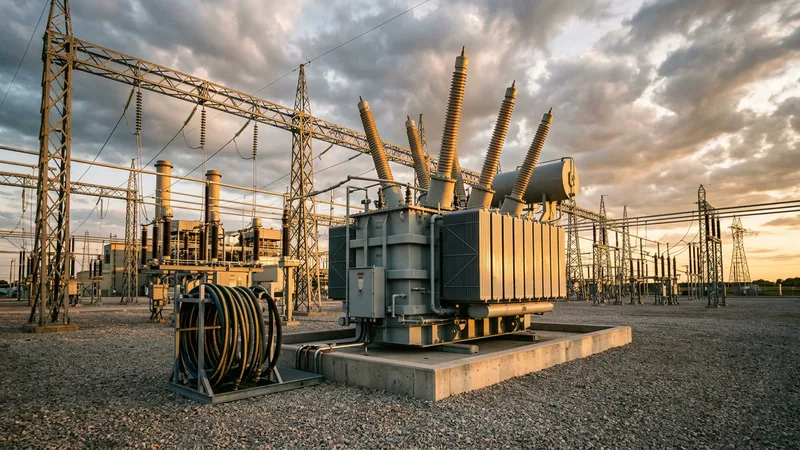






The next great American infrastructure wave has no on-ramps, no toll booths, and no asphalt to lay. It is a highway built not for vehicles but for electrons, stretching across vast distances to connect new sources of energy with the communities that need it. These corridors, operating at a formidable 765-kV, represent the backbone of a renewed effort to enhance grid capacity and resilience, relying on some of the largest and most technically complex machines in the electrical world.
The Resurgence of the 765-kV Standard
First implemented decades ago, the 765-kV alternating current (AC) standard is experiencing a significant resurgence, driven by fundamental physics and modern grid requirements. Transporting electrical power over long distances is a battle against loss, specifically resistive losses, often termed I²R losses. Because power is a product of voltage and current (P=VI), increasing the voltage allows for a proportional decrease in current to deliver the same amount of power.
The reduction in current has an exponential benefit, as losses are proportional to the square of the current. Moving from a 345-kV system to a 765-kV system can reduce these line losses by over 75%, a critical factor when carrying gigawatts of power across hundreds of miles.
This efficiency is paramount for the evolving energy landscape. Integrating large-scale renewable generation, often located in remote, resource-rich regions far from urban and industrial load centers, is not feasible on lower-voltage networks that were designed for localized power distribution. The 765-kV "electrical highway" provides the necessary capacity to move this bulk energy efficiently, akin to how the interstate highway system enabled the nationwide transport of goods. It creates a more robust and interconnected grid, enhancing stability by allowing power to be redirected more fluidly across broader regions in response to changing demands or disturbances.
Autotransformers: The Key Nodal Component
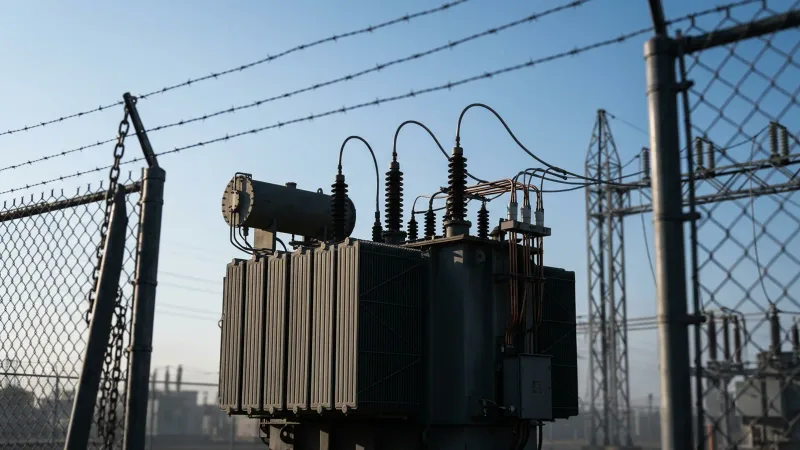
A 765-kV transmission line is only as useful as its points of connection. At substations where different voltage levels meet—for example, stepping down from 765 kV to a regional 345-kV network—the choice of transformer is critical. For these applications, the autotransformer is the component of choice, differing significantly from the conventional transformers familiar in distribution networks.
Unlike a standard transformer with two or more electrically isolated windings, an autotransformer utilizes a single continuous winding with at least one "tap," or connection point, along its length. The primary and secondary circuits share a common portion of this winding.
This design imparts several key advantages for high-voltage grid interconnections. Physically, it is smaller, lighter, and contains less copper and core steel than a comparably rated isolated-winding transformer, which has significant implications for manufacturing, transport logistics, and substation footprint. Electrically, it is more efficient due to lower losses.
Power is transferred through both magnetic induction (like a conventional transformer) and direct electrical conduction through the common winding portion. This configuration is particularly efficient when the voltage ratio between the high and low sides is relatively small (e.g., 2:1 or less), as is typical for transmission-level connections. In the context of a 765-kV system, autotransformers are the indispensable gateways that allow different parts of the grid to speak the same language of power.
Managing Line Physics: Reactive Power Compensation
Operating transmission lines at 765-kV introduces unique physics challenges that must be actively managed. A long extra-high-voltage (EHV) line itself behaves like a very large electrical component. The conductors, suspended high above the earth, form a natural capacitance with the ground plane beneath them.
Over the hundreds of miles that these lines span, this distributed capacitance is substantial. When the line is energized, this capacitance generates a significant amount of reactive power, a phenomenon known as the Ferranti effect. Under light load conditions, this capacitive reactive power can cause the voltage at the receiving end of the line to rise to levels that can damage connected equipment and compromise grid stability.
To counteract this, shunt reactor banks are installed at substations and sometimes along the transmission line itself. A shunt reactor is essentially a large inductor, or coil, designed to absorb reactive power. Its inductive nature directly opposes the capacitive effect of the line, keeping voltage levels within safe operating limits.
These reactors are not optional accessories but are integral, non-negotiable components of any long-distance EHV/UHV AC transmission system. Their presence ensures that the electrical highway can be operated reliably, whether running at full capacity or under light-load standby conditions.
***
Quick Reference: 765-kV System Characteristics
- Voltage Class: 765,000 Volts (AC)
- Primary Application: Bulk power transmission over long distances (>150 miles / 250 km).
- Key Advantage: Significant reduction in resistive power losses (I²R losses) compared to lower voltage levels.
- Primary Challenge: Voltage control due to the line’s natural capacitance, requiring reactive power compensation.
- Key Component: Nodal autotransformers for efficient voltage stepping and system interconnection.
***
The Rulebooks: IEEE Standards in Practice
For machinery of this scale and criticality, standardization is the bedrock of reliability. The entire lifecycle of a 765-kV autotransformer, from initial specification to factory acceptance testing and field operation, is governed by a comprehensive suite of standards, predominantly from the IEEE C57 family. IEEE C57.12.00, the *General Requirements for Liquid-Immersed Distribution, Power, and Regulating Transformers*, serves as the foundational document. It establishes the common language for specifying insulation levels, temperature rise limits, and construction features, ensuring a baseline of quality and performance.
For testing, IEEE C57.12.90—the *Test Code for Liquid-Immersed Distribution, Power, and Regulating Transformers*—is paramount. A 765-kV autotransformer undergoes a rigorous testing sequence to prove its design, far beyond what smaller transformers endure. This includes tests to verify its Basic Lightning Impulse Insulation Level (BIL) and Switching Impulse Level (SIL), which are critical for surviving voltage surges from lightning and circuit breaker operations.
Tests for short-circuit withstand capability use complex computational models to simulate the immense mechanical forces that would occur during a fault. Sound level and temperature rise tests confirm that the unit will operate within environmental and performance specifications. These standards ensure that despite their immense complexity and bespoke design elements, these critical assets provide the predictable performance required by the grid.
Next-Generation Design and Materials
The modern 765-kV autotransformer is a product of continuous evolution in materials, modeling, and monitoring. While the fundamental principles remain, the tools used to design them have been revolutionized. Engineers now rely on advanced Finite Element Method (FEM) software to model both the magnetic and thermal behavior within the transformer with incredible precision.
This allows for the optimization of the core and windings to minimize losses, control internal hot spots, and manage the intense mechanical stresses that occur during transient events. These digital design tools reduce reliance on empirical estimates, leading to more efficient, reliable, and compact final designs.
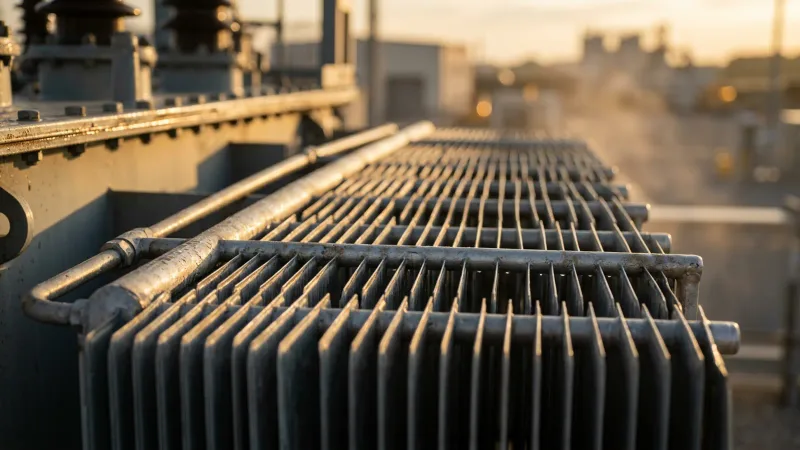
Material science has also played a crucial role. Advances in high-grade, laser-scribed grain-oriented electrical steel have progressively lowered no-load (core) losses, saving energy over the transformer’s multi-decade lifespan. The insulation system, traditionally composed of mineral oil and cellulose paper, is also seeing innovation.
Thermally upgraded Kraft paper and, in some contexts, the use of natural and synthetic ester fluids can enhance thermal performance and environmental safety. Perhaps the most significant shift is the integration of online monitoring. Modern units are often equipped with a suite of sensors for real-time dissolved gas analysis (DGA), partial discharge detection, and bushing monitoring. This data provides an unprecedented view into the transformer’s internal health, enabling operators to move from reactive or time-based maintenance to a proactive, condition-based asset management strategy.
The viability of 765-kV corridors is not merely a testament to manufacturing scale but reflects a deep, iterative understanding of applied physics. Managing the interplay between reactive power, insulation integrity, and thermal performance at this voltage class demands a synthesis of material science, advanced computational modeling, and a system-level engineering perspective. This combination of disciplines is precisely what defines and enables the expansion of the modern electrical grid, ensuring power can flow wherever—and whenever—it is needed.