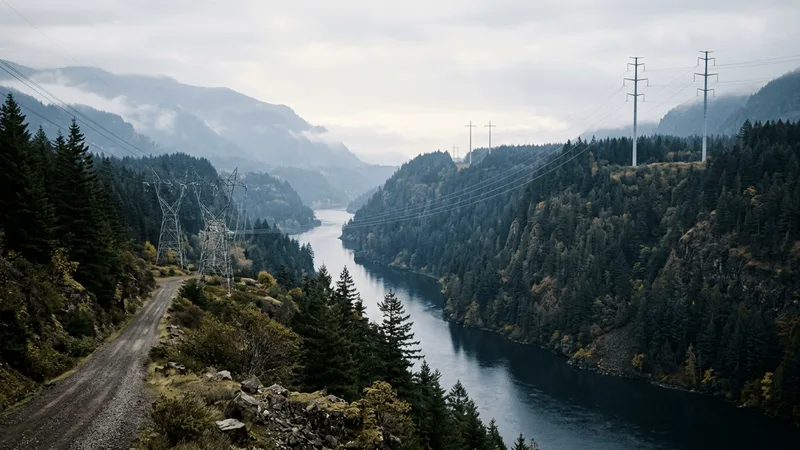






Few American states have achieved such significant grid-scale influence with so little fanfare. The region is a paradox: a major hub of wind generation located in a climate that regularly delivers tornadoes, baseball-sized hail, and extreme temperature swings. This environment makes the reliable operation of power systems a profound engineering challenge, forcing a reconsideration of standard substation design, transformer technology, and maintenance philosophy for renewable energy assets.
Collector Substations in the Wind Belt
Collector substations at large wind farms function differently from traditional transmission or distribution substations. Instead of stepping down voltage for consumption, their primary role is to aggregate the medium-voltage output from numerous wind turbine generators (WTGs), step it up to a higher transmission voltage, and inject it into the main grid. In a region known for its severe weather, this requires specific design fortifications.
The sheer number of incoming feeder circuits from the turbines—often buried cable runs—means the medium-voltage side of the substation is extensive and complex. Busbar arrangements must be designed for both high reliability and operational flexibility, allowing sections to be isolated for maintenance without taking the entire wind farm offline. Furthermore, harmonic filtering is a critical consideration.
The power electronics within WTGs introduce harmonic distortions that must be filtered out at the collector substation to meet grid code requirements for power quality. These filter banks, composed of capacitors and reactors, are themselves significant pieces of equipment that must be specified to withstand the region's volatile atmospheric conditions, from intense solar radiation to sudden, dramatic temperature drops and high winds.
The Underrated Challenge of Low SCR
Integrating large-scale wind generation into a power system can lead to conditions of low short-circuit ratio (SCR) at the point of interconnection. SCR is a measure of the grid's strength or stiffness. A high SCR indicates a robust grid that can handle fluctuations in power injection without significant voltage or frequency deviations. Conversely, a low-SCR environment—often found in the weaker, more remote parts of a grid where wind farms are economically viable—is more susceptible to instability.
The power inverters in WTGs rely on a stable voltage waveform from the grid to operate correctly. In a low-SCR scenario, the operation of the inverters themselves can disturb the voltage, creating a feedback loop that can lead to oscillations and, in worst-case scenarios, tripping the plant offline. Mitigating these issues is a significant engineering task that goes beyond standard substation design.
It often requires the installation of dynamic reactive power compensation equipment, like STATCOMs (Static Synchronous Compensators), to provide voltage support and improve grid stability. The system studies required to accurately predict and engineer solutions for low-SCR conditions are complex, making this one of the most underrated but critical aspects of wind integration.
Dry-Type vs. Liquid-Filled Transformers in Tornado Country
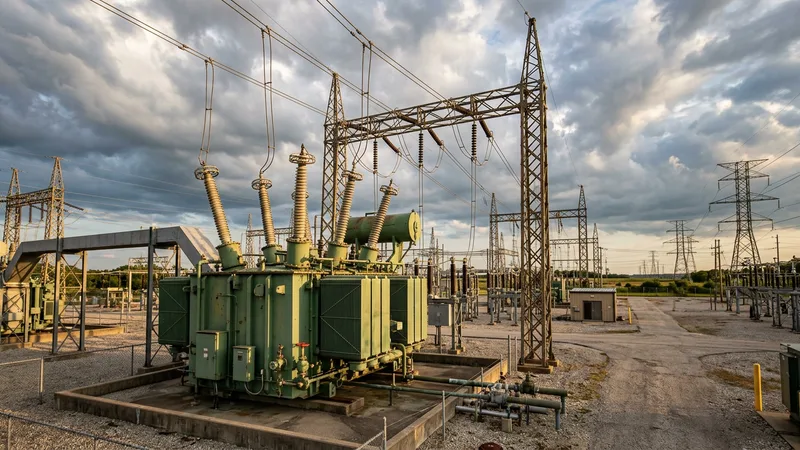
Choosing between dry-type and liquid-filled transformers for auxiliary services or even as the main GSU presents a difficult trade-off in tornado-prone areas. Liquid-filled transformers, typically using mineral oil, offer superior cooling efficiency and a long history of reliability. However, they carry the risk of environmental contamination and fire in the event of a catastrophic failure, such as damage from wind-borne debris.
A breached transformer tank could result in a significant oil spill and a fire that could destroy an entire substation. In contrast, dry-type transformers, which use air or a solid resin for insulation and cooling, eliminate this risk. They are inherently safer from a fire and environmental perspective.
However, they are generally less robust in handling overloads and are more susceptible to moisture ingress and insulation breakdown if their enclosures are compromised, which is a real possibility during a tornado. They also tend to be larger and more expensive for the same power rating. The decision often comes down to a site-specific risk assessment, weighing the high-consequence, low-probability event of a direct strike against the operational realities and cost-benefit analysis of each technology. Many designs now favor liquid-filled units but with enhanced containment systems and fire suppression technologies.
Quick-Reference Box: Transformer Choices Under Extreme Weather
Wind Farm GSUs and IEEE C57.116
A Generator Step-Up (GSU) transformer at a wind park operates under conditions quite distinct from its counterpart at a conventional thermal power plant. While a GSU at a gas-fired plant sees a relatively steady load, a wind GSU is subject to the highly variable and intermittent output of the turbines. This fluctuating load profile, with its rapid ramps up and down, places unique thermal and mechanical stresses on the transformer's windings and insulation system.
IEEE C57.116 is the guide for testing liquid-immersed power transformers for wind farm applications and directly addresses these concerns. It introduces specific test protocols to simulate the cumulative aging effects of this cyclic loading. The guide helps ensure that the transformer’s design, particularly its insulation system and cooling performance, is robust enough to achieve a normal operational lifespan despite the harsh duty cycle.
For a large wind farm, the GSU is the single point of failure between the entire park and the transmission grid. Its reliability is therefore paramount. And specifying a unit compliant with the principles and tests outlined in this guide is a critical step in de-risking the project from an engineering standpoint.
Maintenance Logic Across a 200-km² Site
Managing maintenance for a utility-scale wind farm spread across a vast area, potentially 200 square kilometers or more, presents a logistical challenge on par with its electrical engineering complexity. The sheer distances involved mean that traditional, reactive maintenance models are inefficient and costly. A simple component failure at a remote turbine or collector string can require significant travel time for technicians, extending downtime.
This reality necessitates a proactive, condition-based maintenance strategy. It involves deploying a wide array of sensors to monitor everything from transformer oil temperature and dissolved gases to the operational status of switchgear and protective relays. This data is fed into a central system that can identify incipient faults and allow for planned interventions.
Furthermore, the maintenance plan must account for the landscape itself. Access roads can be long and may become impassable during periods of heavy rain or snow. The strategy must therefore include logistical planning for personnel and equipment transport, potentially staging common spare parts at strategic locations across the site to minimize the response time when a fault does occur. This level of planning transforms maintenance from a simple repair function into a complex logistical operation.
Ultimately, the engineering required to successfully operate power infrastructure in this unique climate demonstrates a crucial lesson in grid modernization. The convergence of extreme weather and high renewable penetration forces a level of system resilience and design forethought that goes far beyond standard practice. It is in these edge cases that the future of reliable, clean energy is truly being forged.