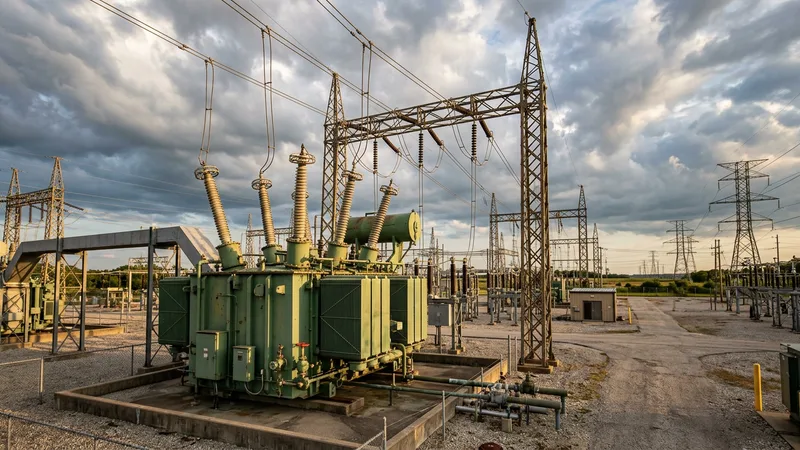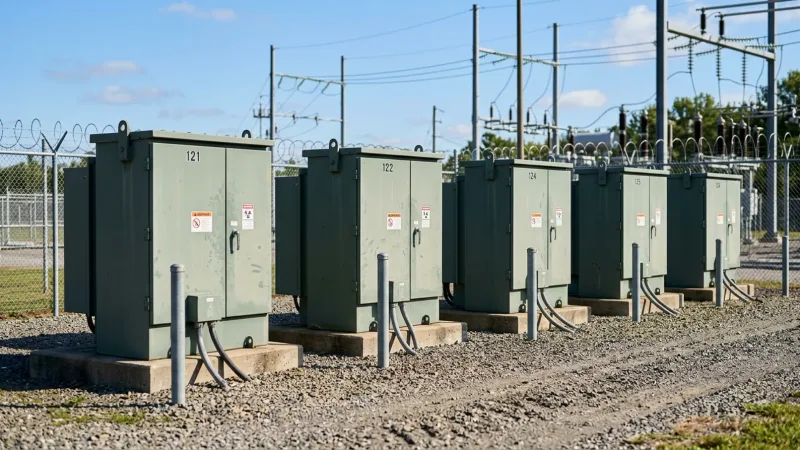






The air in the Sierra Nevada foothills during a dry autumn shift feels less like nature and more like a tinderbox awaiting a single, stray electron. For decades, the hum of a pole transformer was the invisible soundtrack to rural American life—a reliable, boring piece of grey-painted steel that everyone ignored. But after a series of catastrophic fire seasons, that same transformer became a focal point of intense forensic scrutiny. A single spark from a failing bushing or an overhead line slapped by a wind-blown branch could trigger a multi-billion dollar liability and, more importantly, a humanitarian disaster. For utilities operating within the California Independent System Operator (CAISO) footprint, the engineering philosophy has shifted from simple reliability to a doctrine of absolute containment.
This shift has birthed a concept known as wildfire grid hardening, an expansive architectural overhaul of the distribution layer. It is no longer enough for equipment to meet basic efficiency standards; it must now be "hardened" against the possibility of becoming an ignition source. This involves a fundamental re-evaluation of every component sitting ten meters above the ground, from the dielectric fluids inside the tanks to the way a recloser interprets a transient fault during a high-wind event.
The Engineering of the Non-Expulsion Fuse
Traditionally, when a fault occurred on a distribution lateral, a conventional expulsion fuse would do its job with a literal bang. It would vent hot gases and incandescent particles downward to clear the arc—a design that works perfectly in a damp climate but acts as a flint-and-steel in a dry canyon. Under the new California regulatory framework, the expulsion fuse is rapidly becoming an endangered species. Utilities are replacing them with non-expulsion, current-limiting fuses designed to trap all thermal energy and debris within a sealed chamber.
These fuses are often paired with "fire-safe" cutouts that meet the stringent requirements of CAL FIRE’S Power Line Fire Prevention Field Guide. The engineering challenge here is heat dissipation. By sealing the fuse to prevent sparks, engineers must ensure the device doesn't overheat under normal load conditions. This requires high-grade materials and precision manufacturing that far exceeds the historical "good enough" standard of rural electrification. Every connection point is now a potential point of failure that must be mitigated through infrared inspection and rigorous adherence to IEEE C57.12.00 standards for general requirements for liquid-immersed distribution transformers.
The transition to these "calm" fuses is part of a broader move toward "PulseClosing" technology and advanced reclosers. In years past, if a branch hit a line, a recloser would attempt to energize the line multiple times to "burn off" the fault. In a wildfire-hardened grid, that practice is curtailed during Red Flag Warnings. Instead, equipment is programmed for "one-shot" operation, where the first sign of a fault results in an immediate, permanent lockout until a physical patrol can verify the line is clear.
Rethinking the Pole Transformer Architecture
The pole transformer itself has undergone a quiet evolution. While the external silhouette remains familiar, the guts of the machine are being reimagined for extreme thermal stability. One of the most significant shifts is the move away from traditional mineral oil toward natural ester fluids, often referred to as "bio-oils." These fluids, governed by IEEE C57.147, have a fire point significantly higher (approximately 360°C) than mineral oil (approximately 160°C).
In the event of a catastrophic tank failure or a lightning strike, a transformer filled with ester fluid is far less likely to sustain a pool fire or contribute to an inferno. Furthermore, the tank designs themselves are being reinforced. Manufacturers are looking at enhanced bolt-on covers and pressure relief valves that can vent internal pressure without spraying atomized oil into the atmosphere—a phenomenon known as "transformer flaming."
Beyond the fluid, the physical mounting of the pole transformer is being scrutinized. In high-wind zones, the traditional "hang and bolt" method is being supplemented with vibration-resistant hardware to ensure that seismic events or extreme gusts do not result in a transformer tilting or shedding its bushings. The goal is to move toward a "sealed system" mentality, where the transformer is an island of safety rather than a potential radiator of heat.
PSPS and the Rise of the Segmented Grid
Public Safety Power Shutoffs (PSPS) have become a blunt-force tool for preventing ignitions, but they are economically and socially devastating. To minimize the footprint of these shutoffs, California utilities are investing heavily in grid segmentation. This involves installing a higher density of smart reclosers and automated switches that allow the utility to de-energize a single ridge-top while keeping the valley floored with power.
The logic resides in the communication between the pole-top equipment and the central control room. Modern reclosers are now expected to comply with IEC 61850 protocol, allowing for high-speed peer-to-peer communication. If a sensor detects a "downed-conductor" event—where a wire breaks but does not hit the ground, creating a high-impedance fault that traditional breakers might miss—the system can trip the circuit in milliseconds.
This level of sensitivity requires a rethink of protection settings. Engineers must balance the need for safety with the need to avoid "nuisance trips" that leave thousands in the dark because a bird landed on a cross-arm. This delicate dance is governed by the principles in IEEE C57.12.90, which provides the test code for liquid-immersed transformers, ensuring that even under the stress of frequent switching, the transformer's insulation system remains intact.
Materials Science at the Edge of the Forest
Wildfire hardening isn't just about the "smart" components; it's about the "dumb" components too. Cross-arms, traditionally made of Douglas Fir, are being replaced with fire-resistant composite materials or galvanized steel. While wood is an excellent insulator, it is also fuel. Replacing it with non-combustible alternatives reduces the "fuel load" of the utility's own infrastructure.
We are also seeing a massive push toward covered conductors, often called "tree wire." Unlike traditional bare aluminum or copper wires, covered conductors are wrapped in layers of high-density polyethylene. This ensures that if a branch falls against the line, or if the lines "slap" together during a windstorm, no arc is created. This change significantly alters the weight and wind-loading calculations for the pole. Consequently, the pole transformer must be mounted on a structure that can handle the increased mechanical tension of these heavier, insulated lines.
The insulators themselves are shifting from porcelain to polymer. While porcelain is a classic, it is brittle. In a wildfire scenario, the extreme heat can cause porcelain to shatter, potentially dropping a live line to the ground. Polymer insulators, manufactured to IEC 61109 standards, offer better resilience in the face of both mechanical stress and thermal flux, acting as a secondary line of defense in the hardening strategy.
Standardization and the Global Response
While California's challenges are unique in their scale, the solutions being forged there are setting the standard for global distribution networks. Manufacturers now look to ENATS 35-1 or BS EN 50522 for earthing and safety guidelines, but the "California Spec" is becoming a shorthand for "extreme environment readiness."
The shift is moving from reactive maintenance to "predictive hardening." By using satellite imagery and AI to map vegetation growth against the location of every pole transformer, utilities can identify which specific units are at the highest risk of becoming ignition points. This allows for a surgical replacement strategy, swapping out 40-year-old units with modern, ester-filled, non-expulsion-fused equipment in the areas where it matters most.
The transformation of the grid is an exercise in layered redundancy. No single piece of equipment—no matter how well-engineered—can eliminate the risk of wildfire. However, by combining the chemical stability of ester fluids, the intelligence of modern reclosers, the containment of non-expulsion fuses, and the physical toughness of covered conductors, the industry is creating a system that is no longer a passive victim of the environment.
The era of the "forgettable" distribution network is over. On the CAISO grid, every kVA of capacity is now weighed against its potential for ignition. The engineering of the pole-top has become a front line in the battle for climate resilience, proving that even a device as venerable as the transformer can be taught new, life-saving tricks.
We have moved past the point of building for efficiency alone. The modern distribution landscape is being defined by a rigorous commitment to containment, ensuring that the energy meant to power a home never becomes the force that destroys it. In this new world, the hum of the transformer is no longer just the sound of electricity—it is the sound of a system designed to fail safely, every single time.