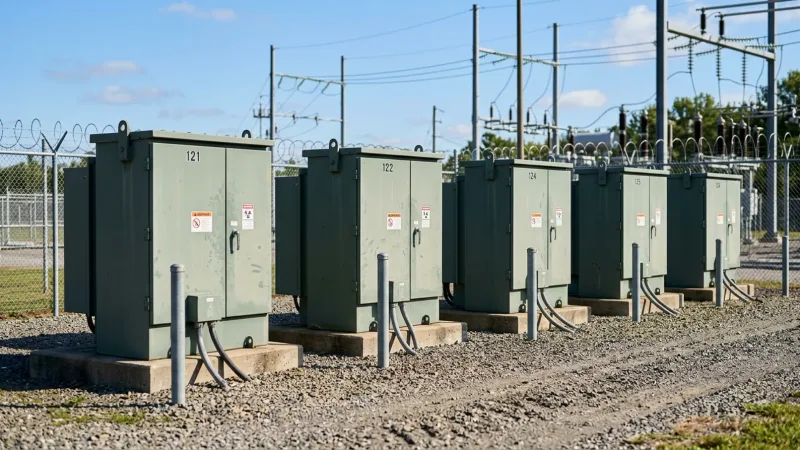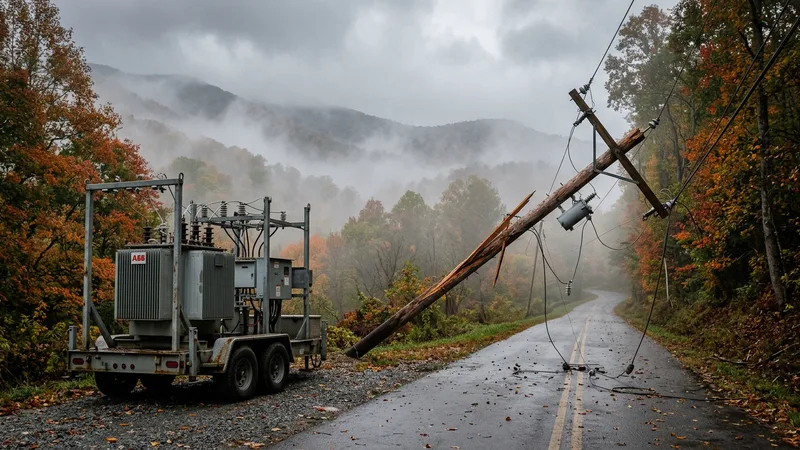






Imagine a high-stakes poker game played with 180,000 miles of copper wire and the energy security of 65 million people. In a nondescript office building in Pennsylvania, the PJM Interconnection conducts an annual ritual that dictates the fate of thousands of megawatts of potential electricity. To an energy trader, a PJM capacity auction is a sophisticated dance of clearing prices, clearinghouse margins, and supply-demand curves plotted on a Bloomberg terminal. To the engineer standing on the shop floor at ETS Group, peering into the core-and-coil assembly of a 40MVA substation transformer, that same auction represents the cold, hard physical reality of thermal limits and fault currents.
The tension between these two worlds—the digital market and the physical grid—is where North America’s energy transition lives or dies. Traders look at the Base Residual Auction (BRA) to see which way the financial wind is blowing. Engineers, however, look at the results and see a massive, looming logistics challenge. When a price signal says "build," it doesn't account for the fact that a high-voltage transformer cannot be summoned into existence by clicking a "Buy" button. There is a gulf between a cleared bid and a commissioned asset, and that gulf is paved with physical infrastructure that must adhere to rigorous standards like IEEE C57.12.00.
The Invisible Constraint of the Interconnection Queue
The most frequent point of friction between the trading desk and the engineering department is the interconnection queue. An energy trader may see a clearing price that incentivizes new solar or battery storage in a specific Locational Deliverability Area (LDA). On paper, the project is a "go." However, the transmission network is not an infinite sink. When a new generator wants to tap into the PJM grid, the engineering studies required under the PJM Open Access Transmission Tariff (OATT) often reveal that the existing infrastructure is at its breaking point.
Engineers wish traders understood that every megawatt cleared in an auction puts a measurable strain on existing switchgear and protection schemes. You cannot simply bolt 100MW of solar onto a 138kV line and hope for the best. It requires a system impact study to ensure that the N-1 and N-2 contingency scenarios—required by NERC reliability standards—are still met. If the addition of a new resource pushes a thermal limit past its rating, someone has to pay for a transformer upgrade. This isn't just a line item in a CAPEX budget; it’s a twelve-to-eighteen-month lead time for a custom-engineered piece of equipment that must meet IEEE C57.12.10 requirements for liquid-immersed power transformers.
Why Technical Specifications Override Market Signals
In the heat of a capacity auction, "capacity" is treated as a fungible commodity. A megawatt from a gas peaker is treated the same as a megawatt from a battery array or a wind farm, provided they meet the Performance Assessment Interval (PAI) requirements. But to the engineer, these sources are vastly different. A battery storage system requires specialized inverter-duty transformers and sophisticated switchgear that can handle the rapid-fire cycling of frequency regulation. A gas plant requires high-availability, long-life distribution transformers that can withstand the harsh environment of a thermal plant.
Traders often push for "standard" equipment to keep costs low and schedules tight, but in the PJM territory, there is no such thing as a standard project. Different utilities within the PJM footprint—from Commonwealth Edison to Dominion—have their own internal engineering standards that sit on top of the broader IEEE and ANSI C57.12.70 frameworks. An ETS Group engineer knows that a transformer spec that works for a project in Ohio might be rejected by a utility in Maryland due to different seismic requirements or specific protection relay preferences. When traders ignore these technical granularities, they risk the project’s commercial operation date, regardless of how well it performed in the auction.
The Physicality of Transmission and Congestion
Grid economics often revolve around the concept of Locational Marginal Pricing (LMP). Traders love volatility here; it’s where the money is made. But congestion on the transmission system is just another way of saying "the equipment is getting too hot." Every time a transmission line approaches its thermal limit, the life of the insulation in the associated transformers is being sacrificed. According to IEEE C57.91, the guide for loading mineral-oil-immersed transformers, heat is the primary enemy of paper insulation.
When capacity auctions lead to a shift in generation from the west of PJM to the load centers in the east, the power flows change. Assets that were once lightly loaded are suddenly being pushed to their nameplate capacity 24 hours a day. Engineers are constantly monitoring the dissolved gas analysis (DGA) and moisture levels in these units, as prescribed by IEEE C57.104. From the engineer's perspective, a "successful" market outcome that results in chronic congestion is actually a managed failure of the physical infrastructure. We are essentially trading the long-term health of multi-million dollar assets for short-term price stability.
Transitioning from Theoretical to Tangible Reliability
The PJM capacity market is designed to ensure "resource adequacy"—having enough steel in the ground to keep the lights on during the hottest day of the year. But reliability is not just a statistical probability; it is a mechanical property. The "Capacity Performance" rules enacted by PJM mean that generators face massive penalties if they fail to deliver when called upon. This is where the trader’s risk management meets the engineer’s preventative maintenance.
If a plant clears the auction, it is on the hook. To an engineer, this means the auxiliary power systems and the step-up transformers must be bulletproof. This requires equipment designed to withstand the rigors of short-circuit forces as defined by IEEE C57.12.00 Section 7. At ETS Group, we see the shift toward higher-reliability specifications: vacuum tap changers that require less maintenance, solidified insulation systems, and more robust cooling packages. Traders see these as marginal costs that eat into the auction revenue; engineers see them as the insurance policy that prevents a $20 million non-performance penalty during a polar vortex.
The Lead Time Crisis and the Capacity Gap
Perhaps the biggest disconnect in the current market environment is the timeline. The PJM auction functions on a three-year forward look (though this has shifted recently due to regulatory hurdles). Three years sounds like a long time until you look at the supply chain for high-voltage electrical equipment. The global demand for grain-oriented electrical steel (GOES) and high-purity copper has pushed lead times for large power transformers to unprecedented lengths.
When a developer wins a capacity bid, the clock starts ticking. If they haven't already Secured their long-lead equipment, they are in trouble. You cannot "trade" your way out of a factory queue. Engineers are the ones who have to explain that the specific BIL (Basic Insulation Level) required for a 345kV substation means the unit must undergo lightning impulse testing according to IEEE C57.12.90, and that the test lab is booked for six months. The market assumes a fluidity that the industrial base simply cannot match. This is why we advocate for "procurement-led engineering" where the technical specifications are locked in long before the auction results are finalized.
Resilience in the Face of Evolving Standards
The PJM grid is also facing new physical threats that the capacity market doesn't fully monetize. Geomagnetic Disturbances (GMD) and physical security are becoming part of the engineering baseline. NERC CIP standards and TPL-007-4 requirements for GMD mitigation mean that new transformers must be designed to withstand geomagnetically induced currents (GIC). This involves sophisticated magnetic modeling of the core to ensure it doesn't saturate.
An energy trader might not care about the flux density of a transformer core, but they certainly care when a GMD event triggers a protective relay and takes a 500MW plant offline during a peak price event. The engineering reality is that the grid is becoming more complex, not less. As we integrate more converter-based resources (solar and wind), the system inertia drops, and the "stiffness" of the grid decreases. This makes the remaining synchronous assets and the quality of the transformers connecting them even more critical.
Closing the Gap Between Desk and Field
Success in the PJM market requires a bilingual approach. A firm needs people who speak the language of cleared prices, hedge ratios, and basis risk, but it equally needs people who speak the language of vector groups, impedance, and hot-spot temperatures. When these two groups don't talk, you get "stranded" capacity—projects that cleared the auction but can't find a transformer, or assets that are technically sound but financially unviable.
The real PJM capacity isn't just a number in a spreadsheet. It’s the physical ability of a transformer to step up voltage without overheating, the reliability of a circuit breaker to clear a fault in three cycles, and the resilience of the transmission system to handle the wind shifting in the Midwest. At the end of the day, an auction can buy you a commitment, but it takes an engineer to give you power.
Reliability is the intersection of a well-designed market and a well-engineered grid. One provides the incentive to build, while the other provides the physical capacity to deliver. If we lose sight of the hardware in our rush to optimize the software, the next auction results won't just be high—they'll be irrelevant.