





A nameplate forty-year design life assumes a thermally-upgraded paper system in a sealed conservator with consistent loading below the IEEE C57.91 hot-spot limit. None of those assumptions held for the population of 138 kV transformers installed across the New England seaboard during the great post-war build-out. This piece reconciles the gap between the standards-based ageing model and what utility forensics actually report.
The 'Install and Forget' Fallacy
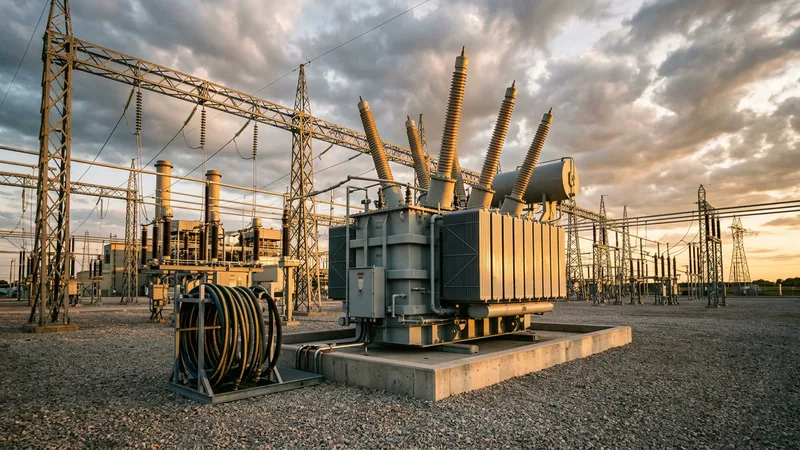
In the boom years following World War II, utilities across the Northeast embarked on a generational project: electrifying America. Companies like Con Edison, Boston Edison (now Eversource), and Niagara Mohawk (now National Grid) laid the backbone of the modern grid. The large power transformers (LPTs) they installed, many in the 100 MVA to 500 MVA class, were marvels of mid-century engineering. Built with robust paper insulation, copious copper, and high-quality mineral oil, these units were specified and built to last. The prevailing wisdom, codified in standards like the early versions of IEEE C57, was that a well-maintained transformer could run for 40 years, perhaps longer.
This created a culture of "install and forget." For decades, a utility's asset management plan for transformers was little more than a calendar and a prayer. Reactive maintenance—responding to failures rather than anticipating them—was the norm. Why wouldn't it be? The things just *worked*. They weathered loading growth, momentary faults, and punishing duty cycles with quiet competence. Planners and operators came to view them less as complex machines and more as permanent fixtures of the landscape, as static and reliable as the concrete pads they sat on. An entire generation of system engineers built their careers on the quiet hum of these over-engineered assets.
But the physics of aging stops for no one. The cellulosic paper insulation that is the heart of a transformer’s dielectric system inexorably breaks down. Over time, heat, moisture, and oxidation degrade the long polymer chains of the paper, reducing its mechanical strength and its ability to withstand electrical stress. The degree of polymerization (DP) value, a key measure of paper health, starts high (around 1200) and steadily falls. Below a DP of 200, the paper becomes brittle and prone to catastrophic failure from even minor through-faults.
The Great Compression
The math is catching up with the Northeast grid. A significant tranche of transformers installed between 1960 and 1980 are now approaching or sailing past their 40-year theoretical lifespan. According to recent utility filings, the age profile of the LPT fleet is alarming. Some estimates suggest that over 40% of large power transformers at major Northeast utilities are over 35 years old. This isn't a gentle slope; it's a demographic cliff.
The Electric Power Research Institute (EPRI) has been sounding this alarm for years. Their research points to a worrying trend: while the *design life* might be 40 years, the *useful life* is often shorter, sometimes significantly so. The loading has changed, too. The rise of renewable intermittency and electric vehicle charging profiles place new, dynamic stresses on these old warriors that their original designers never anticipated.
This leads us to the great compression: a rapidly accelerating replacement need squashed against a stubbornly inelastic supply chain. The hard numbers are stark:
1. Lead Times: Ordering a new LPT is not like buying a pickup truck. Lead times for large, custom-specified units from major manufacturers can easily exceed two years. For the highest voltage classes (e.g., 345 kV), three years is not unheard of.
2. Manufacturing Concentration: The domestic manufacturing base for LPTs in the US is thin. Much of the world's capacity is concentrated in a few countries, creating significant geopolitical and logistical risks.
3. Skilled Labor Shortage: Building a transformer is a craft. Winding the coils, assembling the core, and performing the final tanking and processing requires a highly skilled, experienced workforce that is itself aging out.
One utility planner recently confessed that their "replace-on-fail" strategy has become a high-stakes gamble. A single unplanned failure of a 200 MVA, 138/13.8 kV substation transformer could mean running on a mobile unit (if one is even available) for over 24 months, stressing the system and risking contingencies. The "40,000 transformer replacements by 2032" figure isn't hyperbole; it's a conservative estimate of the wave about to break over the Eastern Interconnection. You can find more detail on available units on our products page.
Navigating the Bottleneck
Faced with this daunting reality, what's a planner to do? Simply accelerating purchase orders isn't a viable strategy; the supply chain can't deliver. The focus must shift from simple replacement to intelligent fleet management. This means embracing a new toolkit of diagnostics, life extension techniques, and alternative procurement models.
First is a commitment to data-driven condition assessment. Moving beyond basic dissolved gas analysis (DGA) is critical. Utilities need to invest in a more holistic diagnostic suite:
- Sweep Frequency Response Analysis (SFRA): Detects winding deformation and core issues.
- Furan Analysis: Directly measures the decay products of paper insulation in the oil, providing a much better estimate of remaining paper life (and true DP value) than DGA alone.
- Dielectric Frequency Response (DFR): Assesses the moisture content in the solid insulation, a key accelerator of aging.
Second is a strategic approach to life extension. For a transformer with a healthy core and windings but wet insulation, onsite oil regeneration and drying can add 10-15 years of reliable life for a fraction of the cost of a new unit. For units with known vulnerabilities, targeted refurbishments—replacing bushings, LTCs, or cooling systems—can reset the clock on key failure modes. Our own engineers have seen units from the 1970s returned to near-new condition through focused interventions. Explore some of our own solutions for transformers and switchgear.
Third is the rise of the remanufactured transformer. This isn't just a "used" unit; it is a fully re-engineered asset. A reputable remanufacturer will completely untank the unit, inspect and test the core and coils, replace the entire insulation system, install new bushings and controls, and issue a new factory warranty. Lead times can be 50-60% shorter than for a new build, and costs can be 20-30% lower. For utilities facing a backlog of replacements, a strategic blend of new and remanufactured units can be the only way to manage risk and budget. It's a pragmatic solution that is rapidly gaining traction among savvy procurement teams.
For engineers wrestling with these challenges, our calculators can provide some useful initial guidance.
Key Takeaways
- The 40-year design life for power transformers is a theoretical maximum, not a guaranteed service life. Real-world data shows many fail sooner, and a large portion of the Northeast's fleet is past this mark.
- A "replacement wave" is imminent as post-war era transformers reach their end of life, but global supply chains for new units are severely constrained with lead times exceeding two years.
- Utilities must shift from reactive replacement to proactive fleet management, using advanced diagnostics, strategic life extension, and the procurement of remanufactured units to navigate the bottleneck.
The Engineer's Takeaway
The age of "install and forget" is definitively over. The next decade of power engineering will be defined not by massive new generation projects, but by the far less glamorous—and far more critical—task of intelligently managing the assets we already have. The humble transformer, long ignored, is about to demand our full attention.