





Eight years ago a US utility could place a 500 MVA / 765 kV order with a domestic OEM and expect delivery inside fourteen months. The same order today closes at thirty-eight months, with grain-oriented steel allocated quarter-by-quarter and bushing manufacturers booked through 2027. This piece traces how a single supply-chain shortage became a strategic-reliability concern that the DOE has now formally classified as a national-security input.
When an LPT fails, you don't simply call a local distributor for a replacement. These are bespoke, highly engineered machines that are often "one-of-one" designs tailored to specific impedance levels and voltage ratios. In the current climate, lead times for a new unit have ballooned from a standard twelve months to a staggering three or four years. For a nation attempting to integrate gigawatts of renewable energy while simultaneously hardening its infrastructure against extreme weather, this supply chain bottleneck is more than an inconvenience; it is a strategic vulnerability.
The Invisible Backbone of the American Grid
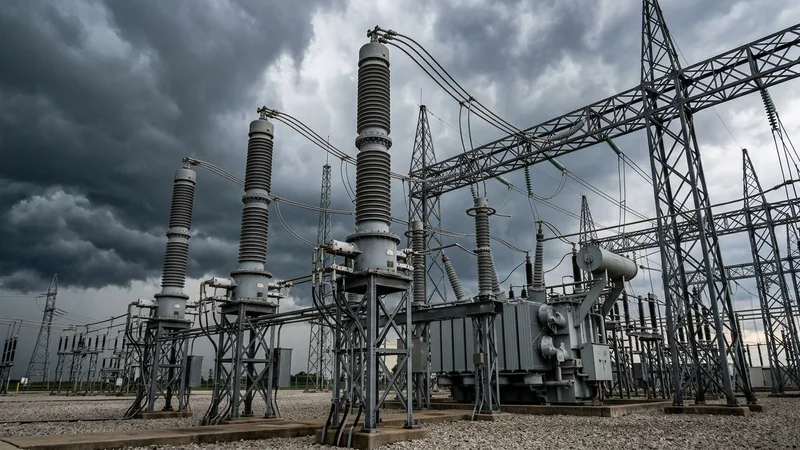
To understand why the LPT shortage is so disruptive, one must understand the sheer physics of the machine. An LPT is the gateway between power generation and the consumer. It takes the electricity produced by wind farms in the plains or nuclear plants on the coast and steps it up to ultra-high voltages—often 345kV or 765kV—to minimize line losses during long-distance transmission. Without these units, power cannot move.
The American grid is currently a patchwork of aging infrastructure. According to Department of Energy (DOE) research, the average age of a large power transformer in the U.S. is approximately 38 to 40 years. Considering that many of these units were designed with a 25-year life expectancy in mind, the country is essentially operating on borrowed time. When a transformer built in the 1970s finally reaches its thermal limit or suffers a catastrophic dielectric failure, there is no "off-the-shelf" solution waiting in the wings.
This is not merely a logistical headache for utilities; it is a matter of national security. Because LPTs are so massive, they cannot be moved by standard heavy-haul trucking once they exceed certain dimensions. They require specialized schnabel cars—unique railway carriages designed to suspend the transformer between two points—to navigate the rail network. With only a limited number of these cars in existence and a dwindling domestic manufacturing base, the physical act of replacing a failed unit has become a Herculean task.
Standards, Stress, and the IEEE C57 Framework
Engineering an LPT is an exercise in managing extreme electromagnetic and thermal stresses. In the United States, the gold standard for these machines is the IEEE C57 series of standards. These documents, such as IEEE C57.12.00, dictate everything from the dielectric strength of the insulation to the short-circuit withstand capabilities of the windings. When a utility orders a transformer, they aren't just buying a box of copper; they are commissioning a piece of equipment that must survive decades of lightning strikes, through-faults, and fluctuating ambient temperatures.
The rigor required by IEEE C57 is a double-edged sword in the current shortage. Because U.S. specifications differ significantly from the IEC 60076 standards used in Europe and much of Asia, it is difficult for international manufacturers to quickly pivot their production lines to serve the American market. Every unit destined for a U.S. substation requires specific testing protocols, cooling configurations (typically ONAN/ONAF/OFAF), and bushing arrangements that are unique to the North American operating environment.
Furthermore, the materials required to meet these standards are themselves in short supply. Grain-oriented electrical steel (GOES) is the "magic" material that makes the transformer core efficient. There are only a handful of facilities globally capable of producing high-permeability GOES that meets modern efficiency requirements. When the supply of core steel tightens, the entire production line for LPTs grinds to a halt, regardless of how many engineers are on the floor.
The Perfect Storm of Demand and Decay
While the aging fleet of existing transformers creates a steady "replacement" demand, two new forces have dramatically accelerated the LPT shortage. The first is the rapid expansion of data centers, driven by the insatiable appetite of artificial intelligence and cloud computing. A single hyperscale data center can require as much power as a small city, necessitating dedicated substations and, by extension, multiple large power transformers.
The second force is the decarbonization of the grid. Connecting a new 500MW solar array or an offshore wind farm to the high-voltage transmission network requires new substations. We are currently witnessing an unprecedented "interconnection queue" across the U.S., where renewable projects are shovel-ready but cannot move forward because they cannot secure the necessary transformers to step their power up to transmission levels.
This surge in demand has created a "seller's market" unlike anything seen in the power industry since the post-war electrification boom. Manufacturers are booked out years in advance, and prices for raw materials like copper and transformer oil have seen significant volatility. For smaller utilities or cooperatives, competing for manufacturing slots against massive multi-state investor-owned utilities (IOUs) has become a losing game, leaving smaller communities at greater risk of long-term outages if a critical unit fails.
Resilience Beyond the Nameplate
Addressing the shortage requires more than just building more factories; it requires a fundamental shift in how we approach grid resilience. Traditionally, the industry relied on a "N-1" redundancy philosophy—having a spare unit on-site or nearby. But as lead times extended, the "spare" units were shifted into active service to meet growing demand, leaving many substations without a safety net.
Modern engineering is looking toward more flexible designs to bridge the gap. This includes the development of "modular" or "universal" spare transformers that can be configured to operate at multiple voltage levels, allowing a single unit to serve as a backup for various locations. These units are often designed with hybrid insulation systems (using Nomex or other high-temperature materials) to allow for a smaller physical footprint, making them easier to transport in an emergency.
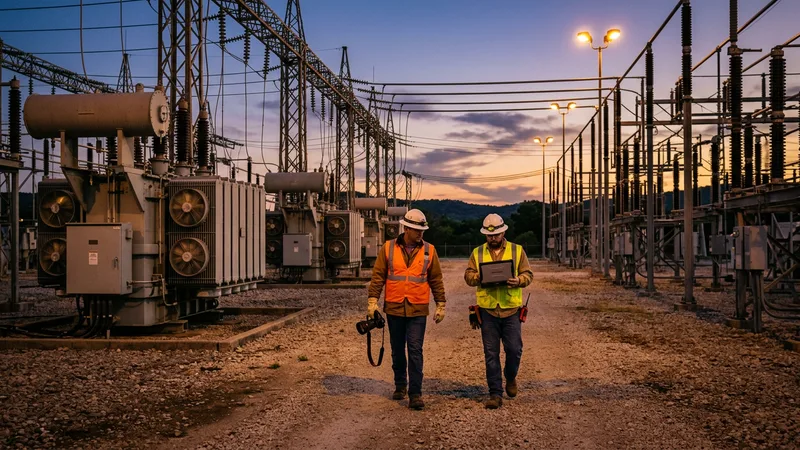
At ETS Group, we see this challenge through the lens of longevity. If the supply of new units is constrained, the premium on the health of existing assets becomes absolute. This means a renewed focus on dissolved gas analysis (DGA) and real-time monitoring to catch incipient faults before they lead to a catastrophic "tank rupture" event. If you cannot buy a new transformer, you must ensure the one you have survives long enough to see the next generation of manufacturing capacity come online.
Navigating the Procurement Labyrinth
For procurement teams, the LPT shortage has turned a technical specification process into a high-stakes strategic negotiation. It is no longer enough to simply issue an RFP and wait for bids. High-tier manufacturers now vet their customers as much as the customers vet them. They are looking for "partners" who provide clear, standardized specifications rather than overly complex, custom requirements that slow down the production line.
International standards like IEC 60076-1 are also playing a larger role as U.S. utilities look abroad to fill the vacuum. While the IEEE C57 framework remains the domestic benchmark, more engineers are becoming "bilingual," understanding how to bridge the gap between European design philosophies and American grid expectations. This cross-pollination of engineering standards is likely a permanent shift in the industry, as the "local" supply chain is no longer sufficient to meet "local" needs.
The secondary market and refurbishment sector are also seeing a resurgence. Transformers that were once destined for the scrap heap are now being core-sampled and rewound. While a rewound transformer may not always reach the peak efficiency of a modern unit designed under NEMA TP-1 or updated DOE efficiency mandates, it has one major advantage: it exists. For a utility facing a three-year wait for a new LPT, a refurbished unit that can be delivered in six months is often the only viable path to maintaining grid stability.
The Long Road to Recovery
The LPT shortage is a physical reminder that the digital world is built on a very heavy, very analog foundation. You cannot "code" your way out of a shortage of grain-oriented electrical steel or a lack of specialized winding labor. It takes time to build the heavy industrial capacity required to manufacture these units, and it takes even more time to train the artisans who understand the nuances of transformer assembly.
Government intervention through the Defense Production Act has been discussed as a way to prioritize electrical steel for the domestic market, but these are long-term plays. In the immediate future, the industry must rely on a combination of rigorous asset management, strategic stockpiling of critical components, and a move toward more standardized designs that allow for faster manufacturing cycles.
The humming monoliths in our substations will continue to age, and the demand for their services will only grow as we electrify our transport and heating systems. The quiet crisis of the large power transformer is a test of industrial foresight—a question of whether we can rebuild the heart of the grid before the old one stops beating. Efficiency and reliability are no longer just performance metrics; they are the literal insulators against a dark and disconnected future.
America’s grid is only as strong as its weakest link, and right now, that link is a 400-ton block of steel and copper. We are learning the hard way that in the world of high-voltage transmission, you cannot rush the physics of power. The hum must go on, but ensuring it does will require a reimagining of our industrial base from the core out.