





Megawatt Charging System ports for Class-8 trucks land at 1,250 V and up to 3,000 A. Multiply that by the eight-stall hub Tesla and Pilot proposed off Interstate 80, and the load curve resembles a small steel mill more than a fueling station. Utility planners in PJM and MISO are already revising their 12-year load forecasts. This article unpacks the medium-voltage architecture making it possible.
The Long Road to Megawatt Charging
Not long ago, a 50 kW DC fast charger was considered state-of-the-art. These early units, built around the CHAdeMO and early Combined Charging System (CCS) standards, were a respectable leap from Level 2 AC charging, but they were designed for 400 V passenger vehicle battery architectures. A 30-minute stop would add maybe 100 miles of range—acceptable for a commuter, but a non-starter for commercial logistics where every minute of dwell time is lost revenue.
The push for faster charging led to the 800 V architectures common in today’s high-performance passenger EVs. Chargers scaled to 150 kW, then 350 kW, pushing the limits of the CCS connector’s thermal and physical capacity. These systems are impressive feats of engineering, but they represent the ceiling of that particular standard. The underlying physics of trying to push more power through the existing pins and cable gauges hit a wall of diminishing returns, dictated by heat and efficiency losses (I²R losses, for the pedants).
Enter the commercial vehicle market. A Tesla Semi, with its anticipated 1,000 kWh battery pack, would take nearly a day to charge on a 50 kW unit. Even a 350 kW charger would require nearly three hours—far too long for a driver’s mandated 30-minute break. The industry needed a completely new standard, one designed from the ground up for multi-megawatt power levels. It required a rethinking of everything from the connector itself to the grid infrastructure behind the meter. The Society of Automotive Engineers (SAE) rose to the challenge, leading to the development of the Megawatt Charging System (MCS), now codified as SAE J3271.
Today’s Megawatt Reality: 3,000 Amps is Not a Typo
The MCS standard is a beast. It specifies a new triangular connector designed for up to 1,250 V DC and a staggering 3,000 A, allowing for a theoretical peak charging power of 3.75 MW. For comparison, the highest-spec CCS chargers top out at 500 A. Delivering this level of current required a complete redesign, incorporating liquid cooling for the cable and connector, sophisticated thermal monitoring, and a robust communication handshake between the vehicle and the dispenser.
The first real-world deployments, like the pilot sites at Pilot and Flying J truck stops featuring Tesla’s Megachargers, reveal the sheer scale of the engineering challenge. A single MCS dispenser delivering 3.75 MW is a significant load. A plaza with just four of these dispensers represents a 15 MW peak load. This is not a load you simply connect to the local 480 V utility service.
This is where power systems engineering takes center stage. A typical MCS installation requires a dedicated medium-voltage service drop from the local utility, often at 12.47 kV, 24.94 kV, or even 34.5 kV. This feeds a customer-owned pad-mounted transformer stepping the voltage down to what the power conversion system requires. The numbers are substantial:
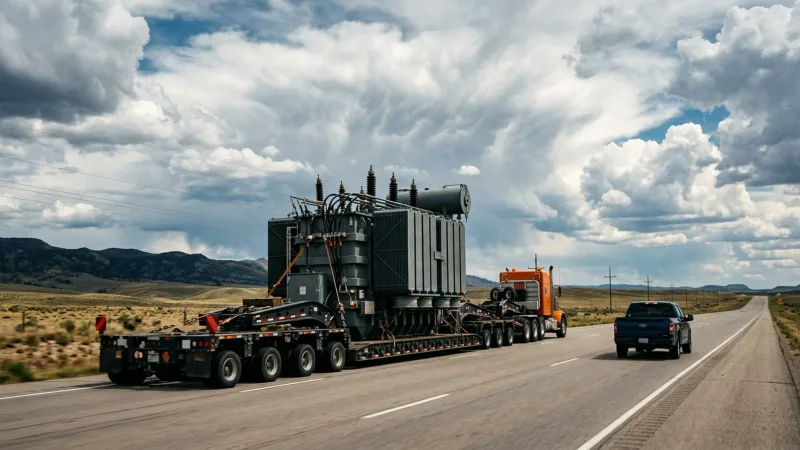
- Transformer Sizing: A conservative rule of thumb for a plaza with three to four MCS stalls might call for a 5 MVA transformer, with considerations for N+1 redundancy. That’s a piece of equipment weighing over 20,000 pounds.
- Harmonic Mitigation: Converting this much AC power to clean DC creates significant harmonic distortion. Active or passive harmonic filters are no longer an optional accessory; they are a critical component to avoid violating IEEE 519 standards and polluting the local grid.
- Grid Impact Studies: Before breaking ground, a thorough grid impact and interconnection study is non-negotiable. Utilities will scrutinize the project’s potential for voltage flicker, fault current contribution, and frequency deviation. Approval is not guaranteed and can take months, or even years, if the local distribution network is not robust enough.
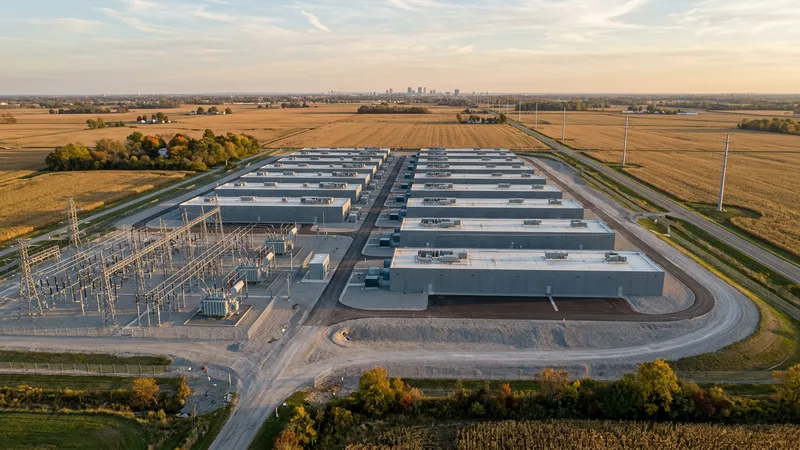
Forget the charger itself; the balance-of-system (BOS) is where the real work happens. We’re talking medium-voltage switchgear, protection relays, extensive grounding systems, and civil engineering for large concrete pads and conduit banks. In essence, every MCS-equipped truck stop is becoming its own small-scale substation. If you're finding these early-stage assessments daunting, our team often runs feasibility studies; you can learn more by visiting our /us/en/contact page.
The Future Grid: From Truck Stops to Power Hubs
Looking ahead, the challenge intensifies. The North American Council for Freight Efficiency (NACFE) estimates that fully electrifying the US and Canadian Class 8 truck fleet would require an amount of electricity equivalent to one-third of all electricity consumed by the commercial sector today. What happens when every stall at a 100-bay truck stop has an MCS connector?
The answer is that the grid as we know it cannot handle it. The future of fleet charging lies in integrated energy systems. Utility planners and fleet operators are looking at a future where charging plazas are no longer just loads, but dynamic energy hubs.
This future model involves several key technologies:
1. On-Site Generation: Large-scale solar PV arrays on canopy roofs and adjacent land will become standard, not just for sustainability points, but to offset punishing demand charges from the utility during peak sun hours.
2. Battery Energy Storage Systems (BESS): Multi-megawatt-hour battery systems will be essential. They will be used for “peak shaving”—charging the batteries during off-peak hours when electricity is cheap and then discharging them to power the chargers during peak demand, avoiding the highest utility rates. They also provide grid-firming services and can buffer the local grid from the massive, spiky loads of arriving trucks.
3. Microgrid Control: The entire site—chargers, BESS, solar, and the utility interconnect—will operate as a coordinated microgrid. An advanced controller will make real-time economic decisions, optimizing when to draw from the grid, when to dispatch the battery, and how to allocate power among charging vehicles based on priority and price.
These future truck stops will interact with the grid in ways we are just beginning to model. With hundreds of multi-megawatt-hour batteries passing through each day (inside the trucks), the potential for Vehicle-to-Grid (V2G) services is enormous. A fleet operator could be paid to allow the utility to draw power from parked trucks to help stabilize frequency during a grid event, turning a cost center into a revenue stream. An essential tool for any planner exploring these options is our suite of grid modeling calculators.
Key Takeaways
- Megawatt Charging (MCS) is a necessary step for fleet electrification, but it brings substation-level power demands (3.75 MW per charger) that dwarf today's EV infrastructure.
- Early MCS projects require significant power engineering expertise, including medium-voltage interconnections, 5 MVA-class transformers, and sophisticated harmonic filtering to meet utility standards like IEEE 519.
- The future of large-scale fleet charging will not be a simple grid connection but rather integrated microgrids using on-site solar, large battery storage systems, and advanced controls to manage cost and grid impact.
The Engineer's Takeaway
For decades, truck stops were an exercise in civil and petroleum engineering. Now, they are becoming a frontier for power systems engineers. The transition from diesel pumps to megawatt chargers isn't just about replacing one nozzle with another; it’s about fundamentally redesigning the energy infrastructure of our entire logistics network, one substation at a time.