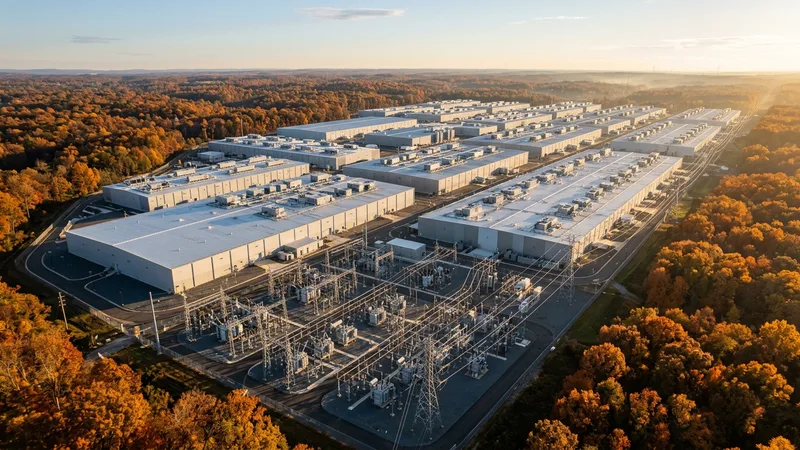






On a typical August evening in West Texas, the load on the ERCOT grid does not really fall. The sun drops behind the mesquite, the irrigation pumps in the cotton fields ease off, and the residential air-conditioning load in Dallas-Fort Worth and Houston picks up exactly the slack the agricultural feeders just gave back. Total system demand stays within a few hundred megawatts of the noon peak, sometimes for ten hours straight. There is no overnight valley to speak of, and that single fact has quietly rewritten how Texas utilities maintain the largest substation fleet in the country.
For most of the United States, transmission maintenance is still organized around a comfortable assumption: load drops at night, you take an outage between two and five in the morning, and the system has enough slack to absorb a 345 kV line being out of service for a six-hour switching window. In ERCOT, and increasingly across the rest of the country, that assumption is breaking. The night-shift maintenance crew is no longer working in the quiet hours. They are working in the only hours, and those hours are getting shorter.
The PRC-005 Clock Nobody Talks About
The regulatory backbone for transmission maintenance in the US is NERC standard PRC-005-6, which prescribes maintenance intervals for protection and control systems on the bulk electric system. The intervals look forgiving on paper — twelve years for an unmonitored microprocessor relay, six years for a battery-only check on a station DC system — but the auditable trail behind those numbers is unforgiving. Every relay setting, every battery impedance reading, every breaker trip test has to be documented to a level that NERC's regional auditors can reconstruct. A single missed interval on a 345 kV bay can trigger a notice of penalty that runs into the hundreds of thousands of dollars.
What changed over the last five years is that the work the standard requires has grown faster than the available outage time. ERCOT's 2024 capacity reports show that the system spent 41 percent of operating hours within 5 percent of an emergency operating limit somewhere on the network, up from 18 percent in 2019. The transmission operator can still grant outages, but the conditions attached — "release within 90 minutes on system notification," "no concurrent outages on any 345 kV line in the same zone," "load-shed plan required above 102 °F ambient" — make a routine six-hour maintenance window functionally impossible on hot weeks.
The practical answer most Texas TDUs have settled on is to compress what used to be a single annual outage into multiple shorter ones, spread across the cooler months, and to push everything that can be done online to be done online. That has changed both the work and the workforce.
Online Condition Monitoring Becomes the Default
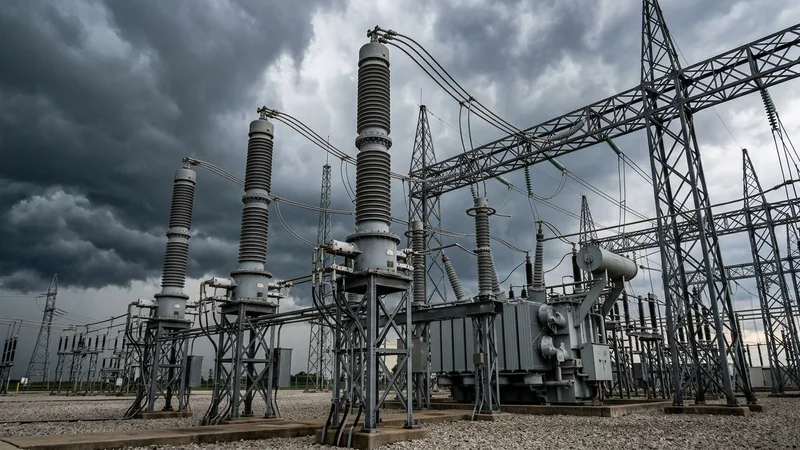
A 345/138 kV autotransformer at a major Texas substation today carries roughly twelve to twenty separate online monitoring streams: dissolved-gas-analysis on the main tank and on each on-load tap-changer compartment, bushing capacitance and tan-delta, moisture-in-oil, top-oil and winding hot-spot temperatures, fan and pump motor currents, OLTC drive torque, partial-discharge from acoustic and UHF sensors, and cooler differential pressure. Ten years ago, half of those points were quarterly handheld readings taken by a technician who actually had to climb up to the bushing turret. Today they stream to a central asset-health platform every minute, and the maintenance plan reacts to trends instead of calendars.
This shift sounds obvious in 2026, but it has been genuinely difficult to execute. The sensor itself is the easy part. The hard parts are the cable runs back to the marshalling cabinet on a live energized transformer, the cybersecurity boundary between the operational technology network and the asset-health analytics that often lives in a corporate cloud, and the simple question of who owns the data when the alarm comes in at three on a Sunday morning. Most of the larger Texas utilities now run dedicated transformer health desks staffed twenty-four hours a day, separate from the system operations control room, with a direct line to the field maintenance crews and a standing relationship with the original manufacturer for any anomaly above a defined severity threshold.
The numbers behind this are striking. Across the ERCOT footprint, the proportion of transformer interventions that begin with an analytics-generated work order — rather than a calendar interval or an in-service failure — passed 60 percent for the first time in 2024. For the largest auto-banks, units above 500 MVA, it is closer to 85 percent.
The Crew That Does Not Exist Yet
The harder bottleneck is human. The American electric utility workforce that does substation maintenance is, on the most-cited industry estimates, between 55 and 58 years of age on average, and the pipeline behind it is thin. A senior substation technician with the certifications to commission a 345 kV bay, perform sweep frequency response analysis on a main transformer, and sign off on a PRC-005 protection test now commands a base salary that has risen roughly 40 percent in five years, and the largest Texas TDUs are openly competing for the same few hundred people.
The training pipeline is responding, but slowly. Texas State Technical College's electrical-power-and-controls program in Waco has roughly tripled its substation intake since 2020. Lone Star College and South Texas College have stood up dedicated apprenticeship tracks tied directly to Oncor and CenterPoint. Most major utilities now run their own four-year internal apprenticeship in parallel, complete with simulator yards built around retired 138 kV equipment. None of this fills the gap in 2026. Every utility planner in the state will admit, off the record, that the binding constraint on transmission maintenance over the next decade is people, not money and not parts.
The response in the field has been pragmatic. More work is being outsourced to specialist service contractors — independent test houses, OEM field-service teams, and a handful of integrated maintenance providers — who can move crews across multiple utilities and effectively amortise their senior technicians over a larger asset base. The economics of that model only work because the underlying analytics have made the work plannable: a contractor can quote a fixed-price scope for a transformer mid-life refurbishment because the asset-health data already says exactly what is wrong before the crew arrives on site.
The 1990s Fleet Comes Due
Underneath the workforce and outage questions sits a more straightforward problem: a very large portion of the Texas transmission transformer fleet was installed during the 1985 to 2000 build-out and is now approaching, or past, its original design life of 40 to 50 years for normal loading. The Edison Electric Institute estimates the national average age of installed large power transformers at 38 years; in Texas the equivalent number is closer to 35, because of the late-1990s growth boom, but the long tail of older units serving the Houston Ship Channel and the East Texas refining belt is older than the network average.
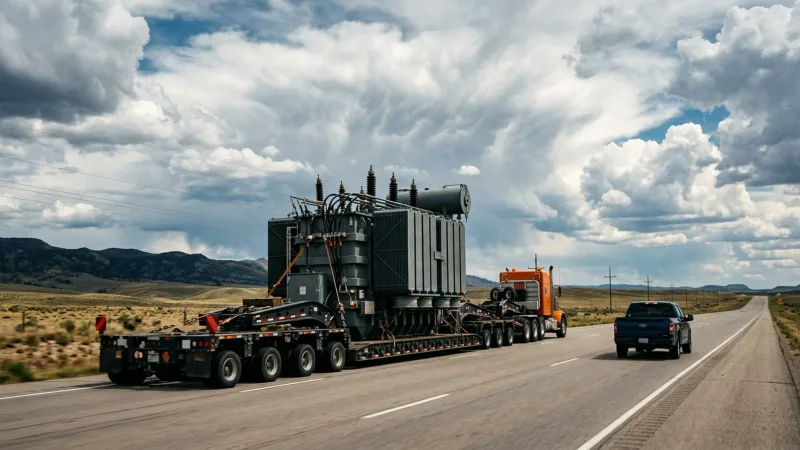
Replacing this fleet on a like-for-like basis would consume a meaningful fraction of national transformer manufacturing capacity for a decade. So the practical strategy across most of the state has shifted to life-extension: full active-part inspection during the next planned outage, oil reclamation or replacement, bushing replacement with modern resin-impregnated paper designs, OLTC refurbishment or upgrade to vacuum-interrupter technology, and a full rewind only where the dielectric and mechanical condition justifies it. The cost of a high-quality life-extension intervention is typically 35 to 50 percent of new-unit replacement, and it can buy fifteen to twenty additional years of service if the underlying core and tank are sound.
The decision of which units to extend and which to replace is, again, largely driven by the same online data. A transformer with stable DGA, low partial-discharge activity, and a winding hot-spot trend that has not drifted in five years is a strong life-extension candidate. A unit with rising furan concentrations and a tap-changer that has crossed its mechanical operations limit is a replacement priority regardless of nameplate age.
What This Means for the Rest of the Country
Texas is the leading indicator, not the exception. The combination of a load curve that never really sleeps, a regulatory standard with non-negotiable intervals, a workforce demographic that no amount of capital spending fixes quickly, and a fleet built mostly in one twenty-year window is now appearing across the rest of the United States — in the PJM footprint with the hyperscaler build-out, in the Southwest Power Pool with the wind expansion, and in California with the post-wildfire reinforcement programs. Every system that has tracked it carefully reports the same pattern: outage windows shrinking, condition monitoring becoming load-bearing, contractor labor rising, and life-extension overtaking replacement as the default disposition for mid-life assets.
The substation that quietly hums on a county road outside Abilene is, in 2026, running a maintenance program that was unimaginable in 1995, on a fleet that was built in 1995, with a workforce that will be largely gone by 2030. The night shift never really stopped working. It just stopped being the night shift.