





Order 2222 reads as a market-design rule. It functions as a hardware specification. Once a 50 kW rooftop array can stack with a neighbor's EV battery and clear into a PJM capacity auction, the 25 kVA pole-top transformer two houses down is being asked to operate as a network device. The rerating math, and what it means for replacement-cycle planning, is the subject of this piece.
The One-Way Street That Built the Grid
For the better part of a century, the electric grid operated on a simple, gravitational principle: power flowed downhill. Large, central power stations generated electrons at high voltage, which were stepped down through transmission and distribution substations until they arrived at a residential curb at a serviceable 240 volts. The neighborhood distribution transformer was the last, quiet gatekeeper in this one-way system. Its life was predictable.
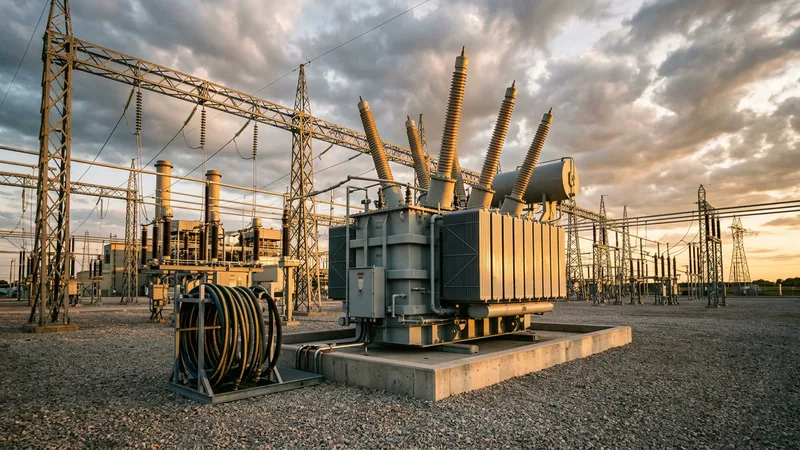
Engineers designed and specified these assets, typically the familiar 25 kVA or 50 kVA single-phase pole-top units, based on a known rhythm of life. Load would rise in the morning, peak in the early evening as families returned home, and then fall into a long, quiet trough overnight. This nightly cooldown was not a luxury; it was a core design assumption. The transformer’s thermal mass could handle the peak heating from daytime load because it had 8-10 hours to dissipate that heat into the ambient air. Its insulation system, primarily kraft paper bathed in mineral oil, was designed according to IEEE C57 standards, which banked on this predictable thermal cycle. The load profile was so understood that a utility could confidently install a transformer and expect it to serve reliably for 25, sometimes even 40 years, with minimal intervention. It was a passive, rugged, and brilliantly simple system.
The Wholesale Market Crashes the Cul-de-Sac
Then came FERC Order 2222. On paper, it’s a landmark piece of regulation designed to open up the wholesale energy markets—historically the exclusive domain of large power plants—to the little guys. It directs the nation’s Independent System Operators (ISOs) and Regional Transmission Organizations (RTOs), like CAISO and PJM, to create pathways for aggregations of Distributed Energy Resources (DERs) to bid their services into the market. We’re talking about collections of rooftop solar panels, home battery systems like the Powerwall, and electric vehicle chargers, all marshalled by a new breed of company running a Distributed Energy Resource Management System, or DERMS.
Suddenly, a quiet suburban cul-de-sac isn’t just a load center anymore. It’s a potential power plant. The aggregator’s DERMS software sees a high price for energy on the PJM market at 1 p.m. on a sunny Tuesday. It signals hundreds of homes in a service area to stop drawing power and start exporting their excess solar generation or discharging their home batteries back onto the grid. For the aggregator and the homeowner, it’s a tidy profit. For the utility distribution company, it’s a nightmare. And for the transformer that was built for one-way traffic, it’s a thermal crisis.
Power is now flowing backward from the meter to the pole. That 12.47 kV primary line is no longer just feeding the neighborhood; it’s collecting energy from it. The distribution transformer, once a simple step-down device, has become a bidirectional gateway, something it was never specified or purchased to be. The entire thermal and electrical engineering basis of the low-voltage distribution network is being upended not by a new technology deployed by the utility, but by a market rule enacted hundreds of miles away. You can find more information about the latest in grid-edge hardware like modern switchgear for managing these new challenges on our site.
The Unseen Enemy: Bidirectional Thermal Cycling
Why is this bidirectional flow so destructive? It systematically dismantles the gentle "heat and cool" cycle that legacy transformers depend on for a long life. The old load profile is gone, replaced by a brutal, twofold assault on the transformer’s insulation.
Consider the new daily cycle. The morning brings a traditional load peak. Then, from roughly 10 a.m. to 3 p.m., rooftop solar generation kicks in across the neighborhood. The net load on the transformer plummets. In many cases, it experiences reverse power flow, pushing energy back up to the medium-voltage line. During this period, the transformer isn’t cooling off; it’s still energized and experiencing core losses, and now its copper windings are heating up from the *reverse* current. Then, as the sun sets, solar generation collapses just as evening residential load (cooking, lighting, HVAC) is ramping up. The transformer is hit with a second, often steeper, peak load. The overnight cooling window has been eliminated.
The core physics of transformer aging are governed by a principle that gives power-systems engineers anxiety: the Arrhenius equation. In simplified terms, it states that for every 6°C to 10°C increase in a transformer’s average winding temperature, the aging rate of its cellulose insulation doubles. That 25-year asset life is effectively halved. By forcing two heating cycles per day without a corresponding cooling period, DER back-feed can easily raise the average operating temperature by that critical 6-10°C, or even more.
This accelerated aging is a quiet, invisible process. There’s no alarm bell. The damage happens molecule by molecule as the long polymer chains of the kraft paper insulation break down. The practical failure progression looks like this:
1. Insulation Brittleness: The paper loses its mechanical strength, becoming brittle and prone to cracking under vibration or fault-current stress.
2. Reduced Dielectric Strength: The mineral oil’s ability to insulate is compromised by moisture and byproducts from the decaying paper.
3. Gassing: As the oil and paper degrade, they produce dissolved gases like hydrogen and acetylene—the tell-tale signs of thermal distress during oil analysis.
4. Turn-to-Turn Fault: Eventually, a minor power surge or through-fault creates a mechanical shock the brittle paper cannot withstand. A crack forms, leading to a short-circuit between windings.
5. Catastrophic Failure: The turn-to-turn fault cascades into a full winding failure. The transformer trips offline, and a neighborhood goes dark.
The workhorse 25 kVA pole-top transformer, designed for a gentle, predictable life, now finds itself in a constant thermal battle, shortening its life by half, two-thirds, or even more.
The Grid’s New Nervous System
The good news is that this is an engineering problem, and it has engineering solutions. But it requires utilities to abandon the passive "fit and forget" model of distribution asset management and embrace an active, data-driven approach. You cannot manage what you cannot measure, and for decades, the grid edge has been a blind spot.
Fixing this means building a new nervous system for the distribution grid. The first step, and the one utilities are rushing to take, is massive sensor deployment. Instead of relying on decades-old assumptions about load, utilities need real-time data on the health and status of their most vulnerable assets. This means deploying sensors that provide visibility into the key parameters that determine transformer health and longevity.
What does this sensor data toolkit include?
- Top Oil Temperature: A direct measurement of the transformer’s primary thermal indicator.
- Calculated Winding Hotspot: Using algorithmic models combining load, ambient temperature, and oil temperature to estimate the true temperature at the hottest point in the windings—the epicenter of insulation aging.
- Real-time Load: Measuring RMS current in real-time to understand both forward and reverse power flow.
- Voltage and Power Quality: Monitoring for the voltage swells and sags that are symptomatic of high DER penetration.
The second step is investing in hardware that is actually designed for this new reality. This means specifying and procuring modern distribution transformers built with higher-temperature insulation systems (e.g., Nomex or thermally upgraded kraft paper), and designs that account for bidirectional flow from the start. Solid-state or “smart” transformers represent a future-looking option, offering precise control over power flow at the cost of higher complexity and price.
Finally, this firehose of new data from grid-edge sensors must be integrated with the same DERMS platforms the aggregators are using. If a utility can see that a particular transformer bank is approaching its thermal limit, it can work with aggregators or use its own control systems to strategically curtail DER output—not just to avoid a blackout, but to perform active thermal management on its own assets, extending their life and deferring billions in capital replacement costs. If you're beginning this planning journey, it's best to get in touch with experts who understand both the regulatory landscape and the engineering realities.
Key Takeaways
- FERC Order 2222, by enabling DER aggregators to bid into wholesale markets, fundamentally changes the operating conditions of the local distribution grid.
- Legacy distribution transformers were designed for one-way power flow with long overnight cooling periods; bidirectional DER flows create a second daily thermal peak, dramatically accelerating insulation aging.
- Survival and adaptation require active asset management, starting with sensor-based, real-time monitoring of transformer thermal stress and upgrading to hardware specified for bidirectional duty cycles.
The Engineer's Takeaway
The distribution transformer is no longer just a piece of passive electrical hardware; it is now an active, and often unwilling, financial market participant. Treating that can of steel and copper like the dumb iron it used to be is a direct path to an unscheduled, middle-of-the-night truck roll and a budget full of emergency replacement requisitions.