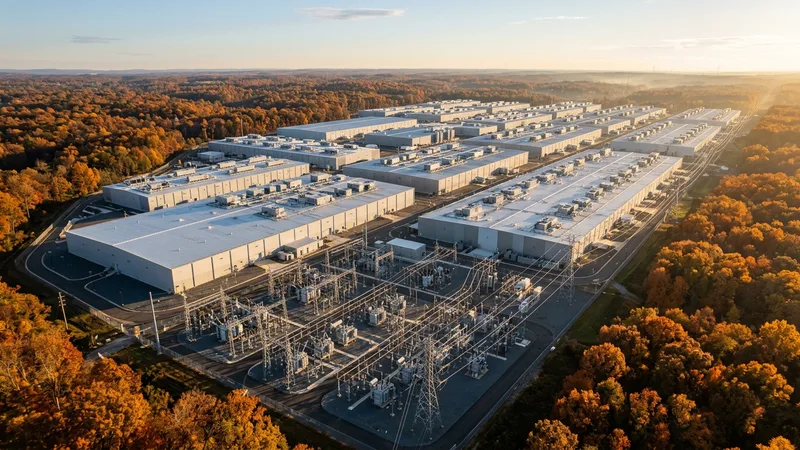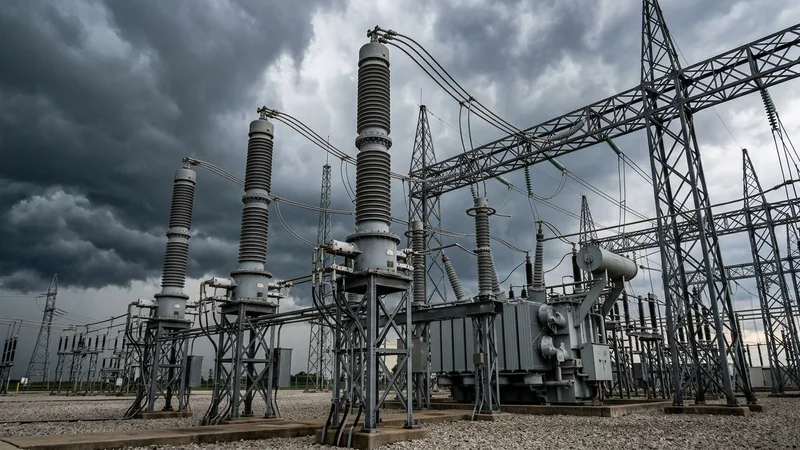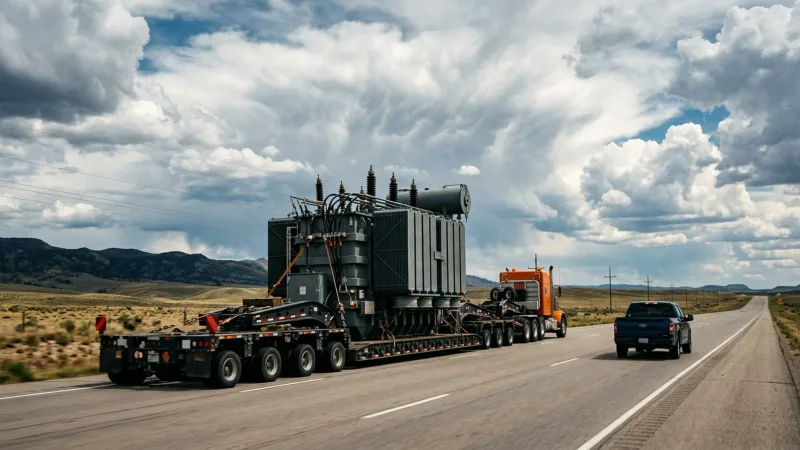






In the pre-dawn quiet of a massive staging yard in the American Midwest, a line of fresh pad-mounted units sits ready for deployment. To the untrained eye, they look identical to the green boxes that have populated residential cul-de-sacs for decades. But lift the hood on any one of these units and you will find a design architecture fundamentally altered by a piece of legislation that remains the most consequential regulatory shift in the history of the American grid. We are talking about the DOE 2016 efficiency standards, a mandate that effectively rewrote the physics of the distribution transformer and forced the global manufacturing industry to rethink how we handle core losses.
Before this mandate took full effect, the efficiency of a utility-scale unit was governed by older benchmarks like NEMA TP-1. While these provided a baseline for performance, the Department of Energy’s move to tighten the screws was not a minor adjustment; it was a structural overhaul. It pushed the efficiency requirements so high that the traditional "off-the-shelf" designs of the 1990s and early 2000s became overnight relics. This wasn’t just about being green; it was about the brutal mathematics of core magnetization and the quest to eliminate the parasitic losses that bleed billions of kilowatt-hours from the national grid every year.
The Engineering Physics Behind DOE 2016
To understand why this mandate caused such a ripple effect throughout the engineering departments at ETS Group and beyond, one must grasp the "no-load" loss dilemma. A distribution transformer is a unique beast because it is energized 24 hours a day, 365 days a year, regardless of whether a single lightbulb is turned on in the home it serves. Under the previous NEMA TP-1 framework, a certain amount of energy leakage—essentially heat generated by the magnetic flux in the core—was an accepted cost of doing business.
DOE 2016 changed the stakes by significantly limiting these losses. This forced engineers to move away from standard cold-rolled grain-oriented (CRGO) steel toward higher grades of silicon steel, or in many cases, toward the more exotic amorphous core technology. In a standard liquid-filled distribution transformer, hitting these new efficiency milestones meant increasing the physical size of the core. More steel or better-quality steel was required to reduce the flux density. This creates a domino effect: a larger core requires more copper or aluminum winding to wrap around it, which in turn requires a larger tank and more dielectric fluid to keep it cool.
Navigating the Transition from NEMA TP-1
The transition from the voluntary NEMA TP-1 standards to the federally mandated levels dictated by 10 CFR Part 431 was not a seamless pivot for the industry. For decades, the "TP-1 compliant" badge was the gold standard for efficiency in dry-type and liquid-immersed units. However, the DOE 2016 levels represent a leap forward that occasionally challenges the physical footprint limitations of existing substations. When a utility replaces a thirty-year-old unit with a modern, high-efficiency equivalent, they often find the new unit is significantly heavier and wider.
At ETS Group, we see the ripple effects of these standards in every specification sheet we review for the North American market. The mandate applies to a broad spectrum of equipment, ranging from small 10 kVA pole-mounted units to large 2500 kVA pad-mounted units used in industrial complexes. Unlike the more flexible interpretations allowed by international standards like IEC 60076, the DOE mandate is rigid. There are no "close enough" scores; a unit either meets the efficiency curve at the 35% or 50% load points, or it is legally prohibited from being installed on the grid.
The Rise of Amorphous Core Technology
One of the most significant byproducts of these stringent efficiency rules has been the acceleration of amorphous metal in core construction. While traditional silicon steel has a crystalline structure, amorphous metal is glass-like, with a disordered atomic arrangement. This lack of structure makes it significantly easier to magnetize and demagnetize, which translates to a massive reduction in hysteresis losses. Under the pressure of DOE 2016, what was once a niche, expensive technology has moved closer to the mainstream.
However, amorphous cores are not a magic bullet. They are physically brittle and significantly harder to manufacture than traditional mitered or wound cores. They also tend to result in a larger physical footprint for the distribution transformer. For a Gulf utility looking for compact footprints or a UK DNO working within Victorian-era masonry, these size trade-offs are significant. In the U.S., the choice between higher-grade CRGO steel and amorphous cores often comes down to a Total Ownership Cost (TOC) analysis, where the upfront capital expenditure is weighed against the energy savings over a thirty-year lifespan.
IEEE C57 vs. The Department of Energy
While the DOE sets the efficiency floor, the mechanical and electrical integrity of these units is still governed by the IEEE C57 series of standards. This creates a complex balancing act for manufacturers. We must ensure that while the unit is highly efficient to satisfy federal law, it remains robust enough to survive the through-fault currents and thermal stresses defined by IEEE C57.12.00.
There is a natural tension here. A highly efficient transformer often has lower impedance, which can lead to higher fault currents during a short circuit. To counteract this, designers must adjust the winding geometry, which may then push the efficiency back down. This dance of parameters—efficiency versus short-circuit strength—is where the real engineering of a modern distribution transformer happens. We aren't just building boxes; we are optimizing complex electromagnetic systems that must remain stable for four decades.
Material Scarcity and the Global Supply Chain
The silent mandate also had an unforeseen impact on the global commodities market. By demanding higher grades of grain-oriented electrical steel (GOES), the DOE effectively increased the competition for the world’s most specialized steel products. There are only a handful of mills globally capable of producing the laser-scribed, high-permeability steel required to meet these levels without ballooning the unit’s size. When global demand for EVs (which also use high-grade steel in motors) spiked, the distribution transformer industry found itself in a pincer move.
This supply chain pressure is why the design phase has become so critical. At our manufacturing facilities, we don't just look at the electrical requirements; we evaluate the long-term availability of the core materials. If a design relies on a specific grade of M3 or M4 steel that is in short supply, the project lead times can stretch from months to a year. The DOE 2016 rule essentially codified a preference for premium materials, making the procurement strategies of a manufacturer as important as their winding techniques.
Why Efficiency Matters for Decentralized Grids
The timing of these efficiency mandates aligns perfectly with the rise of distributed energy resources (DERs). As we move toward a grid populated by solar arrays, EV chargers, and battery storage, the distribution transformer is no longer a one-way street for power. It must handle bidirectional flow and varying harmonic loads. High-efficiency units are better suited for this new reality because they run cooler. A transformer that wastes less energy as heat is a transformer that can handle higher harmonic distortion without degrading its insulation system.
Furthermore, the environmental impact of these rules is massive when scaled. A single percentage point increase in efficiency across millions of units translates to the equivalent of several coal-fired power plants being taken offline. When we look at compliance through the lens of ANSI C57.12.20 or NEMA requirements, we see that the DOE 2016 standard was the catalyst that pushed the industry toward a higher level of precision. The days of "over-designing" with heavy, inefficient iron are gone, replaced by narrow-margin, high-performance engineering.
The Future of Mandated Performance
Looking ahead, the conversation hasn't stopped. There are already discussions regarding the next iteration of efficiency standards, which may push the industry even further toward amorphous technology or even more advanced core configurations. For now, the DOE 2016 framework remains the benchmark that defines the competitive landscape of the North American power industry. For manufacturers like ETS Group, it represented a challenge to innovate, forcing us to move beyond the legacy designs of the founding 1987 era and embrace a more disciplined approach to electromagnetic design.
The legacy of the 2016 mandate isn't just a set of numbers in a federal register. It is found in the reduced carbon footprint of the utility sector and the sophisticated engineering required to make a simple green box do more with less. As the grid continues to evolve, the transformers sitting on those concrete pads will remain the quiet, highly efficient workhorses of the modern economy, proving that sometimes, the most important changes are the ones you can’t even see.
The shift toward extreme efficiency has fundamentally changed the blueprint of the American grid, turning the humble distribution transformer into a piece of precision-engineered equipment. It is a testament to how regulation can drive innovation, even in an industry as established as power distribution. The green boxes might look the same, but under the lid, the world has truly changed.