





Imagine standing on a steel platform the size of a five-story office building, suspended sixty meters above a churning, grey-scale North Sea. Beneath the grating of the mezzanine deck, the salt spray atomizes against the hull, yet inside the pressurized, climate-controlled modules, the air is as still as a laboratory. You are standing on an Offshore Substation (OSS), a marvel of high-voltage engineering that serves as the solitary bridge between a forest of spinning turbines and the millions of homes far beyond the horizon. This isn't just a platform; it is a floating island of copper, steel, and sophisticated insulation designed to survive in one of the most corrosive environments on the planet.
Building an offshore wind substation is a masterclass in compromise and extreme durability. While a land-based substation has the luxury of space and easy access for maintenance trucks, an OSS must be compact enough to be lifted by a heavy-lift vessel yet robust enough to handle the immense electrical throughput required for projects like Dogger Bank. Every kilogram of weight added to the topside increases the cost of the jacket foundation, and every cubic meter of space requires more air conditioning to dissipate the heat generated by the transformers. It is a puzzle where the pieces are constantly shifting with the tides.
The Heart of the Beast: Power Transformation at Sea
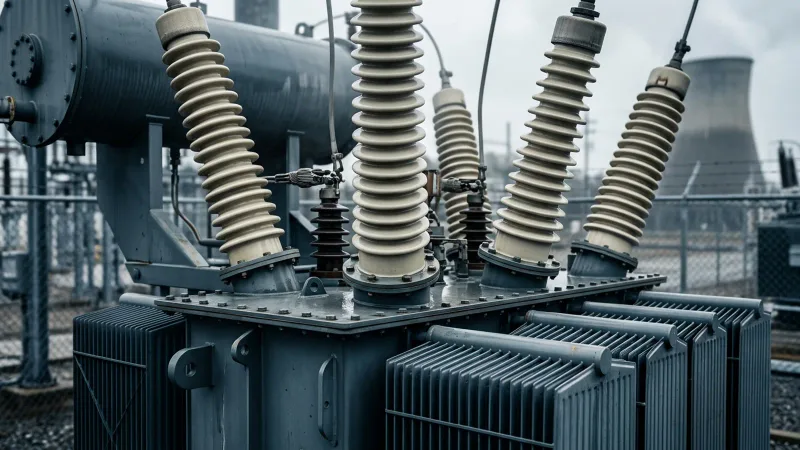
At the core of these floating islands are the power transformers. Their job is deceptively simple but physically Herculean: they take the medium-voltage power generated by the wind turbines, typically at 33kV or 66kV, and step it up to high-voltage levels like 132kV, 220kV, or even 400kV for transmission to the mainland. In the world of offshore wind, efficiency isn't just about saving money; it is about heat management. Every percentage point of energy lost to heat must be removed from the substation via seawater cooling systems or massive HVAC arrays to prevent the dielectric strength of the insulation from degrading.
The transformers must adhere to rigorous international standards, specifically IEC 60076-1 for power transformers and IEEE C57.12.00 for general requirements. However, the "offshore" sticker changes everything. Because these units are subjected to constant vibration from wind and sea, as well as the potential for structural flexing of the platform, the internal bracing of the core and windings must be significantly reinforced. We are not just building for electrical stress; we are building for mechanical endurance. If a transformer fails in the middle of a winter gale, you cannot simply drive a replacement to the site. It is a multi-million-pound logistics operation involving jack-up barges and favourable weather windows that may not appear for months.
High-Voltage DC: The Long-Distance Specialist
As wind farms move further from the coast to capture more consistent, powerful winds, the industry is increasingly turning toward HVDC (High-Voltage Direct Current) technology. While traditional AC transmission is effective for shorter distances, it suffers from significant "capacitive charging" losses in long subsea cables. An HVDC offshore substation solves this by converting the AC power from the turbines into DC for the long journey home. This transition requires massive converter valves, sophisticated thyristor stacks, and smoothed reactors that make a standard substation look like a Victorian power plant by comparison.
HVDC platforms are significantly larger and more complex. They act more like high-voltage data centres than simple switching stations. Inside, the environment is kept at a positive pressure to ensure that no salt-laden air can penetrate the sensitive electronics. The cooling requirements are immense, often utilising closed-loop water-glycol systems that exchange heat with the surrounding ocean through titanium plate heat exchangers. The engineering precision required here is governed by standards such as IEC 62747 for HVDC converters, ensuring that the harmonic distortion and power quality meet the stringent requirements of the onshore grid.
Corrosion: The Relentless Enemy
Salt is the enemy of all things electrical. Left unchecked, the saline atmosphere of the North Sea would bridge every insulator and corrode every control cabinet within weeks. This necessitates a "defence in depth" strategy for material selection. While standard inland switchgear might use galvanized steel, an OSS demands 316L stainless steel for enclosures and specialised C5-M marine-grade paint systems that are tested for thousands of hours in salt-spray chambers.
Even the grounding systems—the silent guardians of the substation—are more complex here. Ensuring a reliable earth connection in the middle of the sea involves a sophisticated bonding network that connects the topside equipment to the jacket foundation and ultimately to the seabed. This is where BS EN 50522 comes into play, providing the framework for the design and installation of earthing systems for power installations exceeding 1kV. In an offshore context, the "earth" is the massive steel structure of the jacket itself, which must be protected from galvanic corrosion using sacrificial anodes or Impressed Current Cathodic Protection (ICCP) systems to ensure the structure lasts its 25-to-30-year design life.
Safety and the Human Element
Despite the high level of automation, human beings still have to visit these platforms. The living quarters on a modern OSS are often designed to a high standard, though they remain functional and compact. Safety is governed by strict zoning; high-voltage areas are physically segregated from the accommodation modules with fire-rated bulkheads (A60 or H120 ratings) capable of withstanding intense hydrocarbon fires or transformer explosions.
The switchgear itself, often SF6 or increasingly SF6-free gas-insulated switchgear (GIS) compliant with IEC 62271-203, is designed to be completely "touch-safe." In the confined spaces of an offshore platform, the small footprint of GIS compared to air-insulated switchgear is its greatest asset. It allows engineers to cram 400kV of switching power into a room the size of a small cafeteria. Every circuit breaker, every disconnector, and every instrument transformer is monitored by a SCADA system that transmits thousands of data points per second back to a control room on land, allowing for remote operation and predictive maintenance.
The Logistics of the Heavy Lift
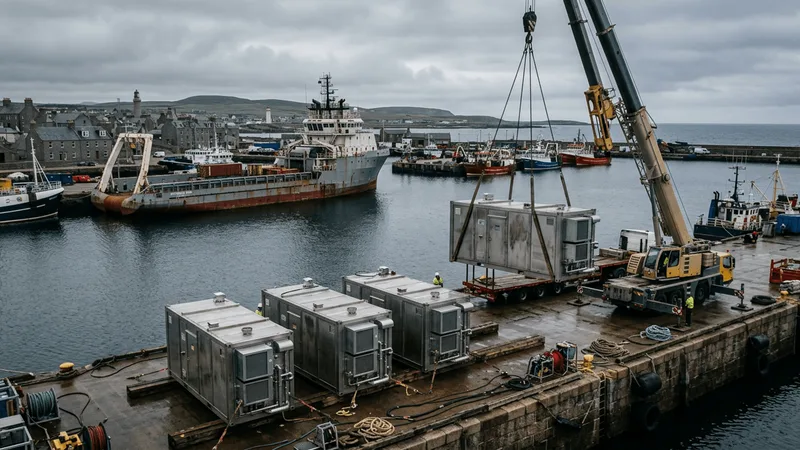
The journey of an offshore substation from the fabrication yard to the middle of the ocean is a feat of engineering in its own right. These structures are often built in "modules" or as a single "topside" weighing several thousand tonnes. The installation requires one of the few crane vessels in the world capable of such a lift. The precision required is staggering; a 4,000-tonne structure must be lowered onto its jacket pins with a tolerance of mere millimeters while the barge heaves in the swell.
Once the topside is mated to the jacket, the "hook-up and commissioning" phase begins. This is a race against time and tide to terminate hundreds of subsea cables and verify every protection relay. The testing protocols are exhaustive, following NEMA and ANSI standards to ensure that when the first turbine begins to spin, the substation is ready to swallow that power and send it shoreward. It is the final step in a process that transforms a collection of steel and copper into a vital organ of the national grid.
The Future of the Floating Hub
As we look toward deeper waters, the industry is experimenting with floating foundations for substations, moving away from fixed jackets. This introduces a whole new set of challenges: dynamic cables that must flex with the waves and internal components that must operate perfectly even when the entire floor is tilting. These floating hubs will be the next frontier, pushing the boundaries of what is possible in electrical engineering and naval architecture.
The offshore substation remains the most critical, least visible part of the green energy revolution. It is a silent sentinel, standing firm against the North Atlantic gales, stripping the raw energy from the wind and refining it for the world below the horizon. Without these steel islands, the power of the sea would remain trapped at the coast; with them, we are rewriting the rules of the global energy map.
The sheer scale of these projects reminds us that the transition to a sustainable future isn't just about policy; it is about the grit of the engineers who bolt it together in the middle of a storm. These platforms are monuments to human ingenuity, proving that we can build reliably even where the map ends and the deep water begins.