





Standing on a quiet suburban street in the English Midlands, you would be forgiven for thinking the energy transition is a silent, invisible affair. There are no billowing smokestacks here, only the occasional hum of an air-source unit and the flickering green light of an electric vehicle charger. But beneath the pavement, the copper and aluminium veins of the LV network are screaming. The cables currently supplying these homes were, in many cases, laid decades ago when the height of domestic electrical ambition was a four-slice toaster and a colour television. Today, those same cables are being asked to facilitate a bidirectional power flow and a simultaneous demand profile that would have seemed like science fiction to the engineers of the mid-20th century.
The fundamental tension lies in the shift from predictable, diversified loads to peak-heavy, high-duty cycles. For seventy years, the British distribution network functioned on the principle of "diversity." Not everyone boiled their kettle at the same second, and the local substation transformer was sized accordingly. Now, as the government pushes for the electrification of heat and transport, that diversity is collapsing. When three neighbours on the same feeder all plug in their 7 kW EV chargers at 6:00 PM while their heat pumps switch to a high-intensity cycle to prep for the evening, the mathematical comfort zone of the local network vanishes.
The Brutal Physics of the Heat Pump Load
Heat pumps are often framed through the lens of thermodynamics, but for a Distribution Network Operator (DNO), they are a challenge of pure amperage. Unlike a gas boiler, which requires a negligible amount of electricity to run a pump and a control board, a heat pump represents a significant, sustained inductive load. The heat pump load is not a transient spike; it is a marathon. During a cold snap, these units may run for eighteen hours a day, pushing the thermal limits of secondary transformers that were never designed for such high utilisation factors.
The technical challenge is codified in the relationship between peak demand and the thermal endurance of the transformer winding. Most legacy ground-mounted transformers in the UK were built to standards that mirror the current IEC 60076 series or the older BS 171. These units rely on a "cooling off" period—usually overnight—to dissipate the heat built up during the evening peak. When heat pumps operate continuously, that cooling period disappears. The result is an accelerated aging of the cellulose insulation. For every 6°C rise above the rated operating temperature, the life expectancy of the transformer insulation roughly halves. We are effectively consuming thirty years of transformer life in ten.
The surge in demand is further complicated by the starting currents of older or non-inverter-driven heat pumps. While modern units utilise soft starters or variable speed drives to mitigate the "flicker" effect, the cumulative impact on voltage stability across a long LV feeder can be profound. In many rural or "soft" parts of the network, the introduction of just half a dozen heat pumps can push the voltage at the end of the line below the statutory limits defined in the Electricity Safety, Quality and Continuity Regulations (ESQCR).
EV Charging and the End of Diversity
If heat pumps are the marathon runners of the LV network, electric vehicles are the sprinters that refuse to leave the track. A standard 7 kW domestic wall box draws approximately 30.4 Amps. In a typical UK street where the average after-diversity maximum demand (ADMD) was historically calculated at around 1.5 kW to 2 kW per household, the addition of a single EV charger effectively triples that home's peak contribution to the local network.
When we look at the specifications set out in ENATS 35-1, which governs the selection of distribution transformers, the gulf between historical design and modern reality becomes clear. British DNOs are now grappling with "clustering"—the phenomenon where EV adoption does not spread evenly but concentrates in specific affluent neighborhoods. A single feeder that was designed to support 50 homes might suddenly find ten of those homes drawing an additional 70 kW of power simultaneously.
This leads to a phenomenon known as phase unbalance. Most domestic properties in the UK are single-phase. If a cluster of EV owners all happen to be connected to the "Red" phase of a three-phase distribution cable, the neutral current rises, and the transformer begins to operate inefficiently. This imbalance creates localized "hot spots" within the transformer tank, potentially leading to gassing and premature failure of the dielectric fluid. At ETS Group, we have seen an increasing need for monitoring systems that can provide real-time data on these phase variances before the fuse in the feeder pillar yields to the inevitable.
The Voltage Swing of Rooftop Solar
The third pillar of this disruption is perhaps the most ironic: renewable generation. While heat pumps and EVs pull power from the grid, rooftop solar pushes it back. On a bright Tuesday afternoon in June, when domestic occupancy is low and the sun is high, a suburban street can suddenly transform into a distributed power plant. This sounds like an environmental victory, but for a transformer designed for unidirectional power flow, it is a technical headache.
The primary issue is voltage rise. As inverters push current back toward the substation, the voltage along the LV feeder rises. If the substation is already tapped to a high voltage to ensure the furthest customer gets enough power during the winter, the "solar soak" in summer can push the voltage above the +10% statutory limit (253V). To counter this, DNOs are increasingly looking at transformers with On-Load Tap Changers (OLTC) at the secondary level—a technology once reserved for massive primary substations but now becoming a necessity for the humble neighbourhood "TX."
Modernising the Secondary Substation
To survive this triple-threat, the British LV network requires more than just thicker cables; it requires a fundamental redesign of the secondary substation. The traditional "fit and forget" approach to distribution transformers is no longer viable. Modern units must be built to the stringent requirements of EU Regulation 548/2014 (and its UK post-Brexit equivalents) regarding Tier 2 Eco-design, ensuring that even under high load, the transformer operates with minimal core and copper losses.
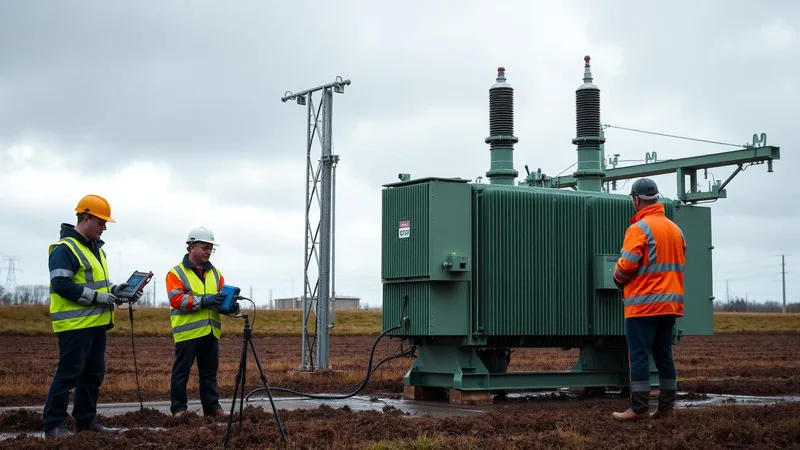
Furthermore, the integration of low-voltage monitoring is becoming the standard. By measuring the harmonic distortion introduced by thousands of EV inverters and the precise thermal state of the oil, DNOs can move from reactive maintenance to predictive replacement. Standards like IEEE C57.91 provide a guide for loading mineral-oil-immersed transformers, giving engineers the mathematical tools to calculate exactly how much "overload" a unit can take before it becomes a liability.
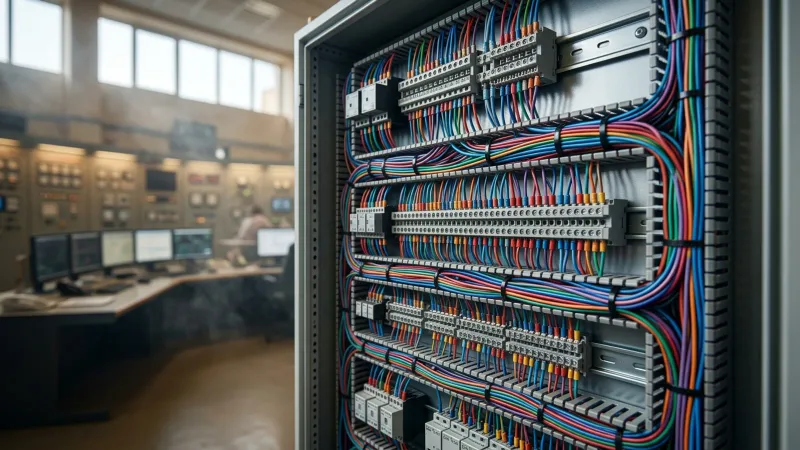
The transition also demands a rethink of protection coordination. Traditionally, a simple fuse in the LV way would suffice. But with bidirectional flows and the complex fault signatures of inverter-based resources (IBRs), the protection must be smarter. We are seeing a shift toward intelligent LV circuit breakers that can distinguish between a genuine fault and the massive inrush current of a street's worth of heat pumps resetting after a brief outage.
The Hidden Cost of the Green Transition
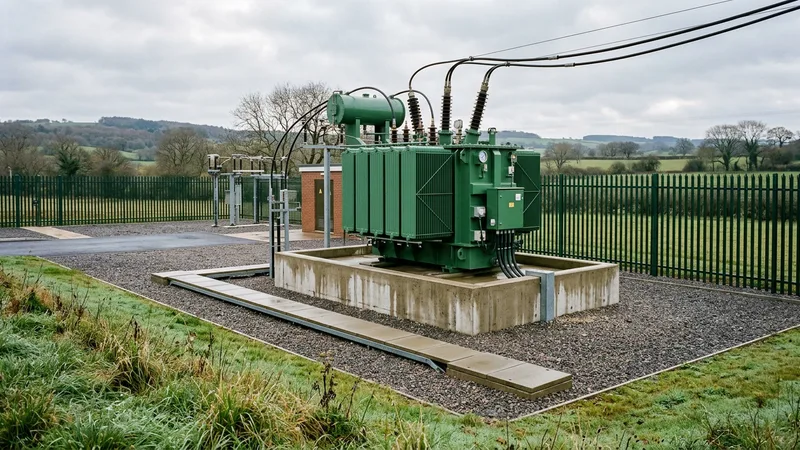
The financial and logistical scale of this upgrade is often understated. It is not merely about replacing the transformer; it is about the physical space. Many British substations are tucked into tiny brick housings or corners of car parks. Upgrading a 500 kVA unit to a 1000 kVA unit to handle a high heat pump load often requires a larger footprint, which may not exist. This has fuelled innovation in high-efficiency, compact transformer designs that pack more capacity into the same physical envelope.
There is also the matter of "secondary" equipment. The switchgear, governed by standards like IEC 62271, must be rated for higher continuous currents and more frequent switching operations. The days of a distribution board sitting untouched for twenty years are ending. We are entering an era of active network management, where the transformer is the heart of a digital node, balancing solar input against EV demand in real-time.
The standards we follow, from ANSI C57.12 for general requirements to the specific UK DNO variants, are currently being tested by the reality of the 21st-century home. The transition to a net-zero grid is not just about offshore wind farms and massive interconnectors; it is about the mundane reality of the 11kV/415V transformer sitting behind a green fence at the end of your cul-de-sac.
The "Three Loads" are not going away. Heat pumps will continue to replace gas boilers, EVs will eventually dominate the driveway, and solar panels will keep soaking up the sun. The LV network was the unsung hero of the twentieth century, providing cheap, reliable power with almost no intervention. To remain the hero of the twenty-first, it must undergo a profound evolution in both its physical capacity and its digital intelligence.
The physics of the street are changing, and the copper must follow suit. We are no longer just delivering power to houses; we are managing a complex, bidirectional energy ecosystem on every corner. The engineers of fifty years ago gave us a brilliant foundation, but the demands of tomorrow have finally caught up with the capacity of yesterday.