




"The business case for two-hour batteries looks great on a spreadsheet," a BESS developer told me over coffee in Bristol, "right up until the moment your transformer trips on thermal overload." That single comment cuts to the heart of a debate that has defined UK energy storage procurement for the last 24 months. On paper, a two-hour duration Battery Energy Storage System (BESS) offers double the energy capacity and operational flexibility of its one-hour counterpart. Yet, as of 2024, the market has seen a pronounced swing back towards shorter-duration systems. The reason isn’t a failure of battery technology, but a misalignment between asset capability, component physics, and the hard realities of grid revenue. The grid is sending a clear signal, and it’s a signal tuned for power, not duration. To understand why, we need to peel the onion back layer by layer—starting with the unglamorous physics of heat. ## Heat Is The Hardest Problem All electrical systems are, at their core, thermal management exercises. For a BESS, the constant charge and discharge cycles are governed by the fundamental principles of resistive heating. Every time current flows through the batteries, inverters, cables, and—most critically—the windings of a transformer, energy is lost as heat, a phenomenon described by the simple elegance of I²R losses (where I is current and R is resistance). Under a steady, predictable load, this heat dissipates into the environment at a manageable rate. The component reaches thermal equilibrium and operates comfortably within its design limits. The problem is, providing grid-balancing services like fast frequency response is anything but a steady, predictable load. Consider the operational profile of Dynamic Containment (DC), a high-frequency, low-energy service from National Grid ESO (NGESO). A BESS providing DC is constantly making micro-adjustments, rapidly switching from charge to discharge to counteract frequency deviations around the 50 Hz nominal. This sawtooth-like profile means the system

Industry
Why 1-Hour BESS Wins in Britain Even With Less Energy
2 min read
Related Articles
Engineering
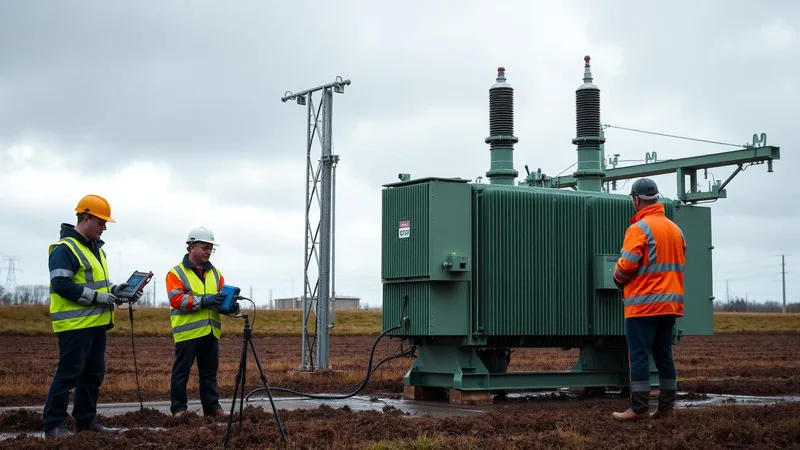
ENATS 35 in the Field: When a UK Test Voids an IEC Pass
A transformer cleared on IEC 60076-3 lightning-impulse waveshape can still fail an ENATS 35 acceptance test at a UK DNO site. Three sub-clauses explain why, and they are exactly the ones an importing OEM tends to under-quote.

Technology
Ester Dielectrics: The Future of Transformer Insulation
Natural and synthetic ester fluids are redefining transformer safety, sustainability, and asset longevity. Here's what every utility engineer needs to know.
Engineering
What Coal Left Behind, and Who Filled the Silence
As large thermal power plants retire, the GB grid loses not just megawatts but critical system inertia. Discover the engineering solutions, from synchronous condensers to flywheels, that are filling this stability gap.
Have a Project in Mind?
Our engineering team is ready to discuss your transformer requirements.