





Deep beneath the tarmac of a typical British suburban cul-de-sac lies a copper and aluminium legacy that has remained largely undisturbed for decades. For the better part of a century, the distribution network operated on a simple, elegant principle of predictability. Power flowed one way—downward from the high-voltage transmission backbone, through the primary substations, and finally out into the neighbourhood via low-voltage (LV) feeders. It was a world defined by the 'after-diversity maximum demand' (ADMD), a statistical comfort zone where engineers could safely assume that while one household was boiling a kettle, three others were asleep.
Today, that statistical comfort zone is evaporating. The UK Distribution Network Operator (DNO) is no longer a silent custodian of a stagnant asset; it is the operator of a shifting, breathing, and increasingly strained machine. We are witnessing the most significant overhaul of the distribution landscape since the post-war electrification era. This shift is not merely about replacing aging poles and wires—it is a fundamental reimagining of how the LV network functions, driven by a triad of decarbonization technologies that the original grid designers simply never envisioned.
The Triple-Threat to the Traditional LV Network
To understand why the UK DNO is entering a period of unprecedented activity, one must look at the specific physics of the modern British home. For decades, the sizing of cables and the ratings of ground-mounted transformers in accordance with ENATS 35-1 were based on a specific set of load profiles. The introduction of air-source heat pumps (ASHPs) and electric vehicle (EV) chargers has effectively torn up those profiles.
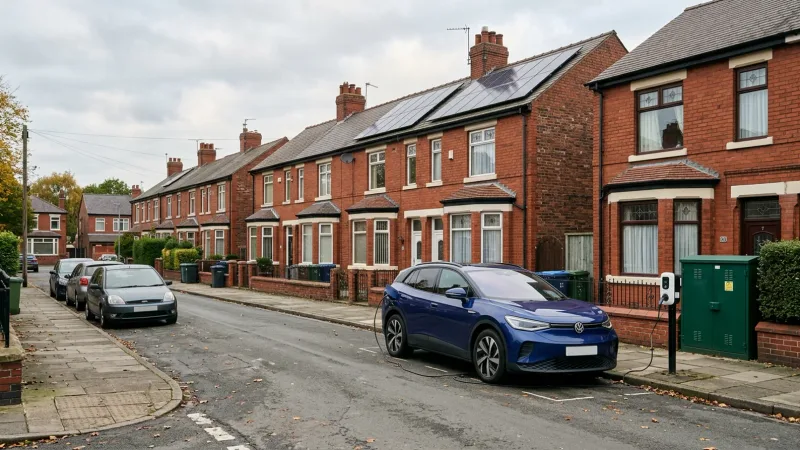
A standard domestic EV charger can pull 7kW of sustained load for several hours. When a cluster of residents on the same feeder plug in their vehicles simultaneously, the localized demand can exceed the thermal capacity of the secondary transformer. Unlike the transient spikes of a toaster or a vacuum cleaner, these are long-duration loads that push equipment toward its thermal limits, accelerating the aging of paper-oil insulation systems and challenging the cooling capabilities defined in the BS EN 60076 series.
Complementing this load growth is the rise of residential heat pumps. While a gas boiler requires only a sliver of electricity for a pump and a control board, a heat pump represents a heavy electrical resistive and inductive load that operates precisely when the grid is already under seasonal stress. The cumulative effect is a 'baseload' at the LV level that is significantly higher than the historic ADMD. The infrastructure that was designed for the era of incandescent bulbs and gas cooking is now being asked to carry the entire primary energy burden of the nation's transport and heating.
Bi-Directional Stress and the G99 Connection Challenge
The second major headache for the distribution engineer is the reversal of the flow. The UK’s radial distribution circuits were built as a one-way street. Power was injected at the head of the feeder and pressure—voltage—dropped as you moved toward the furthest customers. Residential solar PV has flipped this script. On a bright, cool afternoon, a feeder with high solar penetration can see localized voltage rises that push the network beyond the statutory limits defined in the Electricity Safety, Quality and Continuity Regulations (ESQCR).
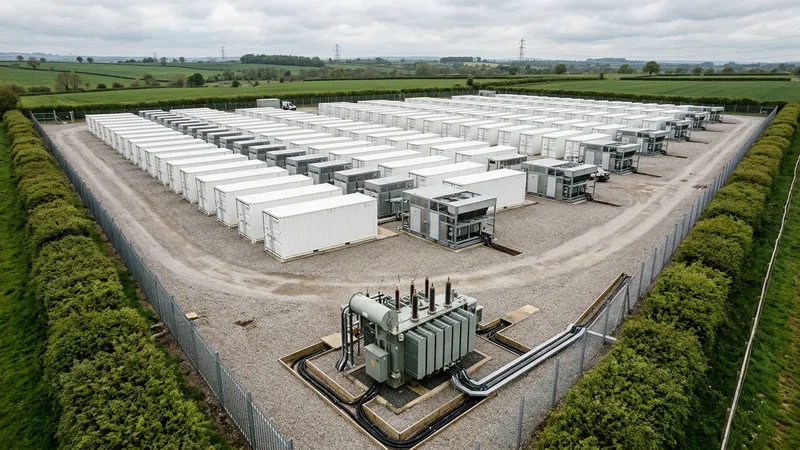
This is where the G99 connection process becomes critical. Ensuring that distributed generation—whether a sprawling solar farm or a localized battery storage unit—can safely interface with the DNO's equipment requires rigorous fault level analysis and protection coordination. Problems such as 'nuisance tripping' or harmonics from low-quality inverters are no longer marginal issues; they are central to the stability of the local network. The engineering challenge is to facilitate these connections without compromising the power quality for neighbouring customers, often requiring the deployment of sophisticated voltage regulation technology at the substation level.
From Passive Assets to Active Distribution
Under the current RIIO price control framework, the regulatory incentive has shifted. DNOs are no longer rewarded simply for 'planting more copper' in the ground. Instead, the focus is on 'Totex'—a balance of capital and operational expenditure that prioritizes smart, flexible solutions. This regulatory environment is pushing the UK DNO to transition from a Distribution Network Operator to a Distribution System Operator (DSO).
The hallmark of this transition is active management. In the past, the LV network was 'dark.' A DNO typically only knew a fuse had blown when a customer called to complain. Modern engineering is bringing visibility to the very edge of the grid. Smart meter data, combined with secondary substation monitoring, allows engineers to visualize load flows in near real-time. We are seeing the rise of Dynamic Line Ratings (DLR), where the capacity of a circuit is not a fixed number on a spreadsheet but a variable figure based on ambient temperature and wind cooling, allowing for higher throughput during periods of high demand.
This visibility is enabling a more granular approach to reinforcement. Rather than digging up a whole street to replace a cable, engineers can deploy Active Network Management (ANM) systems. These systems can autonomously throttle back generation or signal to smart EV chargers to ramp down for twenty minutes, keeping the network within safe thermal and voltage envelopes. It is a digital solution to a physical constraint, and it represents a level of operational sophistication that was previously reserved for the high-voltage transmission system.
Engineering the Hidden Infrastructure
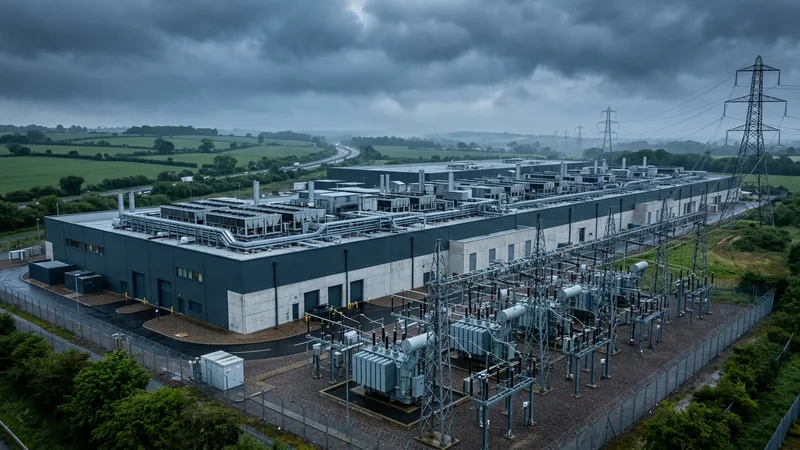
While the general public is often captivated by transmission megaprojects—massive subsea interconnectors and towering pylons—the engineering community is increasingly focused on the ground-mounted transformer and the LV cabinet. For a power engineer, the challenges at the distribution level are arguably more complex. Transmission systems are highly controlled, balanced, and redundant. The distribution network is messy, asymmetric, and vastly more extensive.
We are seeing a renewed focus on the technical specifications of secondary distribution transformers. Compliance with ENATS 35-1 and the BS EN 60076 standards is now being paired with requirements for lower losses and better harmonic resilience. The goal is to create a 'fit and forget' asset that can handle the nonlinear loads of the next thirty years. There is also a quiet excitement about LV automation. The deployment of remote-controlled circuit breakers and automated link boxes means that faults can be isolated and supplies restored in seconds rather than hours, all without an engineer having to step foot in a van.
This shift also requires a re-evaluation of protection and control. As we move away from traditional synchronous generation toward inverter-based resources, the 'fault level'—the amount of current available to trigger a fuse or breaker—is changing. Engineers are having to redesign protection schemes that can operate accurately in a world where fault currents are lower and power flows are unpredictable. This is high-level physics applied to the most local of settings.
The Distribution Renaissance
The distribution network is no longer the 'junior' partner in the power system. It is the frontline of the energy transition. For the consultants and engineers working within the UK DNO framework, this is a period of intense intellectual and physical labour. We are taking a system that was essentially a collection of passive pipes and turning it into a high-speed, bi-directional data and power hub.
The rebuild that is currently underway is not always visible to the passerby. It happens in the quiet upgrade of a transformer, the installation of a new monitoring terminal in a brick kiosk, or the careful modelling of a G99 connection for a community energy project. However, the cumulative effect is a total transformation of the British landscape. The distribution network is finally receiving the engineering focus and investment it has lacked for a generation, ensuring that the hidden infrastructure beneath our feet is ready for the electrified world of tomorrow. In the years to come, the success of our carbon-neutral goals will not be measured only by how much wind we harvest from the sea, but by how well we managed the 400 volts flowing into the local neighbourhood.