





Britain’s long history with civil nuclear power, from the pioneering Magnox fleet of the 1950s to the durable Advanced Gas-cooled Reactors (AGRs) that followed, represents a multi-generational engineering journey. Each new station has served as a crucible for refining safety principles, operational philosophies, and the underlying engineering standards that give them form. As the UK embarks on its next nuclear phase with the European Pressurised Reactor (EPR) design, exemplified by the project on the Suffolk coast, this cycle of learning accelerates.
The focus shifts beyond the reactor core itself to the vast, complex network of supporting electrical systems, particularly the auxiliary power transformers that are fundamental to plant safety and stability. These components, governed by decades of evolving international standards, are a tangible measure of how modern, probabilistically informed safety cases are written in steel, copper, and mineral oil.
The Architecture of Auxiliary Power
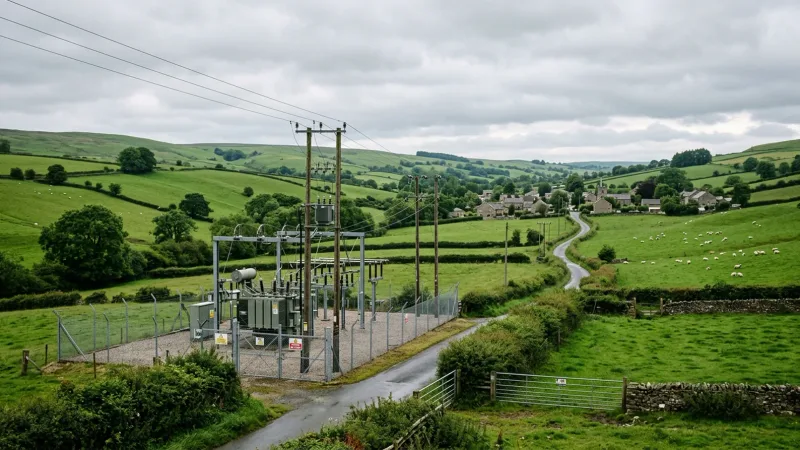
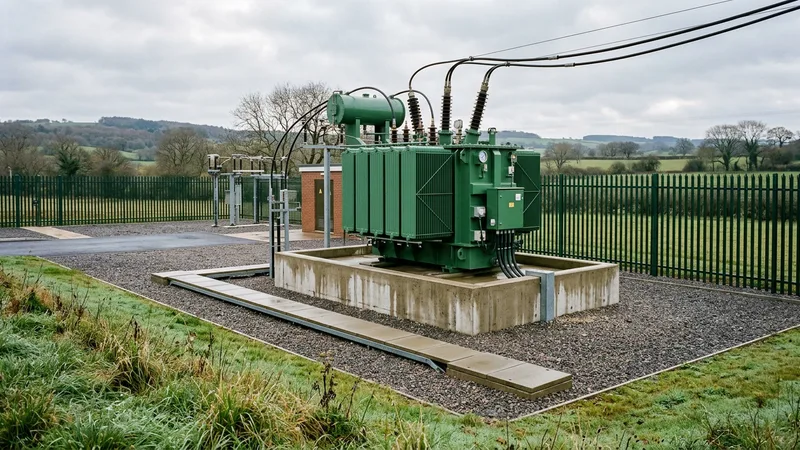
In any large thermal power station, a significant portion of the generated electricity—often several tens of megawatts—is consumed internally to run the plant itself. In a modern pressurised water reactor (PWR), this essential internal demand is met by a carefully structured, multi-layered auxiliary power system. While the main generator step-up (GSU) transformer exports gigawatts of power to the national grid at transmission voltages, a separate system of unit auxiliary transformers (UAT) and station auxiliary transformers (SAT) steps down high-voltage power for internal use.
This isn't a simple, single-step process. Power is typically transformed from the generator's high-voltage output down to medium-voltage (MV) tiers, often in the 11kV or 6.6kV class, which feed the largest motors for primary coolant and feedwater pumps. This MV network then feeds further transformers that step down to low-voltage (LV) networks, typically 400V in line with European norms, to power smaller motors, control systems, lighting, and HVAC.
The UAT typically draws power directly from the main generator’s isolated phase bus duct during operation, providing an efficient source of house load power. The SAT, also known as a reserve auxiliary transformer, provides an alternative path, drawing power from the high-voltage grid transmission network. This dual-source philosophy is the first layer of resilience, critical during different operational states.
During plant start-up, before the turbine is synchronised and generating power, the SAT is the sole source of power for the entire plant. During planned shutdowns or refuelling outages, the SAT again carries the full station load. This electrical distribution network is the plant’s lifeblood. And its architecture ensures that a single credible event, such as a loss of off-site power (LOOP), does not equate to a loss of control—a foundational principle in nuclear design.
Class-1E: The Gold Standard in Safety Logic
The most critical electrical loads within a nuclear plant—those required to safely shut down the reactor and maintain it in a safe state—are supplied via the Class-1E system. This designation, rigorously defined by standards like IEEE Std 308, signifies the highest echelon of safety and reliability. It is not merely a label but a comprehensive design, qualification, and operational philosophy. The unshakeable purpose of Class-1E systems is to function before, during, and after a design-basis event (DBE), which could range from a major internal fault to an external hazard like an earthquake.
The core principles underpinning Class-1E are redundancy, physical separation, and electrical independence. In a typical modern EPR design, this is realised through a four-train architecture. Each of the four "trains" or "divisions" is a complete, independent electrical and mechanical system, capable on its own of safely shutting down the reactor. This means each division has its own dedicated emergency diesel generator, its own MV and LV switchgear, its own connection to an auxiliary transformer, and its own set of critical loads (pumps, valve actuators, cooling systems, and vital instrumentation and control).
This is not just functional duplication. The four divisions are housed in physically separate, seismically qualified concrete structures, protected by fire-rated barriers and flood defences. This prevents a fire, flood, or physical impact in one division from affecting the others.
Electrical independence is just as stringent; sophisticated protection schemes and carefully calculated fault levels ensure that a short circuit in one division cannot propagate to another. The auxiliary transformers feeding these Class-1E distribution boards are therefore among the most critical assets on the site. A fault within one of these transformers must be isolated without affecting the redundant power sources. This rigorous segregation, verified through exhaustive fault analysis and protection coordination studies, is a cornerstone of the defence-in-depth safety case, ensuring that multiple, independent layers of protection are always available.
Transformer Standards: An Evolutionary Path
The standards governing the specification, manufacture, and testing of large power transformers have evolved significantly since the last wave of UK nuclear construction. Core documents like the BS EN 60076 series (the British adoption of IEC global standards) provide a far more stringent framework today than their predecessors. For a nuclear safety application, these are augmented by nuclear-specific codes like IEEE Std C57.12.00 (General Requirements for Liquid-Immersed Distribution, Power, and Regulating Transformers).
One of the most critical evolutions is in the calculation of short-circuit withstand strength, detailed in BS EN 60076-5. In the past, calculations were largely based on empirical formulae. Today, finite element analysis (FEA) allows engineers to model the immense, potentially destructive electromagnetic forces on the windings and busbars with incredible precision.
This leads to more robustly engineered winding clamping structures, core support designs, and internal lead bracing, all verified during a type test. Another key development addresses harmonic distortion. Modern plants use numerous variable speed drives (VSDs) for large motors and countless switched-mode power supplies for digital I&C systems.
These non-linear loads introduce harmonic currents that can cause significant additional heating in a transformer's windings. Transformers for these applications must be specifically designed to tolerate this, often assigned a "K-factor" rating and undergoing more detailed temperature rise tests as guided by BS EN 60076-2 to prove their performance under non-sinusoidal loads.
The qualification programme for a Class-1E transformer far exceeds that of a conventional grid transformer. The quality assurance and documentation traceability required for every sub-component—from the certified origin of the core laminations to the dielectric fluid and bushing ceramics—are exhaustive. An Inspection and Test Plan (ITP) follows every stage of manufacturing, with mandatory hold points for client or third-party inspection. This includes routine tests like winding resistance and turns ratio. But also advanced type tests and special tests like Frequency Response Analysis (FRA) to establish a unique internal geometry "fingerprint" for future diagnostics. And extensive seismic analysis reports to prove the unit can withstand its specified safe shutdown earthquake.
Designing for a Demanding Coastal Environment
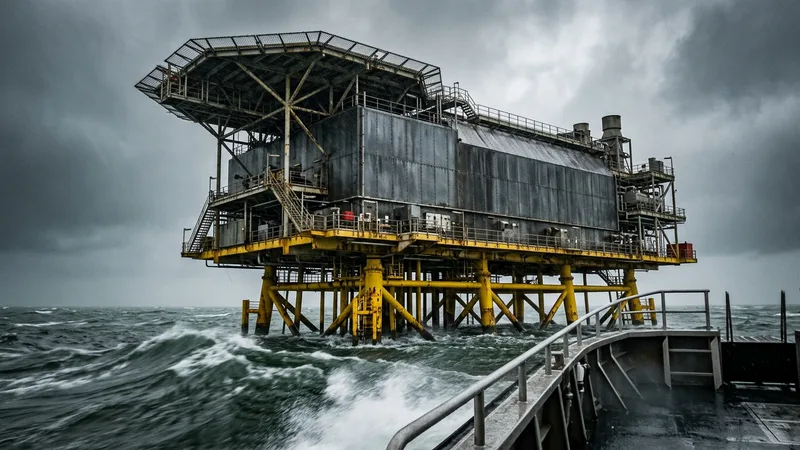
The Suffolk coast presents a uniquely challenging operating environment for any large electrical asset intended to operate for sixty years or more. The combination of high humidity, airborne salinity from sea spray, and prevailing onshore winds requires specific, robust design choices to ensure multi-decade reliability. These environmental considerations are as vital as the transformer's core electrical characteristics.
For oil-filled auxiliary transformers, this has a direct impact on the external steelwork and the oil preservation system. To prevent the ingress of corrosive, moist air into the main tank as the insulating oil expands and contracts with thermal cycling, high-performance designs are mandated. While silica gel dehydrating breathers are a minimum requirement, a superior solution often specified for such critical, long-life applications is a sealed-tank system.
This typically involves an 'atraumatic' or membrane-style conservator, where a nitrile rubber air bag (or membrane) inside the conservator tank inflates and deflates, completely isolating the main oil volume from the atmosphere. This is the ultimate defence against moisture absorption and oxidation of the oil, preserving its dielectric properties.
Furthermore, the selection of external materials and coatings is critical and is governed by standards like ISO 12944. For a high-salinity coastal site, the environment is classified as a C5-M (very high, marine) corrosivity category. This dictates a multi-layer paint system over meticulously prepared steel, such as a zinc-rich primer, an epoxy intermediate coat, and a durable polyurethane topcoat, to achieve a total dry film thickness capable of withstanding the environment.
All external hardware, including fasteners, valve bodies, and control cabinet locks, must be fabricated from marine-grade 316L stainless steel. The cooling system, which might be classified as ONAN/ONAF (Oil Natural/Air Natural, Oil Natural/Air Forced) under BS EN 60076-2, also requires hardening. Radiators are typically hot-dip galvanised. And the fan motors and control cabinets must have a high degree of ingress protection, such as IP56, to prevent failure from wind-driven rain and salt.
Ultimately, the auxiliary power transformers at a modern nuclear facility are not merely components but deeply integrated, highly qualified systems. Their thermal behaviour is modelled in conjunction with the station's ventilation systems, their electrical protection is coordinated with the entire site network. And their physical design is hardened against both internal faults and external hazards. They represent a nexus where electrical, mechanical, and civil engineering disciplines converge, all bound by the uncompromising logic of the nuclear safety case.