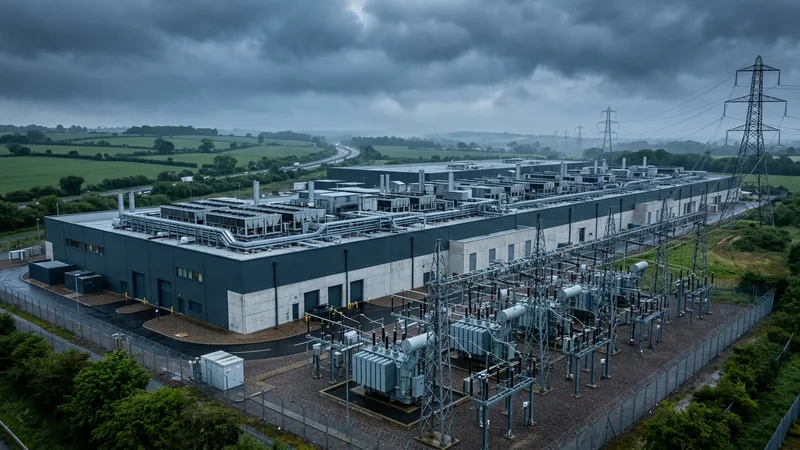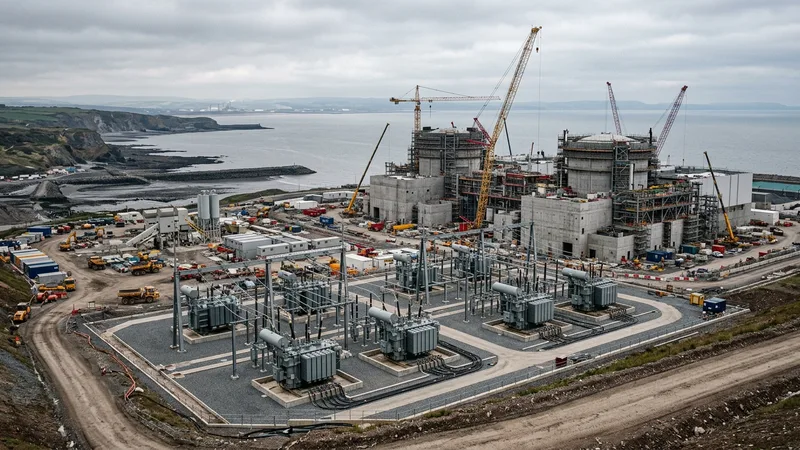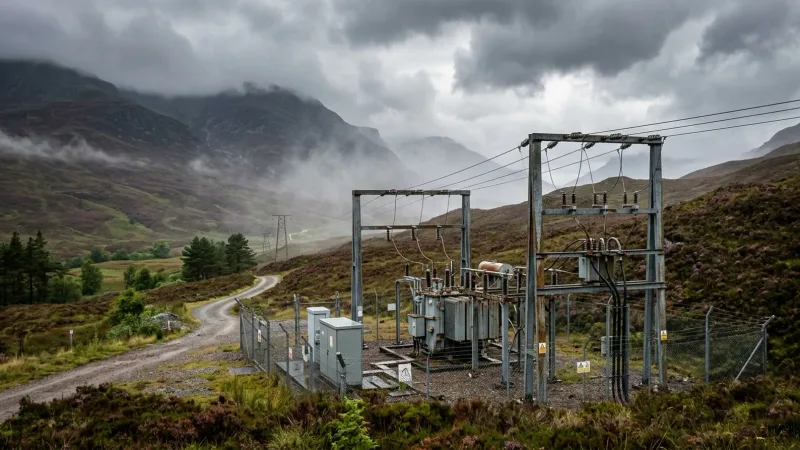






When a power station has served the national grid for half a century, its story is one of constant, considered evolution. For such a plant to change its primary fuel source not once, but twice, marks it as a near-unique asset in the UK’s generation landscape. Situated in Yorkshire, one such facility provides a powerful, ongoing lesson in the longevity of high-voltage engineering, where the grid connection and its core electrical systems often outlive the specific combustion technology they were first built to serve.
This process of reinvention—from coal to biomass and potentially towards future energy vectors—hinges on the robust, over-engineered nature of the original generator string and its associated transformers. These assets can be recommissioned to serve entirely new prime movers, provided they can pass a stringent and comprehensive series of modern diagnostic assessments. The success of such a conversion is not merely a matter of connecting a new heat source. It is a multi-disciplinary engineering challenge, deeply rooted in the principles of electrical and materials science. And governed by internationally recognised standards.
The Generator String: An Enduring Asset of Strategic Importance
In any thermal power station, the large rotating masses of the steam turbine and generator, collectively the "generator string" or "genset," represent an incredible store of kinetic energy and engineering durability. While the method of producing high-pressure steam has evolved dramatically, the generator’s fundamental function remains unchanged: convert rotational mechanical energy into three-phase electrical power at a precisely controlled frequency and voltage.
These massive, hydrogen-cooled generators, many installed in the 1960s and 70s, were built to exceptionally high mechanical and electrical standards. Their rotors were typically forged from single, vacuum-degassed steel ingots, and their stator windings were insulated with mica-based systems (often Class F), all representing the pinnacle of material science at the time. The fundamental design, governed by the physics of electromagnetism, is so efficient that a brand-new generator of equivalent rating today might only offer marginal gains in steady-state efficiency, often at a prohibitive cost. The real advancements have been in cooling, materials, and monitoring, all of which can be retrofitted.
Therefore, retaining the existing generator is almost always the most economically and technically sound decision. The process of "re-lifing" is far more than a simple overhaul. It involves the complete disassembly of the unit.
The rotor is removed and subjected to a battery of tests, including Repetitive Surge Oscillograph (RSO) tests to detect inter-turn insulation weaknesses and detailed Non-Destructive Testing (NDT) for any fatigue cracking in the forging itself. The stator core is tested for interlaminar insulation breakdown (a "core loop" test). And the end windings are rigorously inspected for any signs of movement or fretting, with modern upgrades like improved wedge systems often installed. The Automatic Voltage Regulator (AVR) and excitation systems are invariably replaced with modern digital equivalents, providing far superior dynamic control and grid code compliance.
Crucially, retaining these synchronous generators provides significant inertia to the grid—a characteristic anathema to inverter-based renewable sources. This inertia is vital for maintaining grid frequency stability, making these legacy machines not just power producers, but also strategic stabilising assets. Yet, the generator’s reliability is inextricably linked to the health of its gateway to the grid: the Generator Step-Up (GSU) transformer.
GSU Transformer Recommissioning: A Deep Dive into Diagnostics
Before a vintage GSU transformer can be re-energised as part of a plant-wide renewal, its internal condition must be exhaustively verified. Decades of thermal cycling, cumulative electrical stress from normal operation, and the immense mechanical forces from potential through-faults can degrade its paper-and-oil insulation system and compromise its mechanical integrity. A suite of advanced diagnostic tests, guided rigorously by IEC and IEEE standards, provides a comprehensive, forensic health check.
Dissolved Gas Analysis (DGA) is the foundational diagnostic, acting as a blood test for the transformer. As defined in IEC 60599 and IEEE C57.104, the concentrations and ratios of specific gases dissolved in the insulating oil can pinpoint developing faults. Low-energy partial discharges produce hydrogen (H2), while overheating of cellulose insulation liberates carbon oxides (CO, CO2).
More severe thermal faults in oil create methane (CH4), ethane (C2H6), and ethylene (C2H4). The presence of acetylene (C2H2) is a significant red flag, indicating high-energy arcing has occurred. Interpretation methods like the Duval Triangle and Pentagon use these key gas ratios to classify the fault type with remarkable accuracy, allowing for targeted intervention.
Frequency Response Analysis (FRA) provides a different, but equally critical, perspective. Governed by IEC 60076-18, FRA creates a high-frequency electrical "fingerprint" of the transformer's active part. By injecting a low-voltage, sweeping frequency signal into one terminal and measuring the response at another, a unique plot is generated for each winding.
This signature is sensitive to any change in the geometry of the internal components. It is the definitive method for detecting winding deformation—such as hoop buckling or conductor tilting caused by the extreme magnetic forces during a nearby grid fault—as well as core clamping issues or short-circuited turns. Comparing a new FRA signature to a baseline from years prior, or even to a sister unit, can reveal damage that no other test can see.
Insulation System Dielectric Testing completes the picture. Tan Delta, also known as Dissipation Factor or Power Factor testing, measures the dielectric losses in the insulation system. Per IEEE C57.152, this is performed at ambient and elevated temperatures and across a range of frequencies (Dielectric Frequency Response, DFR) to assess moisture content within the solid cellulose insulation.
A high or sharply rising Tan Delta value (a "tip-up" test) with increasing voltage is indicative of moisture, contamination, or active partial discharge. Partial Discharge (PD) testing itself, guided by IEC 60270, directly measures the small electrical sparks occurring in insulation voids. Using both offline variable-voltage sources and online UHF antenna arrays, PD testing can locate the source of this "cancer" of the insulation before it can grow into a catastrophic failure.
Beyond the GSU: Recommissioning the Wider Electrical Balance of Plant
While the generator and GSU are central, a successful plant conversion depends on the verified health of the entire high-voltage chain.
High-Voltage Switchgear: The 400 kV circuit breakers connecting the plant to the national grid are critical safety and control devices. Original installations may have featured bulk oil or Air Blast Circuit Breakers (ABCBs). These are often replaced with modern, more reliable SF6 (Sulphur Hexafluoride) or, increasingly, vacuum interrupters.
A key part of the recommissioning study is to confirm that the switchgear’s fault-interrupting rating (its "short-circuit breaking capacity") is still sufficient. As the grid evolves and fault levels change, a breaker that was adequate in 1970 may be undersized for the modern network, a verification process guided by standards like IEC 62271-100.
Auxiliary and Station Transformers: A power station is a significant electrical load in its own right, powering enormous pumps, fans, and control systems. This power is supplied via station and unit auxiliary transformers, which step down high voltage to medium and low voltage levels (e.g., 11 kV and 3.3 kV). Their reliability is paramount; a failure of a key auxiliary transformer can trigger a complete plant shutdown. These transformers undergo the same rigorous DGA, FRA, and electrical testing as their larger GSU counterparts.
Busbars and Cabling: The physical connections between these major components are equally vital. The Isolated Phase Bus (IPB) ducting—which carries many thousands of amperes from the generator terminals to the GSU—is inspected for insulation integrity, the condition of its silver-plated joints, and any signs of local overheating. High-voltage cables connecting auxiliary transformers and switchgear are tested to verify their condition after decades of service, often using modern techniques like Very Low Frequency (VLF) Tan Delta or Time Domain Reflectometry (TDR) to identify degradation or locate faults.
Protection and Control Systems: Perhaps the most profound transformation occurs in the plant’s nervous system. The original electro-mechanical protection relays—marvels of intricate clockwork precision in their day—are replaced wholesale with modern numerical relays. These microprocessor-based devices, often communicating via the IEC 61850 protocol, offer vastly superior performance. They clear faults faster, reducing stress on the primary equipment, and provide a wealth of diagnostic data, including high-resolution fault oscillography and Phasor Measurement Unit (PMU) data, which aids in post-fault analysis and understanding wider grid dynamics.
Conclusion: Engineering a Sustainable Future on a Proven Foundation
The reinvention of a half-century-old power plant is a powerful demonstration of sustainable engineering. It is an act of meticulous electrical archaeology, combined with state-of-the-art diagnostic science and system integration. This process confirms that the initial vision of the grid planners—and the robust quality of the equipment they specified—has created enduring assets of immense strategic value.
The ability to repurpose these key generation sites, anchored by their resilient and well-understood electrical infrastructure, is a cornerstone of an achievable energy transition. It allows new, cleaner, or more flexible generation technologies to be integrated into the grid efficiently and economically, building a reliable future on a foundation of proven engineering excellence.