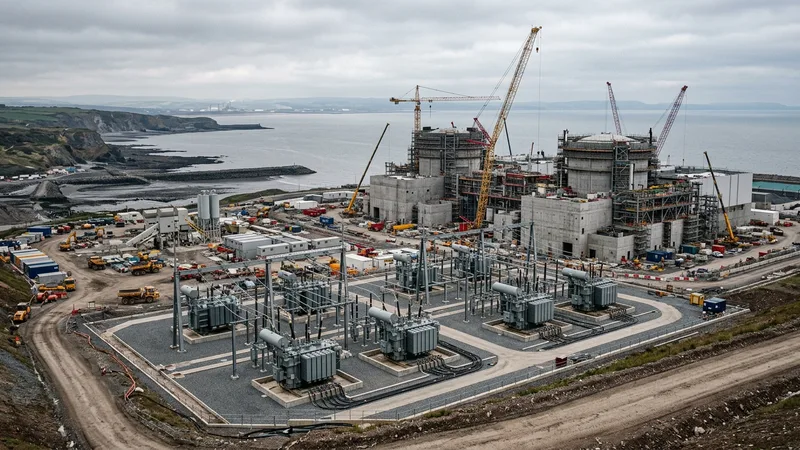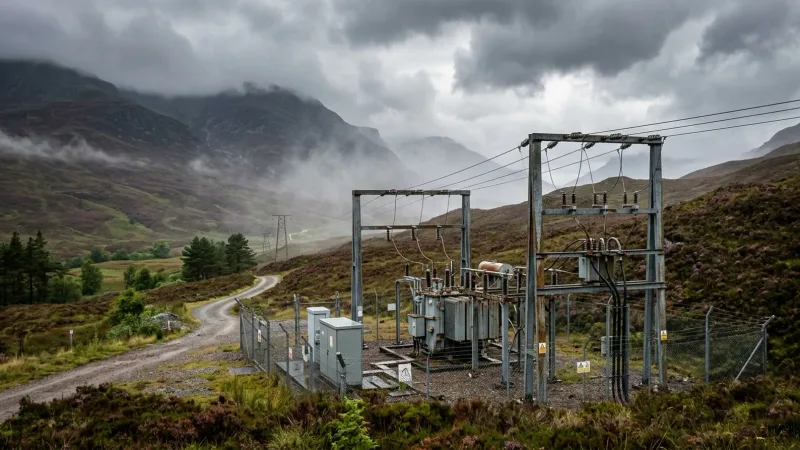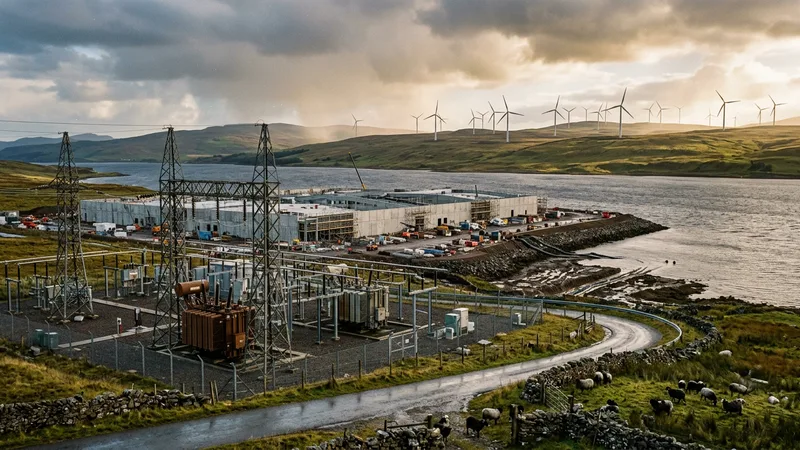






The British transmission system has always been maintained around a quiet seasonal rhythm. In April, when the heating load drops and the wind is still strong enough to cover most of what is left, the National Grid Electricity System Operator opens what engineers used to call simply "the outage season." Crews moved onto the network in a planned sequence — a 400 kV line out here for a week, a transformer bay there for a fortnight, a reactor compartment opened for a major overhaul on the May bank-holiday weekend — and by late September the work was done, the assets were back in service, and the network was ready for winter. That rhythm held, almost unchanged, for forty years.
It is no longer holding. The maintenance window that used to run for roughly twenty-six weeks of the year has, on the most recent ESO data, contracted to something closer to fourteen, and on the heaviest constrained boundaries it disappears for months at a time. Britain's transmission maintenance problem is not, in the way the headlines often suggest, a shortage of engineers or a shortage of spares. It is a shortage of hours during which the asset can safely be released from service.
Why the Window Is Closing
Three things have compressed simultaneously. The first is the demand profile. Heat pumps, electric vehicles, and the steady electrification of light industry have raised the British shoulder-season load to a level that previously only appeared in midwinter. April load in 2025 was on average 9 percent higher than April load in 2019, and the difference between the seasonal trough and the winter peak has narrowed from roughly 18 GW to roughly 12 GW. The trough is what made the maintenance window possible.
The second is the supply profile. Britain now runs on a generation mix in which the dispatchable margin shrinks dramatically whenever the wind drops below a few gigawatts. The system can absorb a planned 400 kV circuit outage on a windy April Tuesday without thinking about it. The same outage, requested for a calm April Tuesday, can require constraint payments to the gas fleet that run into seven figures for a single day. The ESO has not become unwilling to grant outages; it has become unwilling to grant them on conditions the asset owners can plan around.
The third is the queue of new connections. The B6 boundary between Scotland and England, the East Anglia connection points serving the offshore wind clusters, and the new interconnector landfall points on the south coast are all carrying construction and commissioning work that itself consumes outages. Every new circuit that connects to the existing network requires the existing network to be reconfigured around it, and the reconfiguration competes directly with routine maintenance for the same scarce hours.
The cumulative effect, on the most recent ESO data shared with industry stakeholders, is that the median age at which a 400 kV transmission transformer now receives its first major intervention is roughly 38 years, against an original target of 32. The work is not being skipped. It is being deferred, and the deferral is starting to show in the condition data.
What RIIO-T3 Actually Rewards
The price control framework that Ofgem published in draft for the 2026 to 2031 period — RIIO-T3 — is, on a careful reading, an unusually direct attempt to reshape this picture. Two mechanisms inside the framework matter for maintenance specifically.
The first is the network asset risk metric, the NARM, which the transmission owners use to translate every individual asset's condition into a network-level risk number that can be compared across companies and periods. RIIO-T3 increases the financial weight of NARM by a meaningful margin and, critically, ties incentive payments to the rate at which long-term risk is being retired, not simply to the volume of spend. The transmission owner can no longer trade headline volume against actual condition improvement; the framework now distinguishes between the two.
The second is the explicit recognition of constrained outage value. For the first time, the framework allows asset health spend that is delivered inside a difficult-to-access window — a B6 transformer outage executed in a single eleven-day shutdown rather than three separate four-day ones, for example — to be valued at a premium against the same nominal scope delivered in a relaxed environment. The intent is to push the transmission owners and their contractors towards the kind of compressed, fully-prepared, high-mobilisation interventions that the system can actually afford to give them time for.
The early signal from the transmission owners — National Grid Electricity Transmission, SP Transmission, and SSEN Transmission — is that the framework is having the intended effect. Each has, in different language, announced a move towards what is essentially a project-style maintenance programme: a large multidisciplinary crew, a fully kitted-out compound on or near the substation, a parts and consumables inventory pre-staged for the full scope, and an outage sequence rehearsed in detail before the asset is released.
The Offshore Component Nobody Has Solved
Onshore, the constraint is hours of safe outage. Offshore, the constraint is weather. Britain now has roughly 15 GW of offshore wind in operation and another 30 GW in the construction or consented pipeline, and the maintenance burden behind those numbers is only just becoming visible. The substations are not the difficult assets; the export cables are. A 200 km HVDC export cable from Dogger Bank takes a specialised cable repair vessel ten to fourteen days to mobilise, and that mobilisation can only happen in a sea-state window that, in the North Sea, may not appear for weeks at a time during the autumn.
The industry has responded by changing the maintenance philosophy at the source. Modern offshore platforms are being specified for genuinely unmanned operation between scheduled visits, with redundancy at the transformer, switchgear, and auxiliary level that would be considered extravagant onshore. The compensation transformers on the new HVDC platforms are typically installed as N+1 from day one, and the high-voltage cables are increasingly being laid in pairs to allow one to be taken out for repair without losing the whole circuit. The capital cost penalty is significant. The operational logic is unavoidable: if you cannot guarantee access, you have to guarantee that access is rarely needed.
The Skills Question, in British Terms
The workforce question in Britain is shaped differently than in the United States, but the underlying arithmetic is similar. The ENA's most recent skills survey put the average age of a senior substation technician on the British transmission network at 51, with roughly a quarter of the cohort eligible to retire within the current price-control period. The apprenticeship intake at the major TOs has been climbing — National Grid alone took on around 800 apprentices in 2024, the largest single intake in its history — but the years required to develop a fully qualified high-voltage commissioning engineer mean that the trough is locked in for the rest of the decade.
The response has been a mixture of internal training acceleration, deeper relationships with specialist independent service providers, and a willingness to import skills from manufacturers' field-service teams for the most specialised work. This last point is more important than it sounds. The original equipment manufacturers — including ETS Group for transformer interventions on the SSEN and SPT networks — increasingly carry out the kind of work that, twenty years ago, would have been done by the TO's own crew: SFRA testing, active-part inspection, OLTC overhaul, full degassing and reclamation cycles. The TO retains the operational accountability and the asset health analytics. The execution moves to a specialist.
What the Maintenance Window Will Look Like in 2030
The most honest forecast, shared in private by senior asset managers at all three British TOs, is that the maintenance window will not widen again. The load will not fall back. The wind will not slow down. The queue will not shorten. The work that needs to be done on the existing transmission fleet will have to be done in a smaller and harder-to-access set of hours than at any point in the post-war history of the British grid.
That sounds like a problem, and in many ways it is. But it is also forcing a degree of operational rigour that the industry has, frankly, lacked for a long time. The maintenance window of the 1990s allowed plenty of room for inefficient practice — half-prepared outages, late-arriving spares, crews waiting for switching, mid-job scope changes. The maintenance window of 2030 will not. The TOs that have already accepted this — and shaped their supply chains, their training programmes, and their contractor relationships around it — will quietly own the next decade. The ones that have not will spend it in the queue.