





If you walk down a leafy residential street in the Midlands or a business park in the North, the local substation is a predictable affair. It is usually a small brick box or a GRP housing, tucked behind a fence, buzzing quietly under a summer sun. In London, however, the electricity grid is a subterranean ghost world. Beneath the high-end boutiques of Mayfair and the glass monoliths of Canary Wharf, the London distribution network operates in a high-pressure environment where every square inch of real estate is worth its weight in gold. Here, power is not just managed; it is hidden, squeezed, and engineered to tolerances that would baffle a rural linesman.
The capital’s thirst for energy is insatiable, yet there is nowhere to put the hardware. This physical constraint has forced a divergence in engineering standards. While the rest of the UK might rely on sprawling outdoor yards, London has mastered the art of the urban substation—a high-density, often multi-story, indoor facility that must comply with some of the most stringent fire, noise, and vibration regulations in the global electrical industry.
The Vertical Challenge of the Urban Substation
In a typical UK distribution network, space is a commodity, but in London, it is a luxury. When a developer builds a new residential skyscraper or an underground transport hub like the Elizabeth Line, the substation cannot sit in a separate yard. It must be integrated into the building’s footprint, often three levels below ground or thirty floors above it. This creates a cascade of engineering headaches that start with the very air we breathe.
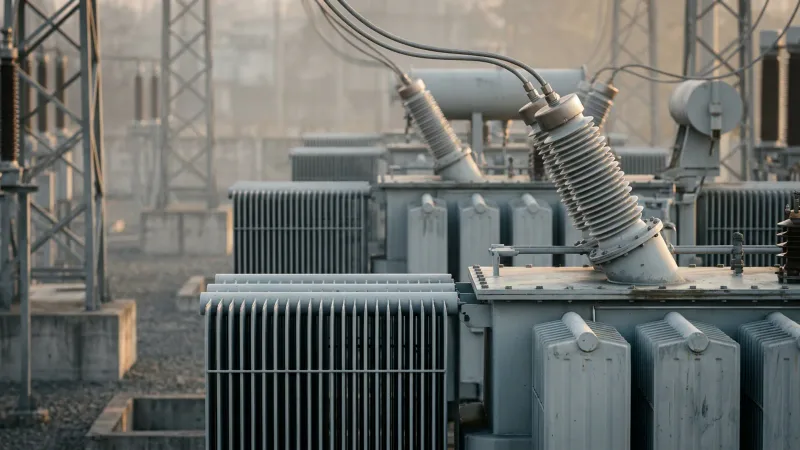
Cooling a transformer is easy when it sits in a field; natural convection does the heavy lifting. In a basement vault, heat is the enemy. An urban substation requires sophisticated forced-air ventilation or water-cooling systems just to maintain its operating temperature as defined by IEC 60076-2. If the ventilation fails, the equipment de-rates rapidly, leading to potential blackouts in some of the most expensive postcodes on earth.
Furthermore, access is a nightmare. In the countryside, you bring in a hiab crane and drop a transformer onto a plinth. In Central London, you might have to dismantle a unit, lower it through a sidewalk hatch with millimeters to spare, and reassemble it in a room that feels more like a submarine engine room than a utility site. This necessity for "compactness" has driven the adoption of Gas Insulated Switchgear (GIS) far more aggressively in London than elsewhere, allowing for a footprint reduction of up to 70% compared to traditional air-insulated designs.
Bridging the Legacy: Fluid-Filled Cables and Modern Constraints
London’s grid is a geological record of British engineering. You can find sections of the network that still rely on technology installed decades ago, living side-by-side with cutting-edge smart grid sensors. One of the most significant differences between the capital and the provinces is the continued management of fluid-filled cable systems. While many regions have moved toward XLPE (cross-linked polyethylene) cables, the legacy 33kV and 132kV networks in London still feature significant lengths of oil-filled cabling.
Managing these cables requires a specialised skill set. Under the oversight of UKPN, the infrastructure must be monitored for leaks constantly, as the environmental impact of a fluid leak in a dense urban environment is catastrophic. This legacy infrastructure dictates the design of the substations they feed. A modern substation in London isn't just a point of transformation; it’s a life-support system for a complex web of aging and new conductors that must play nicely together under the rules of ENA Technical Specification 09-3.
The transition to solid-state insulation is happening, but it is a slow, surgical process. You cannot simply dig up Oxford Street to replace a cable. Every project is a multi-year negotiation between local councils, transport authorities, and the Distribution Network Operator (DNO). This creates a unique ecosystem where the equipment must be designed for an extraordinarily long service life because the cost of replacement isn't just the price of the transformer—it’s the price of shutting down a section of the capital.
Safety Standards and the Multi-Occupancy Nightmare
When a substation is located in the basement of a luxury apartment block, the definition of "safe" changes. In a field, a transformer fire is a localized disaster. In a London basement, it is an existential threat to the building. This is why London projects drift away from traditional mineral oil-filled units and toward synthetic esters or "dry-type" resin-insulated transformers.
The fire safety requirements for these installations are governed by strict adherence to BS EN 50522, which covers the earthing of power installations exceeding 1kV, and the high-risk fire mitigation strategies outlined in IEC 61936-1. Using a high-fire-point fluid like MIDEL 7131 isn't a "nice-to-have" in London; it is often the only way to get a building sign-off from the fire marshal. These fluids are self-extinguishing and biodegradable, providing a layer of security that traditional designs simply lack.
Noise is the other silent killer of urban projects. A 60Hz or 50Hz hum that would go unnoticed at a rural site can become an unbearable resonance in a penthouse thirty floors up. London substations often require advanced anti-vibration mountings and acoustic enclosures that can damp sound by 30dB or more. The engineering challenge here is to block the sound without blocking the airflow—a paradox that requires bespoke enclosure designs that you simply won't see in a standard DNO specification elsewhere in the UK.
The Earthing Enigma in a Concrete Jungle
Earthing is the foundation of any safe electrical system, but in London, the ground itself is problematic. In a greenfield site, you drive copper rods into the earth until you get a low resistance reading. In Central London, "the ground" is a mess of Tube tunnels, sewer pipes, fibre optic bundles, and Victorian foundations. Achieving a safe earth impedance as required by BS EN 50522 is a feat of creative engineering.
Engineers often have to utilise the building's structural steel or specialised "earth nests" buried deep beneath the lowest basement slab. The risk of "transfer potential"—where a fault in the substation causes a lethal voltage to appear on a nearby metal pipe or rail track—is significantly higher in the dense London underground. This requires incredibly complex modelling using software like CDEGS to ensure that a fault in a Mayfair vault doesn't accidentally electrify a nearby Underground escalator.
This complexity is why the London network remains one of the most studied and respected in the world. It is a high-stakes jigsaw puzzle where the pieces are made of copper and steel, and the penalty for a wrong move is a city-wide headline. The equipment we manufacture at ETS Group for these environments carries the burden of this reality; it has to be smaller, quieter, and safer than anything designed for the world above ground.
Resurrecting the Victorian Network for the Net Zero Era
As London pushes toward its decarbonization goals, the pressure on the inner-city substations is doubling. Electric vehicle charging hubs in underground car parks and the massive shift toward heat pumps are forcing more power through the same constrained vaults. We are seeing a new generation of "super-substations" built in locations that seem impossible—like the repurposed caverns or the hidden spaces behind heritage facades in Westminster.
These sites must comply with modern efficiency standards like the Tier 2 Ecodesign requirements (EU 548/2014) despite having to fit into spaces designed in the 1920s. It’s an era of "high-density" power where the transformer is often custom-contoured to fit the room, rather than the room being built to house the transformer. This bespoke nature of London’s power grid is what keeps it unique; it is a city where the electrical infrastructure is as much a part of the architecture as the bricks and mortar above it.
London’s grid is a testament to what happens when engineering meets an immovable object. It is a world of fluid-filled cables, ester-filled transformers, and acoustic shielding that allows millions to live and work inches away from thousands of volts without ever knowing it. The capital’s substations look nothing like the rest of Britain because they have to do the impossible every single day.
Innovation in this space isn't just about higher voltages; it's about the invisible integration of power into the fabric of human life. In the basement of a London skyscraper, silence is the ultimate mark of high-performance engineering.