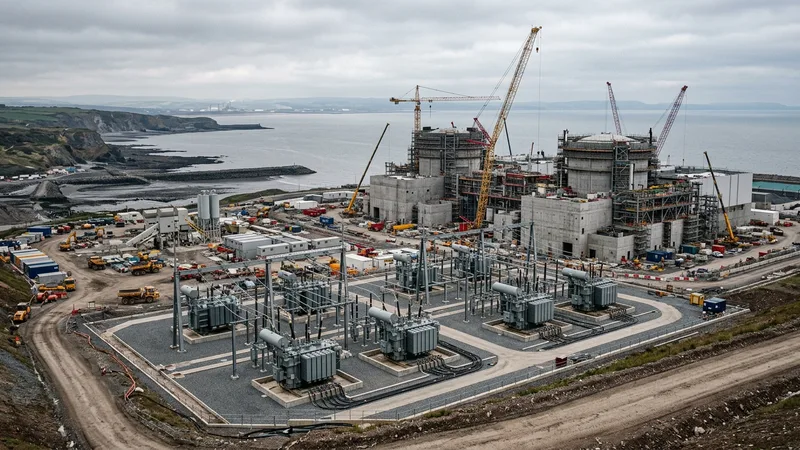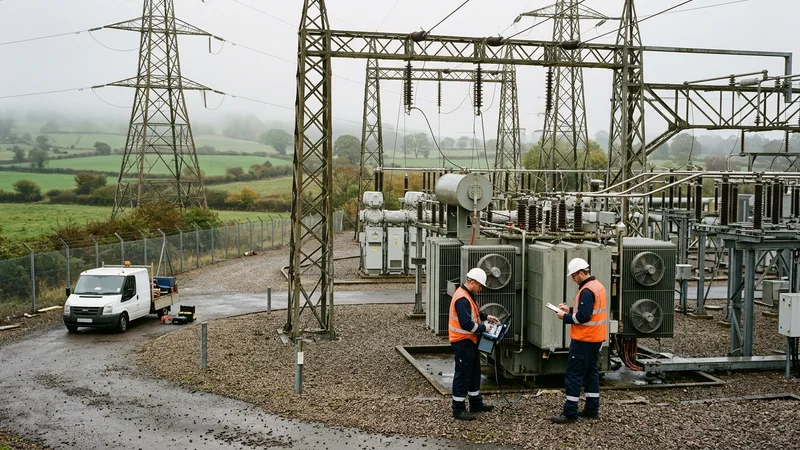






In a windowless control room deep in the English Midlands, a commissioning engineer watches a sync-scope with the intensity of a diamond cutter. Outside, three hundred acres of solar panels sit inert under a grey sky, waiting for the signal to breathe life into the grid. The physical infrastructure is perfect—the foundations are level, the inverters are humming, and the transformers are filled with pristine dielectric oil. Yet, the entire multi-million-pound investment is held hostage by a single document. This is the reality of the UK grid connection process, where the difference between a high-yield asset and a field of expensive glass is a rigorous technical standard known as ENA EREC G99.
To the uninitiated, G99 looks like a typical piece of bureaucratic fluff from the Energy Networks Association. In reality, it is the fundamental rulebook for synchronising any generating equipment to the distribution network. Since it replaced the venerable G59 standard, G99 has become the primary barrier to entry for any developer looking to contribute to the UK’s net-zero transition. It is a document that demands total compliance, punishing the negligent with years of delay and rewarding the diligent with a seamless path to energisation.
The Architecture of ENA EREC G99
Understanding G99 requires moving past the idea that it is just a safety checklist. It is a comprehensive framework designed to protect the integrity of the Distribution Network Operator (DNO) infrastructure. As the UK grid shifts from a centralized model dominated by massive thermal power stations to a decentralized web of renewables, the technical demands on small-scale generators have skyrocketed. The grid is no longer a passive sponge for electricity; it is a delicate ecosystem that requires active management from every connected node.
The standard categorizes installations into four distinct types, from Type A (small domestic or micro-business setups) to Type D (large-scale utility projects connected at 110kV or higher). For most developers in the renewables space, the focus lies in Type B and Type C, covering capacities from 1MW up to 50MW. At these levels, the technical requirements shift from simple "plug and play" logic to complex demands for reactive power control, frequency response, and fault ride-through capabilities. It is here that the specification of the transformer and switchgear becomes the pivot point for project success.
Why the DNO Cares About Your Voltage
The DNO has one primary job: to keep the lights on and the voltage stable within the statutory limits defined by the Electricity Safety, Quality and Continuity Regulations (ESQCR). When a solar farm or a Battery Energy Storage System (BESS) connects to the network, it introduces potential volatility. If a cloud passes over a massive PV array and the output drops by megawatts in seconds, the local voltage can swing wildly. G99 is the mechanism by which the DNO ensures your plant doesn't ruin the power quality for the village five miles down the road.
To comply, your equipment must be capable of surviving "voltage dips" without tripping offline immediately. This is the concept of Fault Ride Through (FRT). In the old days of G59, a generator was often expected to disconnect the moment it sensed a problem to save itself. Under G99, the grid needs you to stay connected—to provide "inertia" and support the network while the fault is cleared. This places immense thermal and mechanical stress on the primary plant, necessitating transformers built to IEC 60076-5 standards, specifically those designed to withstand the physical forces of short-circuit events without deforming the windings.
The Harmonic Headache and Power Quality
One of the most frequent reasons a G99 application hits a wall is a failure to account for harmonics and flicker. Modern renewable energy relies on power electronics—inverters and converters—which naturally produce high-frequency distortion. If left unfiltered, these harmonics can cause nearby transformers to overheat, flip protection relays prematurely, and interfere with telecommunications. The G99 process requires a detailed G5/5 harmonic study before the first shovel ever hits the dirt.
For the developer, this means the transformer isn't just a box of copper and iron; it is a filter. Specifying the correct vector group—often a Dyn11 for standard distribution or specialised phase-shifting windings for larger multi-inverter sites—is critical. If the transformer impedance is not perfectly matched to the system studies submitted to the DNO, the site may fail its final compliance tests. At ETS Group, we have seen projects stall for months because a generic, off-the-shelf transformer was purchased that didn't align with the specific reactive power requirements dictated by the G99 Type C frequency response curves.
Protection Settings: The Heart of the Connection
The secondary systems of a G99-compliant site are where the real complexity lives. The protection relay is the "brain" that communicates with the DNO's substation. It monitors Rate of Change of Frequency (ROCOF) and vector shift to detect "islanding"—a dangerous scenario where a generator keeps a portion of the grid alive even after the DNO has disconnected it for maintenance.
Developers often overlook the integration between the switchgear and the G99 relay. Under the ENA EREC G99 framework, the interface protection must be "fail-safe." This means if the protection relay loses power, the circuit breaker must trip. Precise coordination is required between the CT (Current Transformer) ratios, the VT (Voltage Transformer) accuracy classes, and the relay settings. If your switchgear is designed under IEC 62271-200, it must be equipped with the appropriate sensing equipment to feed the G99 relay the high-fidelity data it needs to make millisecond-level decisions.
Navigating the Type Testing Maze
A significant hurdle in the G99 process is equipment certification. Small scale generators can often rely on "fully type-tested" solutions where the manufacturer has already cleared the hurdles with the ENA. However, for utility-scale projects, "site-specific" testing is usually the only path. This involves a grueling schedule of on-site commissioning witnessed by DNO engineers.
They will simulate frequency excursions and voltage drops to see how the plant reacts. If your transformer tap-changer is too slow to respond to a reactive power command, or if your switchgear's opening time is ten milliseconds outside of the predicted window, the DNO can refuse to grant the Interim Operational Notification (ION). Without that ION, you are not authorised to export power, and your ROI begins to evaporate.
The Role of Modern Switchgear in G99 Compliance
While the transformer handles the voltage transformation, the switchgear is the gatekeeper of G99 compliance. Modern secondary and primary GIS (Gas Insulated Switchgear) or AIS (Air Insulated Switchgear) must be integrated with intelligent electronic devices (IEDs) that support the communication protocols required by the DNO, often involving SCADA integration via IEC 61850.
This digital handshake between the developer’s site and the DNO's control centre is what allows for "active network management." In constrained areas of the UK grid, many G99 agreements are "non-firm," meaning the DNO reserves the right to throttle your export if the network is congested. Your switchgear and control systems must be capable of receiving these signals and modulating the plant output in real-time. If the hardware can't support the logic, the connection agreement will never be signed.
Future-Proofing Your Connection
The UK energy landscape is not static. The standards that govern it, like G99, are subject to periodic revisions as new technologies like hydrogen electrolyzers and ultra-fast EV charging hubs come online. Designing a system that only just barely meets the current ENA EREC G99 requirements is a risky strategy. The most successful developers are those who build a margin of safety into their primary plant.
This involves selecting transformers with cooling capacities that allow for the high-duty cycles of battery cycling and choosing switchgear with high mechanical endurance (M2 class) to handle the frequent switching operations associated with renewable intermittency. By adhering to standards like BS EN 50522 for earthing and ensuring all equipment meets the latest IEEE C57.12 series benchmarks for distribution transformers, you create a robust physical foundation that makes G99 compliance a formality rather than a fight.
The ETS Perspective on Grid Integration
At ETS Group, we view the G99 document not as a hurdle, but as a roadmap. Since our founding in 1987, we have watched the UK's electrical landscape evolve from a simple, unidirectional flow to the complex, bi-directional grid of today. Our role as a manufacturer is to provide the "muscle" (the transformers) and the "reflexes" (the switchgear) that allow renewable projects to thrive within these strict regulatory boundaries.
When we talk to UK DNOs, they aren't looking for the cheapest equipment; they are looking for the most reliable equipment. They want to know that when a fault occurs, the equipment will behave exactly as the G99 studies predicted. That reliability starts on the factory floor, where every weld on a transformer tank and every contact in a circuit breaker is tested against international standards to ensure it can handle the rigors of the modern British energy market.
The G99 document is ultimately a promise of stability. It is a vow that your renewable asset will be a "good citizen" of the grid, contributing to its health rather than taxing its limits. Reading it twice is the minimum requirement; understanding the physical demands it places on your hardware is the real secret to energisation.
The difference between a project that sits idle and one that powers a city is rarely found in the panels or the turbines. It is found in the copper, the steel, and the meticulous engineering of the grid connection. Master the G99 technicalities, and the rest of the project will follow.