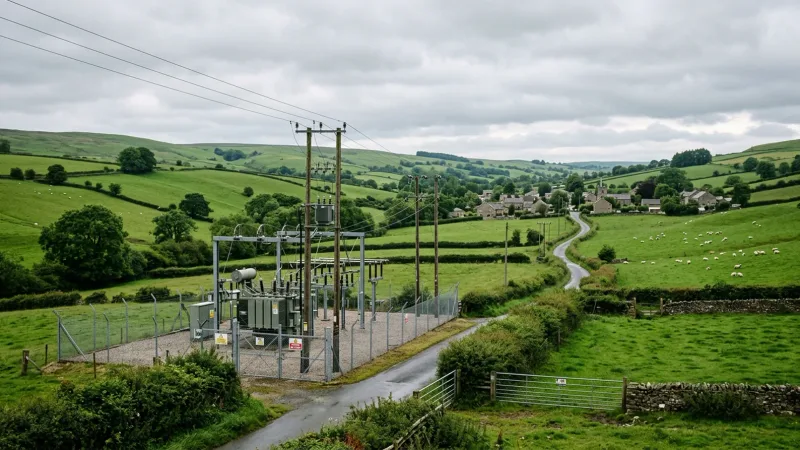






TM04 and TM05 are not regulatory abstractions. They are the rule changes that turned a 14-year transmission queue into a tiered readiness assessment, and they have already moved or struck out tens of gigawatts of provisional offers. This piece reads the modifications from the perspective of a developer holding a shovel-ready project — what survives, what gets re-stamped, and how the GSU procurement clock now moves.
Steel, Copper, and The Tyranny of Physics
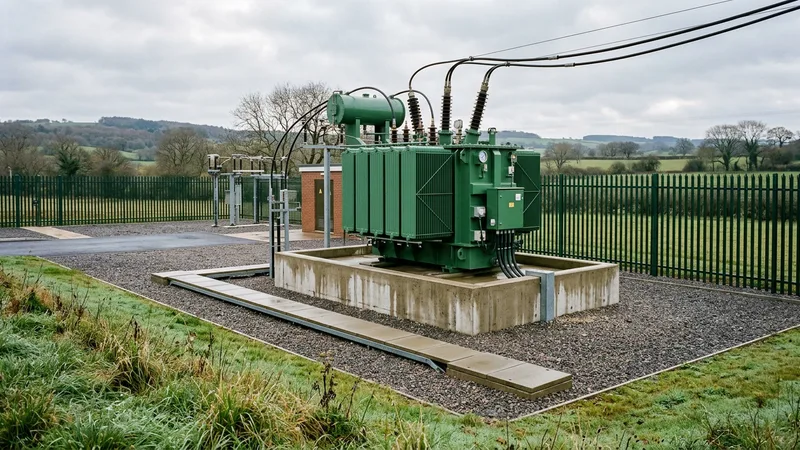
To the uninitiated, a transformer is just a big, grey, buzzing box. A simple component. To the system planner, it is a node in a model. To the procurement manager, it is a line item with a daunting price tag. But to the engineer, a transformer is a finely-tuned instrument governed by the often-inconvenient laws of physics and material science. Understanding this is key to understanding why you can't just "get one sooner".
The heart of the matter is the magnetic core. It’s not just a lump of iron. It’s made from thousands of sheets of cold-rolled grain-oriented (CRGO) silicon steel, each lamination barely 0.23 mm thick, insulated from its neighbour by a film measured in microns. This isn’t just for kicks; it’s a defence against physics. A solid core would be ravaged by eddy currents, turning it into a very inefficient heater. The precise chemistry of the steel and the alignment of its crystalline grains are engineered to minimise hysteresis losses as the magnetic field flips 50 times a second. This material doesn't grow on trees; its production is a specialised, energy-intensive process dominated by a handful of global mills. You cannot rush the annealing ovens.
Then there are the windings. Strands of high-purity copper are precisely wound, insulated with specialist paper, and braced to withstand terrifying electromechanical forces during a short circuit—forces that can rip a poorly-made winding apart. The entire assembly must be baked dry in a vacuum oven for days in a process like vapour-phase drying (VPD) to remove every last trace of moisture. Even a few parts-per-million of water can compromise the dielectric strength of the insulating oil, leading to a catastrophic failure years down the line. The point is, these are not off-the-shelf goods. They are bespoke, heavy-industrial products built on the outer edge of material limits.
From Flimsy Laminations to a 200-Tonne Asset
Building a transmission-scale transformer—say, a 150 MVA, 132/33 kV unit—is less like an assembly line and more like a series of heavy engineering projects. The manufacturing timeline was already a strategic concern long before the current market dislocation. A "normal" lead time of 24-36 months was considered standard.
First, the core is painstakingly stacked by hand, lamination by lamination. The copper coils, some weighing several tonnes, are wound and then lowered into place with millimetric precision. Once the active part is assembled, it’s placed inside its steel tank, a complex fabrication in its own right, designed to contain thousands of litres of oil and support radiators, bushings, and conservator tanks. The final stage involves a battery of Factory Acceptance Tests (FAT) a process that can take weeks, governed by the exacting standards of IEC 60076. These tests confirm everything from winding resistance and voltage ratios to the transformer's ability to withstand lightning impulse voltages.
The entire process, from order to ex-works, is a logistical chain of specialised suppliers and highly skilled labour. The world’s capacity to produce these assets is finite. There are only so many winding machines, so many VPD ovens, and so many FAT bays at the European and Asian factories that serve the UK market. This inelasticity is the inconvenient truth sitting beneath National Grid ESO's shiny new connection process. You can find more information about the types of units in question on our transformers page.
Enter TMO4+: The Great Queue Cull
The UK’s grid connection queue had become a punchline. By early 2023, it contained over 700 GW of generation and storage projects, a portfolio large enough to power the country several times over. An unfortunate side effect of a "first-come, first-served" model was rampant "queue squatting," where speculative projects with little chance of ever being built could secure a spot, blocking the path for more viable, shovel-ready schemes. A 1 GW offshore wind farm with a 2038 connection date could clog up a key transmission node, preventing a 50 MW battery, ready to go in two years, from getting its connection offer.
National Grid ESO’s solution is a fundamental shift to a "First Ready, First Connected" model, introduced via a series of Transmission Licence Condition modifications (TMO3.4 and the TMO4+ proposals). The essence of the reform is to move from a passive queue to an active filtering process with gated milestones. To proceed, developers must prove their project is advancing. And the proof has to be tangible.
The most significant milestone is the requirement to demonstrate "material equipment and security of tenure on land." While land rights are a familiar hurdle, the "material equipment" clause has sent a shockwave through the development community. It means you must have a binding purchase order for your project's main electrical plant. For most generation and storage projects, this means the Generator Step-Up (GSU) transformer or the main transmission transformer connecting to a package substation.
What constitutes a "binding order" is no small matter. It isn't a letter of intent or a friendly handshake. It typically includes:
- A fully executed purchase contract.
- A non-refundable down payment, often 10-20% of the multi-million-pound asset price.
- A confirmed manufacturing slot and an agreed FAT date in the factory's production schedule.
- Substantial financial penalties for cancellation.
You can no longer bluff your way through. To stay in the queue, you have to spend real money. Lots of it.
A Coordinated Scramble and the 4-Year Lead Time
The reform